Fishing tips & tactics
How to catch Yellow Bullhead
Ameiurus natalis
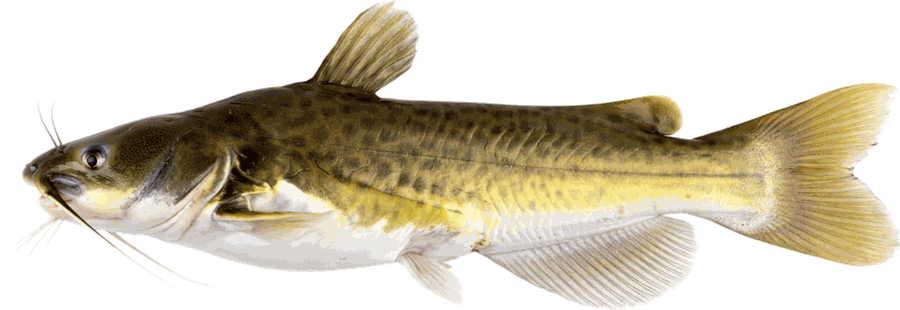
Bump Board's tactics library for Yellow Bullhead — where to fish, what to tie on and how to fish it, season by season. In the app, these tips adapt live to the weather, the front and the light.
Yellow Bullhead — Prespawn
Where to fish
- Ahead of the spawn, fish move shallow in the secondary accounts — toward the clear, vegetated, gravel-and-rock shallows this species prefers over its congeners' muddy water. That clear-water preference is one of the genuine, decision-relevant differences in this genus: where brown bullhead is a fish of silty, vegetated stillness and black bullhead is the turbid-water specialist, yellow is the clear-water bullhead, and prespawn effort belongs on the clearest firm-bottom shallows you have.
What to tie on
- Scent-led bottom offerings, as in every season for this taste-led fish (the mechanism is its own — see summer). Prespawn sizes to the benthic diet: aquatic insects and their larvae, crustaceans, molluscs, worms.
How to fish it
- Fish the warming shallows on the species' own clock — adults are nocturnal in this species' one controlled diel study, so the prespawn shallow move is an evening-and-night pattern, with early evening named as a feeding period in the secondary syntheses. The temperature that ends prespawn is genuinely uncertain in this species (see the spawn entry's carried conflict), so let the shallows and the fish, not a single number, tell you the season has turned.
If it's still tough
- If the clear shallows are empty, the move hasn't happened — staging in this sedentary genus is a short move (tagged yellow bullhead in one lake study remained within 100 m of release), so check the first firm-bottom edges off the shallows before you search the lake.
Yellow Bullhead — Spawn
Where to fish
- Fish the clear, vegetated shallows in late spring — April to June, May to June in the northern accounts — and carry this species' honest complication with you: its spawn temperature band is in genuine conflict in the literature, and the entry refuses to hide it. One cluster of accounts puts the move shallow at about 20–22 °C; another puts spawning beginning at 23–28 °C; a state agency account gives 24–27 °C. The clusters may describe onset versus peak, or southern versus northern fish — nobody has resolved it. The derived set therefore fishes a wide band, onset around 20 °C and core 21–28 °C, graded accordingly, and no single 'yellow bullhead spawn temperature' is quoted anywhere in this library.
What to tie on
- Nothing spawn-specific is measured for this species — no spawn bait, and no observation of whether guarding suppresses its feeding. Keep the scent-led bottom presentations of the feeding seasons and work them around the spawning shallows.
How to fish it
- Work the shallows methodically while the wide window runs, on the adults' nocturnal clock. Because the band is wide and conflicted, the practical skill in this season is coverage — several clear shallow areas across several evenings — rather than precision timing to a temperature the literature itself hasn't settled.
If it's still tough
- A quiet spawning flat in this species is weaker evidence than in most: with a band this wide, 'too early' and 'already done' are both live possibilities a few degrees apart. Check a warmer and a cooler shallow before you conclude anything about the spawn.
Yellow Bullhead — Summer
Where to fish
- The warmest preferendum of the three bullheads, and this species' own measurement: in the same compilation, by the same method, yellow bullhead's preferred temperature sits in the high 20s, with an optimum-growth value around 28 °C carried in the compilation's appendix and in a regulatory exhibit, and a lethal ceiling at 36.4 °C (that ceiling's label is disputed between compilations; the temperature is not — see the coverage note on this file). Summer addresses are the clear-water set: gravel and rock bottoms, dense vegetation, water clearer than its cousins tolerate — multiple accounts describe this species avoiding highly turbid, polluted water, the clear-water end of its genus. Confidence flag, stated where the rating states it: this is a derived set capped at Moderate — the thermal peak and the ceiling are yellow's own, and the curve between them is interpolated from yellow's own points, because no consumption-versus-temperature experiment for this species exists.
What to tie on
- This species owns the family's flagship sense. The founding catfish taste study — Atema, 1971 — was done on this fish, under its old name Ictalurus natalis: over 175,000 taste buds estimated across the body surface of a 25 cm fish (about 20,000 on the barbels, about 155,000 on the remaining surface, roughly 12,500 more on the gill arches), with the body-surface buds serving food localisation — taste as a distance sense — and the mouth buds serving acceptance. Two generations of 'catfish taste' lore borrowed that study; here it is home. Fish it directly: scent-forward, still, bottom presentations that let a fish taste its way to the bait, sized to the measured benthic diet of insects, crustaceans, molluscs, worms, detritus and small fish. The literature names no lure for this species, and none is invented here.
How to fish it
- Adults are nocturnal — measured in this species' own controlled diel-and-temperature work (Reynolds and Casterlin, 1978), which also found the preference and the clock both shift with age, so this entry rates and describes adults, as the rating does. Fish dusk into night on the clear shallows and their edges. What this entry will not give yellow bullhead is a light threshold: the lux numbers published for its congeners are their experiments, and no equivalent measurement exists for this species — the direction is yellow's own, the thresholds are not borrowed.
If it's still tough
- If clear summer shallows fail at night, check the clarity story before the bait: a basin that has gone genuinely turbid is water this species measurably prefers least among the bullheads, and the clearest firm-bottom water in the system is the fix the niche evidence supports. In honest limits, dissolved oxygen is one of them — no primary oxygen value for yellow bullhead was located at all, and secondary claims about its tolerance contradict each other, so no oxygen pattern is offered for this fish.
Yellow Bullhead — Fall
Where to fish
- Fall is the honest blank in this entry: the cooling-season behaviour of yellow bullhead itself has never been studied, and no other fish's fall pattern is substituted for it. Fish the cooling water on this species' own clear, firm-bottom, vegetated addresses, and treat your own lake's answer as genuinely new knowledge.
What to tie on
- The scent-led bottom menu, slower as it cools. The taste system doesn't season off, and it remains the best-supported presentation this species has in any month.
How to fish it
- Keep the adults' nocturnal emphasis and shorten the search: a sedentary fish cooling toward an unstudied winter is a fish to look for near its summer water, on the nearest clear, vegetated, firm-bottom shelter.
If it's still tough
- Fall silence in this species carries less information than in the fully measured fish — its autumn was never measured at all. Fish the pattern, log the result, and treat your own lake's answer as genuinely new knowledge.
Yellow Bullhead — Cold
Where to fish
- Start with what this entry is, because the cold season is exactly where it matters: yellow bullhead's rating is a derived set, its confidence capped at Moderate — and no winter, cold-feeding or under-ice study of yellow bullhead exists in any design, so no other species' cold-water shape is substituted for one. What follows in this entry is therefore general guidance applied to this species' own clear-water addresses (gravel and rock bottom, dense vegetation), not a measured yellow winter pattern. Other bullheads' cold numbers — feeding at 4 °C, predation at 3 °C — belong to the fish that were measured, and are not claimed for this fish anywhere in these entries.
What to tie on
- The one cold-season tool that is genuinely this species' own is its sense of taste (see the summer entry): a fish that finds food by taste at a distance is fished with scent, still and on the bottom, in any season. Small bottom offerings matched to the broad benthic diet — insects, crustaceans, molluscs, worms — are the supported shape; no lure is named in the yellow bullhead literature, and none is invented here.
How to fish it
- Slow, close, and weighted to the dark hours — the nocturnal clock below is this species' own measurement, and it is the strongest cold-season guidance the entry can honestly give, because no yellow cold-water temperature response has ever been measured at all.
If it's still tough
- If cold yellow bullhead won't go, you are at the edge of what is known about this fish, and the entry says so rather than dressing another fish's pattern as yellow's. Yellow in winter is, on present evidence, a gap.
Yellow Bullhead on the ice — Through the ice season
Where to fish
- Not covered — stated as the finding it is. No winter, cold-feeding or under-ice study of yellow bullhead exists in any design, and ICE mode for this species reports not-covered rather than borrowing a pattern. No other species' ice set is substituted for one: everything that makes an ice set even provisional — under-ice stomachs, winter laboratory trials, dormancy physiology — is unmeasured for yellow bullhead.
What to tie on
- No ice presentation exists for yellow bullhead, and none is borrowed to fill this space.
How to fish it
- If you fish this species through the ice, you are fishing past the edge of its science: the honest starting points are its open-water facts — clear water, firm bottom, vegetation, a nocturnal clock — labelled as transfers, not ice findings.
If it's still tough
- For ice fishing with study backing in this genus, brown bullhead's provisional set is the only one that exists. Yellow bullhead's winter is a genuine unknown, and the library's answer is to say so.
Where Yellow Bullhead live
2,056 waters in the Bump Board dataset hold Yellow Bullhead. A selection:
Ontario
- Arran Lake
- Ausable River
- Baby Creek
- Balsam Lake
- Barbers Lake
- Bass Lake
- Bayfield River
- Bear Creek
- Beaver Lake
- Beaver River
- Big Clear Lake
- Big Creek
- Big Rideau Lake
- Big Salmon Lake
- Birch Lake
- Black Lake
- Black Lake
- Black River
- Bobs Lake
- Buck Lake
- Buckhorn Lake
- Bull Lake
- Burgoyne Creek
- Burrows Lake
Plus 140 more Ontario waters — browse Ontario lakes.
Colorado
Connecticut
- Alexander Lake
- Aspinook Pond
- Bashan Lake
- Beseck Lake
- Black Pond
- Black Pond
- Black Rock Lake
- Black Rock Pond
- Butternut Pond
- Colony Pond
- Eagleville Pond
- Easton Reservoir
- Hemlock Reservoir
- Hopeville Pond
- Lake Candlewood
- Lake Hayward
- Lake Kenosia
- Lake Lillinonah
- Lake Quassapaug
- Lake Winnemaug
- Lake Zoar
- Little Pond
- Moosup Pond
- North Spectacle Pond
Plus 16 more Connecticut waters — browse Connecticut lakes.
Delaware
- Abbotts Pond
- Chipman Pond
- Concord Pond
- Killen Pond
- McColley Pond
- Millsboro Pond
- Portsville Millpond
- Raccoon Pond
Iowa
- Cedar Lake
- Diamond Lake
- East Okoboji Lake
- Elk Lake
- Five Island Lake
- Greenfield Lake
- Ingham Lake
- Lake Icaria
- Lake Iowa
- Lake MacBride
- Lake Manawa
- Lake McKinley
- Lake Orient
- Lost Island Lake
- Nine Eagles Lake
- Silver Lake
- Swan Lake
- Union Grove Lake
- West Okoboji Lake
Idaho
Illinois
- Canton Lake
- Forbes Lake
- Lake Jacksonville
- Lake Pittsfield
- Lake Sara
- Lake Springfield
- Lake Storey
- Lake Taylorville
- Washington County Lake
Indiana
- Adams Lake
- Appleman Lake
- Atwood Lake
- Ball Lake
- Banning Lake
- Barr Lake
- Barton Lake
- Baugher Lake
- Bear Lake
- Beaver Dam Lake
- Bell Lake
- Big Chapman Lake
- Big Lake
- Big Long Lake
- Big Otter Lake
- Bixler Lake
- Black Lake
- Blue Lake
- Brokesha Lake
- Buck Lake
- Cass Lake
- Cedar Lake
- Cedar Lake
- Center Lake
Plus 121 more Indiana waters — browse Indiana lakes.
Louisiana
Massachusetts
- Alum Pond
- Arcadia Lake
- Baddacook Pond
- Baldpate Pond
- Barrett Pond
- Bartlett Pond
- Brookline Reservoir
- Carbuncle Pond
- Cedar Pond
- Chauncy Lake
- Coes Reservoir
- Dunn Pond
- East Brimfield Lake
- East Waushacum Pond
- Farm Pond
- Fivemile Pond
- Flint Pond
- Flint Pond
- Forest Lake
- Forest Lake
- Forge Pond
- Fort Pond
- Hamilton Reservoir
- Hardwick Pond
Plus 53 more Massachusetts waters — browse Massachusetts lakes.
Maryland
Michigan
- Algonquin Lake
- Alley Lake
- Alma Lake
- Archer Lake
- Atodd Lake
- Baker Lake
- Baldwin Lake
- Bankers Lake
- Baptist Lake
- Barlow Lake
- Barnes Lake
- Barton Lake
- Bass Lake
- Bass Lake
- Bass Lake
- Bass Lake
- Bass Lake
- Bassett Lake
- Batteese Lake
- Baw Beese Lake
- Beadle Lake
- Bear Lake
- Beebe Lake
- Belleville Lake
Plus 296 more Michigan waters — browse Michigan lakes.
Minnesota
- Adams Lake
- Adney Lake
- Airport Lake
- Aitkin Lake
- Albert Lake
- Albert Lea Lake
- Alice Lake
- Amber Lake
- Amelia Lake
- Anderson Lake
- Andrew Lake
- Andrusia Lake
- Ann Lake
- Anna Lake
- Annie Battle Lake
- Antler Lake
- Arrowhead Lake
- Baby Lake
- Bachelor Lake
- Bad Axe Lake
- Bald Eagle Lake
- Ball Bluff Lake
- Ballantyne Lake
- Balsam Lake
Plus 1,192 more Minnesota waters — browse Minnesota lakes.
Montana
New York
- Burden Lake
- Canadarago Lake
- Collins Lake
- Dunham Reservoir
- Goodyear Lake
- Otisco Lake
- Otsego Lake
- Owasco Lake
- Tomhannock Reservoir
Oregon
Pennsylvania
- Conneaut Lake
- Dutch Fork Lake
- Edinboro Lake
- Foster Joseph Sayers Lake
- Frances Slocum Lake
- Francis E Walter Reservoir
- Hammond Lake
- Hopewell Lake
- Kyle Lake
- Lake Perez
- Lake Wallenpaupack
- Leaser Lake
- LeBoeuf Lake
- Lily Lake
- Loyalhanna Lake
- Mauch Chunk Lake
- Pymatuning Reservoir
- Scotts Run Lake
- Shenango River Lake
- Speedwell Forge Dam
- Tamarack Lake