
Fishing tips & tactics
How to catch Mooneye
Hiodon tergisus
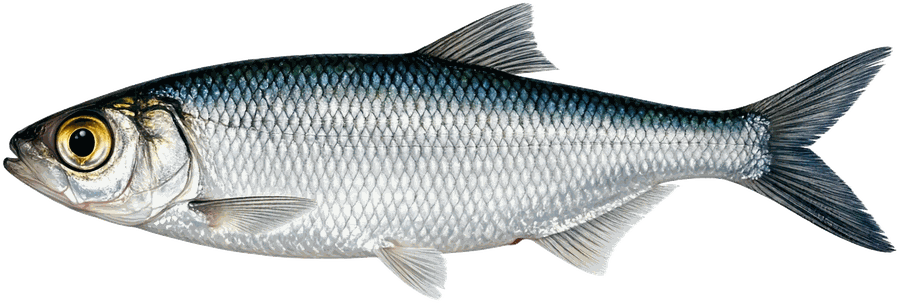
Bump Board's tactics library for Mooneye — where to fish, what to tie on and how to fish it, season by season. In the app, these tips adapt live to the weather, the front and the light.
Mooneye — Prespawn
Where to fish
- Mooneye feed hard before they spawn, and it is measured: in the Assiniboine programme, stomachs were fullest in April and May — the spring peak of a two-peak feeding year — in the run-up to the mid-May spawn. Prespawn fish are travelling and feeding fish, staging toward the spawning shoals on the spring rise.
- The staging address is the holding water below the spawning shoals: schools hold in the deep pools and slower margins and feed on the move, with the run to the shoals still ahead of them.
What to tie on
- The spring menu is the measured one: corixids dominate the Assiniboine stomach record, with adult beetles, adult and larval mayflies, midges and crustaceans behind them — small insect-profile offerings, fished at and near the surface where this surface feeder works, are the diet-supported pattern. No lure is named in the mooneye literature, and none is invented here.
How to fish it
- Fish the light change at the end of the day hardest: the dusk-led timing in this entry is agency consensus backed by measured eye anatomy (a grouped, rod-rich retina with a reflective tapetum — hardware for low-light feeding), not a stomach-measured clock, and it is flagged that way wherever it appears. No diel feeding study exists for this species at any season.
- Clarity is a location rule for this fish before it is anything else: mooneye are repeatedly described as intolerant of silt and turbid water, and their declines track siltation. In spring runoff, fish the clearest water you can find — a silted reach is the wrong address for this species even at the right temperature.
If it's still tough
- If prespawn schools are nowhere on the staging water, check the temperature against the spawn band: below about 8 °C the run has not started, and the feeding fish are still spread through the spring holding water rather than gathered below the shoals.
Mooneye — Spawn
Where to fish
- The spawn is a broadcast event with no nest and no guarding: eggs are shed over the shoals and drift, semibuoyant, into quiet water, and no parental care follows. Crucially for the fishing, May is independently a peak feeding month in the stomach record — spawning mooneye are not off their food the way a guarding species is, and the spawn renders in the rating as a location annotation only, with no feeding bonus and no suppression claimed.
- The spawning address itself is clear, flowing water over rock and gravel shoals — measured at shared spawning shoals as about 0.8–2.0 m deep with surface flow around 0.4–1.0 m/s — reached on an upstream migration. In Manitoba the peak is mid-May at 10–13 °C; the range-wide band is 8–15 °C, late April in the south to mid-June in the north.
What to tie on
- The insect menu continues through the spawn — corixids and the mayfly, midge and beetle items of the spring diet — presented at the surface and in the upper water over and below the shoals. Nothing spawn-specific is named in the literature; the diet is the tackle story, as it is all year for this fish.
How to fish it
- Fish the schools on the move: mooneye travel in schools, and a spawning-season school is a located fishery — work a found school thoroughly at the dusk peak rather than casting empty shoal water. The dusk timing remains consensus-grade (agency accounts plus eye anatomy), stated as such, not as a measured bite window.
- Temperature is the spawn calendar: the run keys to the 8–15 °C band with its peak at 10–13 °C, latitude-shifted by weeks from south to north. If the water is in the band and the shoals are quiet, the local run is early or late — move along the migration route instead of changing presentations.
If it's still tough
- If shoal fish are present but not feeding at midday, that is this species' normal day value, not a refusal to solve: the model's daylight value is its lowest (0.55) on a dusk-led shape. Stay for the evening — the surface feeding this fish is built for happens at the light change.
Mooneye — Summer
Where to fish
- Summer is the growth season — growth was fastest June through August in the Assiniboine work, and Manitoba's angling peak runs August–September on the Winnipeg system — on a thermal centre that needs its provenance stated: the model's plateau (19–24 °C) follows a single field measurement, a preferendum of 22 °C with upper avoidance at 27 °C. A compiled preferendum family sitting near 27–29 °C exists in the Ontario metrics compilation; it is a database value with an untraced primary source, it is kept separate and not blended into the anchors, and the whole mooneye set is DERIVED, capped at Low confidence, for exactly this kind of thinness.
- The summer pattern is split by design: schools hold in the deep pools and slower margins and feed mostly in the flowing water — occurrence record, not a measured feeding-versus-flow function. Fish the flowing feeding water at the light changes and the holding pools between feeds.
- In big clear water the summer address is the nearshore zone: the Great Lakes record keeps mooneye within about a mile of shore and above 10 m deep, in the clear water this species requires. Fish the clear shallows and their first drop at dusk.
What to tie on
- Surface insects are the summer menu — this is a surface-feeding insectivore: corixids, mayflies, midges, beetles and other fallen and emerging insects, with crustaceans behind them in the Assiniboine record. Small insect-profile offerings fished at the surface in the evening are the whole supported pattern; the literature names no lure, and the entry invents none.
How to fish it
- Dusk is the peak and night is a real second shift (the model runs dawn 0.70 / day 0.55 / dusk 1.0 / night 0.80): surface feeding in the evening and into the night is the agency account, the plausible mechanism being the evening insect fall and emergence — stated as interpretation, because the diel shape itself is consensus and anatomy, never stomach-measured. Plan the day around the last hour of light and fish into dark.
- Guard the clarity rule in summer above all: this is the clear-water member of its family — its congener tolerates turbid water and mooneye is its opposite — and no dissolved-oxygen value of any kind has ever been measured for this species, so neither murk nor low-oxygen water comes with any sourced guidance except avoidance of the murk. After any silt event, the fish are in the clearest water in the system or they are not feeding.
If it's still tough
- If summer surface water pushes past the 27 °C avoidance, the shallows are the wrong address — avoidance is the measured response, so look for cooler water rather than new baits. And know the limit honestly: no lethal temperature has ever been measured for this species, so the curve's warm tail past avoidance is flagged interpolation, not a threshold to fish by.
Mooneye — Fall
Where to fish
- Fall is the second measured feeding peak: Assiniboine stomachs were fullest again in October and November, riding the fall corixid migration — the autumn half of a bimodal feeding year whose growth peak, by contrast, sits in summer. Fall mooneye are feeding fish on a moving insect supply, and the cooling water is still well inside their season.
- Fish the flowing feeding water below the holding pools as the corixid supply moves: the fall peak is a prey-migration pattern, so the schools set up where the drifting insects concentrate, and they feed there into the evening.
What to tie on
- Corixids are the fall menu, dominating the stomach record in the peak months — small insect-profile offerings sized and fished to that single dominant item are the most diet-specific pattern this species offers all year. Where corixids are not moving, fall back to the general insect ledger: mayflies, midges, beetles, crustaceans.
How to fish it
- The dusk-led clock runs the fall day as it runs the summer one (consensus and anatomy, flagged as ever): surface feeding at the light change and into the night, tracking the evening insect movement — the corixid mechanism is interpretation offered by the research, not a measured parameter, and the practical consequence is simply to be on the feeding water at dusk while the migration runs.
- Work schools, not water: fall feeding is concentrated where the prey concentrates, and a located school on the migration is worth an evening of thorough fishing. Cooling toward November shortens the season (the model's November value steps down and December falls to its floor), so late-fall effort belongs on the warmest, clearest afternoons sliding into dusk.
If it's still tough
- If the fall water is silent, check clarity first and temperature second: silt shuts this species down by its best-evidenced response, and once the water falls toward the winter floor the feeding year is closing — the December value is a presence floor, not a feeding pattern.
Mooneye — Winter
Where to fish
- Winter mooneye are documented as present — overwintering in the deep holding pools — and that is nearly all that is documented: adult winter feeding and activity have never been measured for this species. The only winter diet record in its science is young-of-year fish eating stoneflies in their first winter, a first-year record this entry refuses to present as adult behaviour.
- Manitoba's fishery agrees with the gap: the provincial mooneye record is an open-water, June-to-October fishery with its peak in late summer. Winter is this species' unmeasured season, and the entry treats it as one rather than dressing presence up as a pattern.
What to tie on
- No winter presentation is sourced for mooneye. If you fish open winter water at all, the year-round insect ledger at its smallest and slowest is the only diet the species offers — offered here as the honest minimum, not as a winter finding.
How to fish it
- Fish the deep holding pools slowly and give located fish time: the model's winter floor (0.25) is a presence floor built from documented overwintering, not a feeding rate, so expectations should be set by the floor, not by the spring and fall peaks.
- Carry the open-water clock in only as a flag: the dusk-led shape is a consensus construction for the open-water seasons and has never been tested in winter. A winter dusk is a reasonable bet by that shape and nothing stronger — the entry says so rather than selling it as winter science.
If it's still tough
- A dead winter pool is the documented state of this species' knowledge, not necessarily a tactics failure: presence without measured feeding means silence proves nothing either way. The sourced mooneye seasons are the spring run, the summer growth season and the fall corixid peak — winter effort is honestly better spent there.
Mooneye on the ice — Through the ice season
Where to fish
- No ice parameter set exists for this species, deliberately: no under-ice study of mooneye exists, no ice fishery targets it in its Manitoba range, and issuing an ice pattern would invent one. If your water is ice-covered, the honest guidance is the winter open-water pattern — deep holding pools — labelled as exactly that.
- The winter record underneath that gap is one young-of-year diet note (stoneflies in the first winter) plus documented overwintering presence in deep pools. Adult winter feeding has never been measured, so there is no ice season in this fish's science to summarise — the coverage verdict is not-covered, and the entry carries it openly.
What to tie on
- No ice presentation is sourced for mooneye. Nothing here is borrowed from another species to fill the space.
How to fish it
- Treat ice-season mooneye as unstudied water: fish the winter holding pattern if you fish them at all, and know the library has no ice science to check your results against.
- Open-water ratings resume at ice-off — that boundary is the ice chapter for this species. The spring feeding peak that follows, with stomachs at their fullest in April and May, is measured, and it is where this library's mooneye year actually begins.
If it's still tough
- The sourced mooneye seasons are the spring run and spawn, the summer growth season and the fall corixid peak. The ice season is, on present evidence, a gap — the entry says so rather than papering over it.
Manitoba Master Angler
A Mooneye of 35.5 cm (14 in) or better qualifies for Manitoba's Master Angler Program.
Where Mooneye live
75 waters in the Bump Board dataset hold Mooneye. A selection:
Manitoba
Ontario
- Abitibi River
- Adam Creek
- Allumette Lake
- Ball Lake
- Barnston Lake
- Beaver River
- Big Fox Lake
- Big Sand Lake
- Bruce L. South Basin
- Bruce Lake
- Camping L.
- Chukuni River
- Clay Lake
- Eaglenest Lake
- English River
- Frederick House River
- Goose Lake
- Grand River
- Grassy Narrows Lake
- Grindstone Creek
- Gun Lake
- Holden Lake
- Lac Coulonge
- Lac des Chats
Plus 42 more Ontario waters — browse Ontario lakes.