
Fishing tips & tactics
How to catch Chain Pickerel
Esox niger
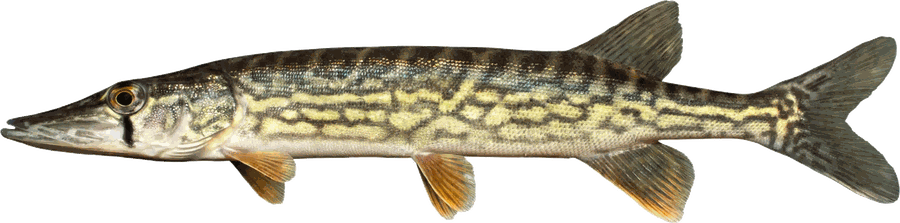
Bump Board's tactics library for Chain Pickerel — where to fish, what to tie on and how to fish it, season by season. In the app, these tips adapt live to the weather, the front and the light.
Chain Pickerel — Prespawn
Where to fish
- Ahead of the spawn, pickerel move shoreward into the shallow, vegetated littoral they will spawn over — flooded vegetation in water no deeper than about 3 m is the spawning address, and the staging fish hold in the feeding cover beside it. This is a habitat-shift direction from the species' own record (Armbruster 1959), not a tracked migration: no telemetry study of this fish exists at any season.
- Cold does not switch this fish off: pickerel fed actively at 5 °C in the laboratory and were already predating at 5.1 °C in spring field work, in experiments where smallmouth bass at 5 °C did not feed at all. Prespawn pickerel are reduced, feeding fish — fish them as ambush predators in cover, not as a dormant species.
- In flowing water the address is the quiet water: backwaters, pools and swampy margins with vegetation — a quiet-water littoral fish everywhere it lives. Fish the still, covered margins, not the runs.
What to tie on
- Size the offering to the measured diet at this season's sizes: small pickerel feed in the vegetation on invertebrates — dragonfly and mayfly larvae and crayfish — and fish take over above about 8 cm, with adult diets fish-dominated. No lure is named in the pickerel literature, and none is invented here: a small fish-profile or crayfish-profile offering, presented in the vegetation at close range, is the whole supported tackle story for a visual ambush feeder.
How to fish it
- Use the one measured clock this species has: in spring field deployments, predation risk shifted later in the morning when the water was below 13 °C. On cold prespawn mornings the feeding window opens late — do not fish dawn, blank, and leave; the measured pattern says the morning improves.
- Fish slowly and close in the cover. The strike itself is a sighted ambush (measured strike kinematics: a modulated ram-and-suction strike that requires seeing the prey), so a presentation the fish cannot see developing in its vegetation is not fishing this species — work each patch of cover as a separate ambush site.
If it's still tough
- If the staging shallows are empty, the temperature has not arrived: spawning peaks at 8.3–11.1 °C, so drop to the deeper edge off the spawning vegetation and wait for the water rather than changing baits.
Chain Pickerel — Spawn
Where to fish
- The spawn itself is a shallow flooded-vegetation event: fish gather over flooded vegetation in water up to about 3 m deep, adhesive eggs are shed onto the vegetation with no nest and no parental care, and a population's bout runs about 7–10 days. The window is latitude-timed — December to February in Florida, April to May in Canada shortly after ice-out — inside a wide 2–22 °C range with the peak at 8.3–11.1 °C.
- Spawning usually takes place during the day in the synthesis record — this is a daylight event in the shallows, and the fish are on the flooded vegetation itself while it runs.
What to tie on
- Nothing spawn-specific is named in the literature, and no spawn feeding response has ever been measured for this species — no fast, no suppression, no bonus is claimed here. Offerings stay on the year-round menu (small fish first, crayfish second) and are fished at the edges of the spawning vegetation, where feeding fish hold, rather than over the spawners themselves.
How to fish it
- The spawn window renders in the rating as a location annotation only, and this entry fishes it the same way: be on the flooded vegetation while the bout runs (it is days, not a season), fish the daylight hours the event itself keeps, and treat strikes on the beds as spawning-season encounters — the research measures no feeding rate for this window in either direction.
- Because the bout is short and latitude-shifted, temperature is the calendar: at 8–11 °C in northern water you are in the peak band; well above or below it, the fish you find on the vegetation are staging or recovering, and the prespawn and postspawn entries are the better guides.
If it's still tough
- If the vegetation is quiet at peak-band temperatures, the local bout may already have run — 7–10 days is the whole event. Move to the adjacent vegetated shallows and fish the postspawn pattern rather than waiting on empty beds.
Chain Pickerel — Postspawn
Where to fish
- After the bout, pickerel stay in the vegetated littoral — and this warming band is where the species' best field measurement lives: in the Maine predation work, the pickerel-specific model's hazard rose steeply with temperature across 5–18 °C and temperature was the strongest covariate in the study. Postspawn warming is a rising-activity season by measurement, not by lore.
- Fish the vegetation itself and its first deeper edge: postspawn fish feed from cover in the shallows while the water climbs through the teens, holding deeper by day as the season warms.
What to tie on
- The adult menu, measured: in the classic stomach work, golden shiners appeared in 47.3% of 234 stomachs and crayfish in 42% — fish first, crayfish a close second, varying by water. Fish-profile offerings are the primary pattern and crayfish profiles the change-up; in waters where the forage fish differ, match the local small fish, because the diet record is system-dependent and no single prey constant exists for this species.
How to fish it
- One conflict in this species' small evidence base is disclosed, not smoothed over: a 1993 laboratory thesis found daily consumption lowest at 5 °C, peaking at 10 °C and falling at 15 °C — the opposite slope to the field predation work over 10–15 °C. The two measure different things (tank ration on one prey type versus encounter hazard on wild fish), and this entry follows the field direction, as the rating does; if your postspawn fish feed hardest in the coolest part of this band, the laboratory result is the one your water is agreeing with.
- The morning clock flips in this band: the measured interaction puts peak morning risk later below 13 °C and earlier above it. Once the water is through the low teens, be set up early; in the cooler part of the band, let the morning develop.
If it's still tough
- If postspawn shallows look empty at midday, check the deeper daytime holding pattern before changing tackle — the prose record has adults holding deeper water (to about 3 m) by day and moving shallow at the light changes, one leg of a contradictory diel record this entry flags rather than resolves.
Chain Pickerel — Summer
Where to fish
- Summer is this warm-water fish's peak season, and its evidence tier is stated plainly: pickerel's rating is a DERIVED set capped at Low confidence — temperature anchored on the species' own data, the rest thin or untested. What is anchored is solid: a laboratory final preferendum of 24 °C (Reynolds' data, tabulated in Coutant 1977), upper avoidance at 27 °C, lower avoidance below 20 °C, and occupied summer habitat at surface temperatures of 20–30 °C. Fish the warm vegetated shallows while the water sits in the low-to-mid 20s — that band is the measured centre of this fish's year.
- In midsummer heat the habitat record shifts fish deeper and the shallows rest: work the deeper vegetation and the shaded, covered water by day, and the shallow feeding cover at the light changes.
- Summer flowing-water pickerel hold the same quiet address as spring: vegetated backwaters, pools and swamp margins out of the faster water, ambushing from cover.
What to tie on
- Fish first, crayfish second — the adult diet ledger (shiners in 47.3% of stomachs, crayfish in 42%) is the summer menu too, with insects and other invertebrates for the smaller fish in the vegetation. No lure is named in the pickerel literature; fish-profile and crayfish-profile offerings worked through the vegetation are the diet-supported patterns, and anything more specific would be invented.
How to fish it
- Fish the daylight: this is a day-led visual ambusher in the model (dawn 0.90 / day 1.0 / dusk 0.85 / night 0.20) — a Grade-C consensus shape built around one measured morning term, and the softest scored factor in the set. The practical reading: the full day fishes, the light changes carry strong shoulders, and night is the low shift, not a zero.
- Mind the warm edge with the species' own numbers: above the 27 °C upper avoidance the fish leave the warm shallows, and the occupied-habitat record tops out at 30 °C — in a heat wave, the fix is cooler, shaded or deeper vegetated water, not a new bait. (No lethal temperature has ever been measured for this species; the circulating higher figure has no experiment behind it and is not used here.)
If it's still tough
- If stained water is all you have, fish it: pickerel thrive in tannin-stained vegetated swamp water as well as in clear ponds, and no turbidity response has ever been measured for this species in either direction — clarity is not a reason to leave pickerel water, and this entry claims no clearer-is-better rule for it.
Chain Pickerel — Fall
Where to fish
- Fall brings the shoreward shift again — the habitat record moves fish shallow in autumn as it does at spawn — and agency and angler consensus describes an aggressive fall feed-up along the weed edges. That feed-up is consensus, not measurement, and it is labelled that way; what the temperature factor adds underneath it is physical: early-fall water cooling down toward the 24 °C preferendum is moving toward this fish's centre, not away from it.
- Work the vegetation edges and the shallow cover while the water is still in the teens and low 20s; as it falls through the single digits the pattern slides toward the deeper winter water.
What to tie on
- The measured menu at fall sizes: fish-profile offerings first (adult diets are fish-dominated), crayfish profiles second — the two items that dominate the stomach record all year. Cooling shortens nothing about the menu; it shortens the effective ambush day, so put the best presentations on the light changes and the warmest hours.
How to fish it
- Fish fall as a cooling-toward-preference season: activity holds on the model's autumn shoulder while the temperature factor does the work, with the day-led pattern (full daylight base, dawn and dusk shoulders) running the clock. In the colder part of fall, the measured morning rule returns — below 13 °C, expect the feeding to build later in the morning.
- Cover the edges thoroughly rather than searching open water: this is a cover ambusher whose fall record is a weed-edge pattern, and a located patch of standing vegetation in cooling water is a located fishery in a way open shallows are not.
If it's still tough
- If the fall shallows go silent, read the thermometer before the tackle box: below about 8 °C this fish is sliding toward its reduced winter pattern — still feeding, measurably, but slower — and the deeper water off the edges is the next address, in that order.
Chain Pickerel — Winter
Where to fish
- Winter pickerel hold deeper water and keep feeding at a reduced rate — the season floor in the model is 0.35, a feeding floor, not a dormant one. The cold evidence is the species' own: laboratory feeding at 5 °C (where bass in the same programme refused), field predation recorded from 5.1 °C, and limited metabolic cold compensation in the physiology work — this warm-water fish's optimum is warm, but its cold limb is genuinely active.
- In open winter water, fish the deepest vegetated cover near the shallow feeding ground — the winter address in the habitat record is deeper water off the summer shallows, and the fish that feed do so from cover.
What to tie on
- Small, slow and close: winter consumption is a fraction of the warm-season rate, so the offering has to arrive at a holding fish — small fish-profile presentations worked slowly through the deep cover. No winter-specific lure or technique is named in the pickerel literature, and none is invented here.
How to fish it
- Cold-water timing follows the measured morning rule: below 13 °C the predation risk built later in the morning, so winter effort belongs in the late morning and the warmest part of the day rather than at first light.
- Give each patch of deep cover real time. Winter fish move little and the encounter rate is the low end of this species' year — finding the holding cover is most of the catch, and a thorough pass beats a searching one.
If it's still tough
- A silent winter flat at near-freezing temperatures is this species at its measured floor, not a tactics failure: activity below 5 °C has never been measured for pickerel at all, and the honest move is the warmest, deepest vegetated water in the system — or a warm-season return.
Chain Pickerel on the ice — Through the ice season
Where to fish
- Not applicable — and stated as a coverage result, not a biology claim: chain pickerel is a warm-water Atlantic and Gulf coastal-plain species, most of its waters never freeze, and no ice rating is issued for it. Where ice does form at its northern edge — New York, New England, Nova Scotia, Ontario — pickerel keep feeding under the ice and support a real ice fishery; that feeding is synthesis-grade record, and it is the whole of the under-ice record.
- No under-ice behaviour has ever been measured for this species — no under-ice timing, depth, oxygen or catch-rate data exists at all — so no ice score is invented for the fringe waters either. The open-water winter entry is the library's whole cold-season pickerel guidance, and it is labelled open-water guidance.
What to tie on
- No ice presentation is sourced for chain pickerel.
How to fish it
- Treat ice-season pickerel as unstudied water: if you fish them through northern-fringe ice, you are fishing past the edge of this species' science, and the library has no ice pattern to check your results against.
- What the cold record does support is the open-water winter pattern — reduced but real feeding, deepest vegetated cover, late-morning timing in cold water — and that entry, not an invented ice chapter, is where this library's pickerel winter guidance lives.
If it's still tough
- If you are standing on ice over pickerel water, the honest summary is that the fish below you feed in winter and nobody has ever measured how they do it under ice — the sourced pickerel seasons are the spring spawn, the warm summer peak and the fall shoreward shift.
Where Chain Pickerel live
1,370 waters in the Bump Board dataset hold Chain Pickerel. A selection:
Ontario
Nova Scotia
- AMEROS
- ARTHURS
- AYLESFORD
- BAR
- BEAVER
- BISETT
- BLACK
- BLACKETTS
- CHARLES
- CHURCH
- COCKSCOMB
- CRANBERRY
- DOCTOR
- DUCK
- EEL
- EGMONT
- ELLENWOOD
- FISH
- FLETCHER
- FRENCH CLEARWATER
- GEORGE
- GERMAIN
- GILLIS
- HEBB
Plus 41 more Nova Scotia waters — browse Nova Scotia lakes.
Alabama
Connecticut
- Alexander Lake
- Amos Lake
- Amston Lake
- Anderson Pond
- Andover Lake
- Angus Park Pond
- Ashland Pond
- Aspetuck Reservoir
- Aspinook Pond
- Avery Pond
- Babcock Pond
- Ball Pond
- Baltic Reservoir
- Bantam Lake
- Barkhamsted Reservoir
- Bashan Lake
- Batterson Park Pond
- Beach Pond
- Beachdale Pond
- Beseck Lake
- Bigelow Pond
- Billings Lake
- Black Pond
- Black Pond
Plus 175 more Connecticut waters — browse Connecticut lakes.
Delaware
- Abbotts Pond
- Andrews Lake
- Blairs Pond
- Concord Pond
- Derby Pond
- Garrisons Lake
- Griffith Lake
- Horseys Pond
- Ingram Pond
- Killen Pond
- Lums Pond
- McColley Pond
- McGinnis Pond
- Millsboro Pond
- Portsville Millpond
- Records Pond
- Trap Pond
- Tubmill Pond
- Wagamons Pond
- Waples Pond
Florida
Georgia
Louisiana
Massachusetts
- Aldrich Lake
- Althea Lake
- Alum Pond
- Ames Long Pond
- Arcadia Lake
- Ashfield Pond
- Ashmere Lake
- Asnacomet Pond
- Baddacook Pond
- Badluck Lake
- Baldpate Pond
- Bare Hill Pond
- Barret Pond
- Barrett Pond
- Bartlett Pond
- Bassett Pond
- Beaver Pond
- Beck Pond
- Bell Pond
- Benedict Pond
- Benton Pond
- Berry Pond
- Big Bearhole Pond
- Big Sandy Pond
Plus 220 more Massachusetts waters — browse Massachusetts lakes.
Maryland
- Adkins Pond
- Deep Creek Lake
- Johnson Pond
- Leonard Pond
- Loch Raven Reservoir
- Saint Marys Lake
- Tuckahoe Lake
- Unicorn Mill Pond
Maine
- Allen Pond
- Anderson Pond
- Basin Pond
- Beaver Pond
- Beddington Lake
- Beech Pond
- Belden Pond
- Bennett Pond
- Berry Pond
- Berry Pond
- Biscay Pond
- Black Pond
- Bonny Eagle Pond
- Bowler Pond
- Boyd Pond
- Bradbury Lake
- Brainard Pond
- Branch Pond
- Brettuns Pond
- Browns Pond
- Buker Pond
- Burgess Pond
- Cain Pond
- Cargill Pond
Plus 215 more Maine waters — browse Maine lakes.
Missouri
Mississippi
New Hampshire
- Angle Pond
- Ashuelot Pond
- Ayers Pond
- Ayers Pond
- Baboosic Lake
- Back Pond
- Bacon Pond
- Badger Pond
- Bagley Pond
- Bagley Pond
- Bailey Pond
- Balch Pond
- Barrett Pond
- Barrett Pond
- Barville Pond
- Baxter Lake
- Bear Hill Pond
- Bear Pond
- Bearcamp Pond
- Beaver Lake
- Beaver Pond
- Bellamy Reservoir
- Berry Bay
- Berry Pond
Plus 275 more New Hampshire waters — browse New Hampshire lakes.
New York
- Arnold Lake
- Artist Lake
- Belmont Lake
- Big Pond
- Brant Lake
- Buck Pond
- Burden Lake
- Canaan Lake
- Canada Lake
- Canadarago Lake
- Canadice Lake
- Canandaigua Lake
- Cannonsville Reservoir
- Canopus Lake
- Cayuga Lake
- Cayuta Lake
- Cazenovia Lake
- Chase Lake
- Chenango Lake
- Cod Pond
- Collins Lake
- Copake Lake
- Cranberry Pond
- Croton Falls Reservoir
Plus 89 more New York waters — browse New York lakes.
Ohio
- Caldwell Lake
- Fox Lake
- Greenfield Lake
- Lake Park
- Long Lake
- Pine Lake
- Punderson Lake
- Spencer Lake
- Zepernick Lake
- Zoar Lake
Pennsylvania
- Bearwallow Pond
- Beltzville Lake
- Black Moshannon Lake
- Canoe Creek Lake
- Colyer Lake
- Cowans Gap Lake
- Curwensville Lake
- Duman Lake
- Elmhurst Reservoir
- Frances Slocum Lake
- Francis E Walter Reservoir
- George B Stevenson Reservoir
- Glendale Lake
- Gouldsboro Lake
- Green Lane Reservoir
- Hamilton Lake
- Hammond Lake
- Harris Pond
- Harveys Lake
- Hopewell Lake
- Hunters Lake
- Kettle Creek Lake
- Klines Reservoir
- Lake Gordon
Plus 33 more Pennsylvania waters — browse Pennsylvania lakes.
Rhode Island
Texas
Virginia
- Abel Lake
- Airfield Pond
- Banister Lake
- Conner Lake
- Diascund Creek Reservoir
- Douthat Lake
- Gardys Millpond
- Harrison Lake
- Harwoods Mill Reservoir
- Hunting Run Reservoir
- Lake Cohoon
- Lake Drummond
- Lake Gordon
- Lake Kilby
- Lake Moomaw
- Lake Orange
- Lake Prince
- Little Creek Reservoir
- Northeast Creek Reservoir
- Nottoway Falls Reservoir
- Sleeter Lake
- Totier Creek Reservoir
Vermont
- Amherst Lake
- Arrowhead Mountain Lake
- Berlin Pond
- Bristol Pond
- Brownington Pond
- Charleston Pond
- Clarks Pond
- Clyde Pond
- Coits Pond
- Coles Pond
- Crystal Lake
- Curtis Pond
- Daniels Pond
- Duck Pond
- Echo Lake
- Flagg Pond
- Fosters Pond
- Gale Meadows Pond
- Great Hosmer Pond
- Green River Reservoir
- Greenwood Lake
- Halfway Pond
- Halls Lake
- Hardwick Lake
Plus 55 more Vermont waters — browse Vermont lakes.