
Fishing tips & tactics
How to catch White Perch
Morone americana
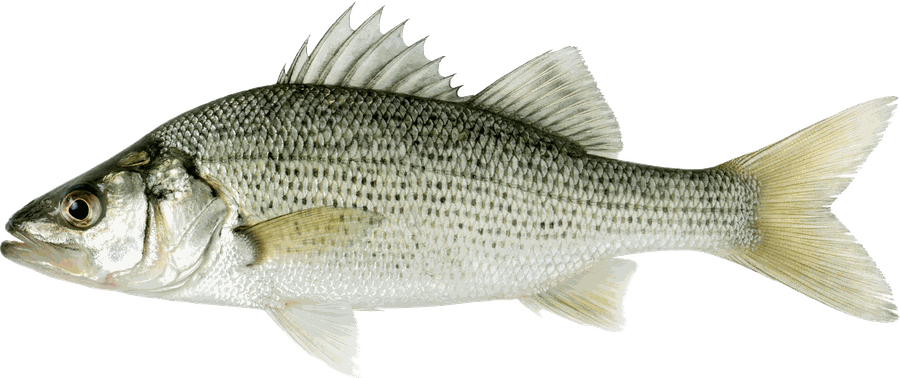
Bump Board's tactics library for White Perch — where to fish, what to tie on and how to fish it, season by season. In the app, these tips adapt live to the weather, the front and the light.
White Perch — Prespawn
Where to fish
- Prespawn is a staging climb toward a well-bracketed run: spawning spans 10–19 °C and peaks at 11–16 °C, so the fish gathering below 10 °C are staging, not spawning. Telemetry found the seasonal range expanding in spring as activity rose toward the spawning period — fish the widening staging water off the shallow spawning ground, in the direction of travel.
- The shoreward move is the shore pattern: landlocked populations move shoreward and toward tributary mouths to spawn in water under 7 m deep, as shallow as the top metre or so over the spawning bottom. Stage on the first deeper water off those shallows while the temperature is still in single digits.
- In flowing water the spring move is upstream toward the same shallow spawning ground. Fish the holding water below the spawning reaches first — the run loads progressively, and the earliest fish are the travellers staging under it, not fish already on the beds.
What to tie on
- Fish the spring end of a switching menu: this opportunist feeds on zooplankton when it is dense, on benthic invertebrates when it is not, and Lake Erie fish prey on perch eggs in spring. Small natural offerings in both stories — tiny swimming profiles for the plankton-feeding mood, small bottom offerings for the benthic one — cover what the research supports. No lure is named in the white perch literature, and none is invented here.
- Keep offerings small and close: prespawn fish are feeding on the climb, but the temperature curve still pays only 0.35 at 8 °C and 0.18 at 4 °C. This is a located-fish, short-cast season, not a power-fishing one.
How to fish it
- Time the day by the low-light shape, with its evidence label attached: the diel values — dawn 0.90, day 0.75, dusk 1.0, night 0.90 — rest on telemetry movement, nightly in the warm season, plus the account tradition of greater activity in low light. No stomach-by-hour study exists for this species. Fish dusk hardest, dawn next, and keep the day as a real shift, because movement is one step removed from feeding and the entry says so.
- Fish the warming trend: staging activity rises with the climb toward 10 °C, and spawning itself happens at dusk, so late-day warming water near the spawning ground is the prespawn window that matters most. A cold snap that drops the shallows back into single digits pauses the climb, on the curve if not yet on the beds.
- Expect findable groups rather than scattered fish: this is a schooling, semi-pelagic species, and its seasonal pulses — the spring aggregation above all — are carried by the season score because findability is half the catchability story for a school fish.
If it's still tough
- If the shallows are empty, the temperature has not arrived: below the 10 °C bottom of the spawning range there is no run to be early for. Drop to the staging water off the spawning ground and fish the travellers — or wait for the water, rather than changing baits on an empty bed.
- If staging fish are sluggish, check how cold you really are: winter fish were described as most active at 4.4–8.9 °C in the angler canon, and the model's floor at those temperatures is low but non-zero. Slow down, shrink the offering, and fish the warmest staging water in the last light of the day.
White Perch — Spawn
Where to fish
- The spawning band is convergent and specific: a range of 10–19 °C peaking at 11–16 °C, in water under 7 m deep — in lakes as shallow as the top metre or so — with adhesive eggs laid over clay, sand, shell and gravel, at dusk. The synthesis figure of 17.5 °C reads as the upper, egg-development end of the same family, not the run trigger, and the research keeps them separate: do not wait for 17.5 °C to fish the run.
- Fish the shallow spawning flats themselves and their first drop-off: lake fish spawn in the top water over the bottom, shoreward, in dense seasonal aggregations. The May season peak in the model — a full 1.0 — is this migration and aggregation peak carried as a season score, stated as such, not a claim that spawning fish feed hardest.
- Running-water fish move upstream to the same shallow ground and spawn at dusk over the same bottom types. Fish the reaches at the light change and the holding water just below them through the day — the run passes through it on its way up.
What to tie on
- There is no guarding state to fish: white perch give no parental care, lay adhesive eggs and leave, so the bass and panfish rule about nest-defending males feeding less does not exist here and is not imported. Aggregated spawning fish are travelling, schooling fish — present the mixed menu they actually eat, small profiles and small bottom offerings alike.
- Match the switch, not a fixed diet: feeding demonstrably flips between open-water zooplankton and bottom prey on prey-density thresholds, so a school ignoring a bottom offering may be feeding up in the water on dense plankton, and the reverse. Carry both stories in small sizes and let the school's depth choose between them.
How to fish it
- Dusk is the priced peak for a measured reason: spawning happens at dusk in the agency profile, and dusk is the transition into the nightly movement window the telemetry describes. The model's dusk value is 1.0, dawn 0.90, night 0.90, day 0.75. Build the spawn session around the evening and fish into the first dark hour.
- Fish the whole band, not just the peak: the run spans 10–19 °C across April to June in the northern range, so early fish at 10–12 °C and late fish at 17–19 °C are the same event at its edges. A school present but unhurried at the band's edge is staging between pulses — give it the dusk window before you judge it.
- Work an aggregation thoroughly before moving: spawning and migrating schools are the most findable this fish ever is, and findability is doing real work in this season's rating. Moving on quickly from located spawn fish trades the season's one certainty for a search.
If it's still tough
- If the beds are quiet at midday, that is the shape, not a failure: the day value is the lowest of the four even in the spawn window, and the event itself is a dusk event. Rest the water and return for the evening — or fish the staging drop-off below the flats, where travelling fish hold through the bright hours.
- If you are fishing warm water at the top of the band and the run seems already over, check the shallows at dusk once before you conclude it: at 17–19 °C you may be at the tail of the run rather than past the season, and the last pulses of a broadcast spawner still gather at the light change.
White Perch — Summer
Where to fish
- Summer is the warm dome, and it is warmer than its famous relative's: measured final preferences for the northern populations run 28.9–29.6 °C, the Ontario synthesis puts growth optimum at 28.5 °C and final preference at 29.8 °C, the agency optimum band is 27–32 °C, and consumption was still rising at 27.5 °C, the highest temperature ever tested — the peak was never located in a feeding tank. The model's plateau is 25–29 °C, entered from below on the consumption curve. A much warmer southern population measured 32.4 °C; the primary paper itself found the populations significantly different, so that value is kept in the record and out of this northern plateau.
- The northern warning belongs in this entry, not a footnote: at the latitudes of the served lakes — Ontario, Nova Scotia, the Northeast and the Great Lakes — the 25–29 °C plateau is a warm, shallow, mid-summer condition, not a typical one. Most summer days you are fishing the climb toward the plateau, in the low-to-mid 20s where the curve already pays 0.90 at 20 °C.
- Telemetry found the summer range contracted — fish hold a smaller home water in summer than in spring or fall. On a lake that means a located summer school is a resident school: mark it, fish it patiently, and expect it to still be in the neighbourhood tomorrow, working the local prey field from the same base.
What to tie on
- Fish the density switch, this species' defining diet science: when Daphnia are dense, adults feed up in the water on zooplankton; below the density and composition thresholds, the same fish switch to bottom invertebrates. Add the rest of the measured menu with size — midge and insect larvae, crustaceans, snails, fish eggs, and fish, including their own young, increasingly for larger fish. No lure is named in the white perch literature, and none is invented here; small profiles for the open-water mood and small bottom offerings for the benthic one are the supported pair.
- Oxygen has real numbers here, rare for a fish of this size: consumption starts falling at about 3.83 mg/L and growth at about 3.07 mg/L in the segmented-regression synthesis, full performance holds at 5 mg/L and above, and the agency optimum is anything over 4.6 mg/L. Carry the depth honestly — those thresholds rest on a single underlying study — and fish summer bottom water that still holds its oxygen.
How to fish it
- The summer clock leans nocturnal, on movement evidence labelled as movement: nightly upriver movements were favoured in summer and fall in the telemetry, and the account tradition has fish moving to surface and shoreward water at night and deeper by day. Dusk at 1.0 and night at 0.90 are the model's values; day at 0.75 keeps the daylight shift honest for a schooling feeder demonstrably present and catchable by day.
- Clarity barely moves this fish, and the entry will not pretend otherwise: the agency synthesis states turbidity has little effect at any life stage, lake fish were found preferring turbid, higher-conductivity water as a distribution, and larvae fed on prey concentration inside a high-turbidity zone. That is tolerance with occurrence support, not a dose-response — in stained summer water, fish on, and save your clarity worries for species whose record actually contains one.
- Salinity is context, not a summer lever: this is a euryhaline fish that lives from fresh water to full seawater, and adult telemetry found salinity had little effect on movement or activity. The served lakes are fresh water, and this entry imports no estuary lore — no tide tables, no brackish-water tricks — into a lake rating.
If it's still tough
- If summer fish will not take in the heat, first check whether you have run off the top of the dome: avoidance begins in the 31–34 °C family, and there is no single lethal point to quote — spring fish collected cold died at 26 °C while fall fish collected warm survived to 33 °C, with synthesis and tolerance families above that. In a heat wave, fish the coolest oxygenated water and the night, and never treat a hot shallow as safe water for a cold-season fish.
- If a basin's deep summer water has gone dead, think oxygen before bait: this fish avoids truly oxygen-free water in the field pattern, moving shoreward away from it in the big-lake record, even while being described as more tolerant of low oxygen than its yellow perch neighbours — and simultaneously sensitive enough to serve as a regulatory oxygen indicator. All three statements are in the record; together they mean: fish above the depleted layer, at 5 mg/L water where you can find it.
White Perch — Fall
Where to fish
- Fall carries this species' second measured pulse: telemetry activity increased during pre-winter foraging, and the seasonal range expanded again in autumn after the summer contraction. The season score reflects it — 0.95 in September, 0.90 in October — a genuine foraging bump before winter, not a glide down from summer. Fish it as a feeding season in its own right.
- The fall fish are ranging: with the range expanded and foraging up, schools work a bigger water than the summer residents did. Cover the feeding ground between the summer base and the deep wintering water — the fall fish are travelling that corridor and feeding on the way.
- In flowing water the autumn pattern has a direction the telemetry caught: the nightly movement that ran upstream through summer and fall is the same system that reverses in winter. Late fall, start favouring the lower, deeper holding water — the turn toward winter begins in the movement pattern before it shows in the temperature.
What to tie on
- The fall menu in the record is bottom prey and fish: diet seasonality runs from spring egg predation through the summer plankton switch to fall benthic and fish prey. Favour the bottom offerings and the small fish profiles as the water cools — the open-water plankton story fades first.
- Keep the sizes honest to the opportunist menu — larvae, crustaceans, snails and small fish — and fish them at the pace the cooling curve sets: the temperature value still pays 0.90 at 20 °C and 0.75 at 16 °C, so early and mid fall are full-speed feeding by this species' own numbers.
How to fish it
- Fish the low-light clock through the foraging pulse: dusk and night carry the movement pattern, dawn stays strong, and the fall fish are feeding with winter coming on. The best fall sessions are the evening ones over the travelling schools.
- Use the expanded range as permission to search: a summer mark that has gone quiet in fall is a fish that moved, in a season when moving and feeding are the same behaviour in the telemetry. Re-find the school along the corridor toward the wintering water rather than waiting for it to come back.
- Watch both ends of the thermometer: the telemetry also found seasonal temperature extremes suppressed activity at both ends of the year. The fall pulse lives in the middle band — a warm fall fishes long, and the first hard cold that drops the water toward the winter floor ends the pulse on schedule.
If it's still tough
- If fall fish vanish from the summer base, follow them, do not mourn them: range expansion in the telemetry is a measured behaviour, and the corridor toward deep wintering water is the search pattern. Check the deep pools and basins the winter accounts name — around 30 ft in the big-lake ice-fishery record — as the season turns.
- If the water has dropped into single digits and the pulse is clearly over, switch expectations with it: winter activity is reduced, not zero, and the winter pattern — located deep schools, fished slowly — replaces the fall search. Do not keep fishing a fall pattern at winter temperatures and call the fish lock-jawed.
White Perch — Winter
Where to fish
- Winter white perch are a dimmer, not a switch: telemetry activity was reduced in winter, the seasonal range contracted, and the day-night movement pattern that organises the warm season collapsed to a 13.8% frequency, against 49–58% in summer. The fish are in contracted, deep holding water — deep pools in the winter angling canon — at a season score of 0.25 in the coldest months.
- The lake winter address in the record is the deep basin: the recognised ice-fishery pattern holds fish in basins around 30 ft deep in the guide-sourced big-lake account, and the agency digest notes perch schooling densely and prowling for food in late winter and early spring. In open winter water, read the basin and its edges as the holding address, with the late-winter shallows as the season's turn.
- Carry the evidence's address honestly: the telemetry winter was measured in an estuary system, not under lake ice, and the lake winter pattern above rests on agency and angler records. The two agree that winter fish are deep, grouped and reduced — they do not agree because either one measured the other.
What to tie on
- Small, natural offerings fished close and slow over located schools: winter consumption is a fraction of the warm season's, and no winter-specific lure is named in the white perch literature. The angler canon's winter tackle — small jigs and tip-up presentations — is carried in this entry as canon with its label, not as a measured winter pattern.
- The winter-active band in that same canon is 4.4–8.9 °C, with fish feeding even under forming ice on sheltered bays in the accounts. Where your winter water sits in that band — inflows, sheltered bays, the warmest basins — it is the best winter water this entry can point you to.
How to fish it
- Timing matters least in winter, on the telemetry's own finding: with the day-night pattern's frequency collapsed to 13.8%, the dusk-first discipline of the warm season flattens out. Fish the located schools when conditions suit you, give each group real time, and let location do the work the clock does in May.
- Late winter is the turn, on agency evidence: the digest record calls late winter and early spring potentially the most productive season, with perch schooling densely on the prowl for food, and the historical record even holds a commercial through-ice net fishery on the Hudson system. As the season wanes, start checking the staging shallows again — the spring climb begins before the ice is gone.
- Expect the reversed winter movement if you are tracking schools: the nightly movement direction flipped in winter in the telemetry, downstream where summer ran upstream. A school's winter drift is not a broken pattern; it is the measured winter version of it, in the system it was measured in.
If it's still tough
- If a winter group will not take, move a short distance rather than changing the whole approach: contracted-range fish that are not feeding in this pool may be the neighbouring pool's school an hour later, and winter effort is too expensive for long casts into unsearched water. Location first, always, in the cold season.
- Know the floor honestly: the model's cold values are 0.18 at 4 °C and 0.10 at 2 °C — low because winter activity is measured as reduced, non-zero because it is also measured as continuing, with a documented winter fishery behind it. A blank winter session is within the evidence; a claim that the species shuts down entirely is not.
White Perch on the ice — Through the ice season
Where to fish
- The ice set for white perch is provisional, capped at Moderate confidence, and this entry carries that flag openly: a real, agency-documented ice fishery exists — winter seasons run from ice formation to the end of March in the Maine plan, the New Jersey digest calls late winter and early spring potentially the most productive season, and a commercial through-ice fishery is in the historical record — and telemetry measures a winter activity reduction rather than a shutdown. What has never been measured is winter feeding itself, the under-ice day-night shape, or any under-ice oxygen response. Fish the deep wintering basins, around 30 ft in the big-lake record, and the late-ice staging shallows.
- Late ice is the provisional set's best water: the densely schooling, prowling fish of the late-winter agency record are staging toward the spring run. As the season wanes, move with them from the basins toward the shallow spawning ground the spring entry describes.
What to tie on
- No ice-specific presentation is measured for white perch. The honest application of the winter evidence is small, natural offerings fished close and still over located deep schools — with the angler canon's jig and tip-up tradition named as canon, not measurement. Nothing is borrowed from the other temperate basses to dress this up: their winter files are theirs.
- Size to the winter end of the measured menu — small bottom invertebrates and tiny profiles — and deliver it to the fish: at winter activity levels, a school will not travel far for an offering, and the located-school discipline matters more than the choice between two small baits.
How to fish it
- The timing below is a labelled transfer, and says so: the under-ice shape in the model is the open-water low-light shape flattened — dawn 0.90, day 0.85, dusk 0.95, night 0.90 — with the flattening direction itself supported by telemetry, where the movement pattern's frequency collapsed from 49–58% in summer to 13.8% in winter. Fish dusk first, but do not abandon the daytime the way the open-water shape might tempt you to.
- Treat the oxygen numbers as transferred, because they are: the thresholds — consumption falling from about 3.83 mg/L, growth from about 3.07 mg/L, full performance at 5 mg/L — are open-water measurements, from a single underlying study, applied under ice as the provisional set's best available bounds. In a depleting basin late in the ice season, favour the water most likely to still hold its oxygen, and label that advice in your own mind as an inference.
- Use the late-ice build deliberately: winter range contraction means mid-winter schools are resident and findable, and the pre-spawn staging that follows is the first strong pattern of the new year. The ice season's last weeks are a scouting season for the run as much as a fishing season.
If it's still tough
- Mid-winter silence in a deep basin is usually location or season, not presentation: the provisional set exists because winter activity is real, and it is capped because winter feeding has never been measured for this species. Move between neighbouring basins and basin edges before you cycle baits — and if the whole system is quiet, that is a result the evidence accommodates.
- If late ice produces nothing in the basins, check the staging shallows before you quit the season: the agency record's most-productive window is exactly this turn, with schools dense and moving toward the spawning ground. The ice year's best white perch fishing, on the documented record, is its last chapter.
Where White Perch live
861 waters in the Bump Board dataset hold White Perch. A selection:
Ontario
- Apungsisagen Lake
- Big Otter Creek
- Bronte Creek
- Credit River
- Dinorwic Lake
- Dog Lake
- Don River East Branch
- Duffins Creek
- East Lake
- Echo Lake
- Elephant Lake
- Etobicoke Creek
- Four Mile Creek
- Frenchman's Bay
- Graham Creek
- Grassy Lake
- Grenadier Pond
- Grindstone Creek
- Harmony Creek
- Hoople Creek
- Humber River
- Kaministiquia River
- Kettle Creek
- Lake Erie
Plus 28 more Ontario waters — browse Ontario lakes.
Nova Scotia
- ABRAHAMS
- AGARD
- AINSLIE
- ALLEN
- ALMA
- AMAGUADEES
- AMEROS
- ANDREW
- ANNIS
- ARTHURS
- AYLESFORD
- BARNIE
- BARTLETTS
- BAYER
- BEAR
- BEAVER
- BEAVERBANK
- BEAVERHOUSE
- BEAVERTAIL
- BEAVERTAIL BASIN
- BEELERS
- BELLIVEAU
- BENNERY
- BENNETTS
Plus 300 more Nova Scotia waters — browse Nova Scotia lakes.
Connecticut
- Alexander Lake
- Amos Lake
- Amston Lake
- Ashland Pond
- Aspinook Pond
- Avery Pond
- Ball Pond
- Bantam Lake
- Batterson Park Pond
- Beseck Lake
- Billings Lake
- Broad Brook Reservoir
- Chapman Pond
- Colony Pond
- Columbia Lake
- Dooley Pond
- Easton Reservoir
- Glasgo Pond
- Great Brook Reservoir
- Great Hill Pond
- Hemlock Reservoir
- Hopeville Pond
- Lake Candlewood
- Lake Housatonic
Plus 35 more Connecticut waters — browse Connecticut lakes.
Delaware
Georgia
Indiana
Kansas
Massachusetts
- Althea Lake
- Ashumet Pond
- Bare Hill Pond
- Bartlett Pond
- Beck Pond
- Benton Pond
- Bloody Pond
- Blueberry Pond
- Buffumville Lake
- Carbuncle Pond
- Cedar Pond
- Center Pond
- Chauncy Lake
- Chebacco Lake
- Coes Reservoir
- College Pond
- Congamond Lakes
- Cook Pond
- Coonamessett Pond
- Curlew Pond
- Deep Pond
- Demond Pond
- Dug Pond
- East Waushacum Pond
Plus 112 more Massachusetts waters — browse Massachusetts lakes.
Maryland
Maine
- Adams Pond
- Anderson Pond
- Beaver Pond
- Beech Pond
- Berry Pond
- Big Hurd Pond
- Biscay Pond
- Bonny Eagle Pond
- Bowler Pond
- Boyd Pond
- Bradbury Lake
- Branch Pond
- Brettuns Pond
- Buker Pond
- Center Pond
- Chickawaukie Pond
- Cochnewagon Lake
- Cochrane Lake
- Coleman Pond
- Collins Pond
- Cooks Pond
- Cooper Pond
- Crescent Lake
- Crystal Pond
Plus 128 more Maine waters — browse Maine lakes.
Michigan
North Carolina
Nebraska
- Bluestem Lake
- Bowling Lake
- Branched Oak Lake
- Glenn Cunningham Lake
- Holmes Lake
- Oak Lake
- Pawnee Lake
- Rockford Lake
- Wildwood Lake
- Yankee Hill Lake
- Zorinsky Lake
New Hampshire
- Ayers Pond
- Baboosic Lake
- Berry Bay
- Bow Lake
- Brindle Pond
- Chalk Pond
- Chocorua Lake
- Contoocook Lake
- Country Pond
- Crescent Lake
- Crystal Lake
- Cummins Pond
- Deering Reservoir
- Drew Lake
- Eel Pond
- Everett Lake
- Gilmore Pond
- Goose Pond
- Gorham Pond
- Great Pond
- Halfmoon Lake
- Harvey Lake
- Highland Lake
- Horn Pond
Plus 42 more New Hampshire waters — browse New Hampshire lakes.
New York
- Burden Lake
- Collins Lake
- Copake Lake
- Cross Lake
- Jamesville Reservoir
- Lake Neatahwanta
- Lower Saranac Lake
- Onondaga Lake
- Otisco Lake
- Tomhannock Reservoir
Oklahoma
Pennsylvania
- Green Lane Reservoir
- Lake Luxembourg
- Lake Marburg
- Lake Nockamixon
- Lake Redman
- LeBoeuf Lake
- Ontelaunee Lake
- Pymatuning Reservoir
- Raystown Lake
Virginia
- Beaverdam Swamp Reservoir
- Burke Lake
- Diascund Creek Reservoir
- John H. Kerr Reservoir
- Lake Anna
- Lake Chesdin
- Lake Orange
- Lake Smith
- Leesville Reservoir
- Motts Run Reservoir
- Occoquan Reservoir
- Smith Mountain Lake
- Waller Mill Reservoir
- Western Branch Reservoir