Fishing tips & tactics
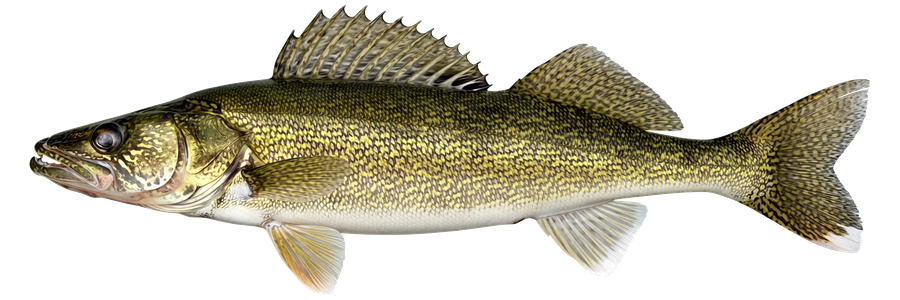
How to catch Walleye
Sander vitreus
Bump Board's tactics library for Walleye — where to fish, what to tie on and how to fish it, season by season. In the app, these tips adapt live to the weather, the front and the light.
Walleye — Prespawn
Where to fish
- Walleye are gathering near where they'll spawn — rocky shoals, gravel bars. The males arrive first and stay shallow longest, in just a few feet of water. The bigger females hold a little deeper, just off the spawning area, and slide shallow in the morning, in the evening and after dark.
- Walleye are gathering near where they'll spawn — the mouths of tributary creeks and rivers. The males arrive first and stay shallow longest, in just a few feet of water. The bigger females hold a little deeper, just off the spawning area, and slide shallow in the morning, in the evening and after dark.
- In rivers, work the holes, the current breaks, the eddies and below wing dams — anywhere a fish can rest out of the push and still watch food come past.
What to tie on
- A jig and minnow is the spring standard — 1/16- or 1/8-oz in the shallows. Keep the jig on the bottom: when in doubt about the weight, go heavier rather than lighter, because a jig that isn't touching bottom isn't fishing.
- A jig and minnow is the spring standard — 1/4- to 3/8-oz in river current. Keep the jig on the bottom: when in doubt about the weight, go heavier rather than lighter, because a jig that isn't touching bottom isn't fishing.
- In rivers, lean to oranges, yellows and chartreuses — but in unusually clear river water, dull browns, blacks and whites do better.
How to fish it
- Work the jig slowly along the bottom — lift it a few inches to a foot, let it fall back, and rest it. Cold water means cold fish: short lifts, long pauses.
- Time your best shallow spots for morning, evening, dark or a windy day — that's when the females visit. The males are there all day.
If it's still tough
- If the shallows are dead, drop to the first deeper water beside the spawning area and slow right down. A minnow on a plain hook under a slip bobber, set just off the bottom, gives a wary prespawn fish something it doesn't have to chase.
Walleye — Postspawn
Where to fish
- The spawn is done or winding down. The fish rest first, then start feeding again as the water warms — look just off the spawning shoals, then toward nearby flats. On the big lakes, postspawn walleye work flats roughly 7–20 ft deep before they scatter to summer structure.
- The spawn is done or winding down. The fish rest first, then start feeding again as the water warms — look just off the spawning shoals, then toward river mouths and nearby flats. Postspawn walleye work river mouth water roughly 7–20 ft deep before they scatter to summer structure.
What to tie on
- Jigs and minnows still lead, but this is when rigging and crankbaits come back into play — the books call the warming stretch ahead great for jigging, rigging and cranking alike. A live-bait rig (walking sinker, a leader of a foot to a metre, a size 2–4 hook) with a minnow is the slow search tool.
How to fish it
- Cover water slowly and don't expect violence — these are recovering fish. Work a spot thoroughly before you move; a resting fish often eats on the third or fourth good pass, not the first.
- The bait rotation turns with the season: minnows in spring, leeches as late spring arrives, crawlers into summer.
If it's still tough
- Anchor over the best-looking flat edge and slip-bobber a leech or minnow just off the bottom. Postspawn fish that won't chase will still rise a few inches for something hanging in front of them.
Walleye — Late spring
Where to fish
- Fish are moving out to the main lake — points, humps and reefs are turning on, and the first deep weedlines are worth checking. Expect them to use the same structure all summer from here; what changes is which side and how deep.
What to tie on
- The full menu works now: jigs, live-bait rigs and crankbaits. For rigging, match the walking sinker to the depth (1/16-oz in the shallows up to 1½ oz deep), a leader of about 30–90 cm — longer, up to several metres, on clear, pressured water, shorter in dark water — and a size 2–4 hook.
- Bait follows the calendar: minnows give way to leeches, and crawlers come on as the water warms.
How to fish it
- Jig the breaks, rig the flats, and troll cranks when you need to find them. When you mark fish, run a trolled crankbait 2–5 ft above them, never below — walleyes rise to a bait; they rarely dive for one.
If it's still tough
- Slow down and go to live bait on the spot-on-the-spot — the inside turn, the tip of the point, the one patch of rock. A slip bobber with a leech, set a foot above the rocks, soaks the exact spot a trolled bait just passes over.
- Slow down and go to live bait on the spot-on-the-spot — the inside turn, the one patch of rock. A slip bobber with a leech, set a foot above the rocks, soaks the exact spot a trolled bait just passes over.
Walleye — Summer
Where to fish
- Main-lake points, humps, reefs and deep weedlines are the summer addresses — plus a pattern many anglers miss: walleye suspended over the basins, following baitfish. On the Great Lakes the bait stacks 30–50 ft down and the walleye hang halfway down to it. If you're marking bait over deep water with nothing under it, look halfway up.
What to tie on
- Trolling is the summer search engine. Use dive curves to put crankbaits exactly where you want them — the prime trolling band is 15–25 ft — or add a snap weight: an ounce clipped on 20 ft ahead of the bait, with 100 ft of line out, runs the bait about 30% deeper than it would on its own (that method was tested at 2.0 mph).
- Colours follow the water: chrome, purple and naturals in clear water; clown, firetiger, chartreuse and wonderbread in stained water; UV and glow when it's overcast or the light is low; gold is the staple in tea-stained water. A black bait run high in the column silhouettes against the sky and gets noticed.
- Bottom bouncers with spinners or crawlers cover the breaks: an ounce of bouncer for every 10 ft of water, the line at about 45°, at 1.0–1.5 mph.
How to fish it
- Summer trolling speeds run 1.8–2.2 mph. Run baits 2–5 ft above the fish you mark, never below. With leadcore, one to two colours back with a stickbait reaches 15–22 ft at a slow 1.2–1.6 mph — a good way to comb a basin edge.
- Summer trolling speeds run 1.8–2.2 mph. Run baits 2–5 ft above the fish you mark, never below. With leadcore, one to two colours back with a stickbait reaches 15–22 ft at a slow 1.2–1.6 mph.
If it's still tough
- In the dog days the feed happens in short, intense windows, mostly in low light — be on deep structure at dawn and dusk instead of grinding at noon. At midday, the shaded side of the thickest cover and the deepest edge you can fish are the percentage plays.
Walleye — Early fall
Where to fish
- Cooling water pulls walleye back onto the points, humps and reefs and bunches them up on baitfish. It's becoming an edges season again — the same structure that worked in summer, fished a little shallower and slower as the water drops.
What to tie on
- Crankbaits still cover water — this is snap-weight season (an ounce 20 ft ahead of the bait, 100 ft out, for roughly 30% more depth) — but the jig and minnow starts taking its share back as the water cools.
How to fish it
- Ease the trolling speed down toward the cold-water range, 1.2–1.6 mph, and keep baits 2–5 ft above marked fish. Toward evening, check the tops of the points — fall fish slide up to feed as the light goes.
- Ease the trolling speed down toward the cold-water range, 1.2–1.6 mph, and keep baits 2–5 ft above marked fish. Toward evening, fall fish slide up to feed as the light goes.
If it's still tough
- If they won't chase, go vertical: a jig and minnow worked in place over the deep edge, lifted a few inches to a foot, dropped on a free fall and rested. Cold-shoulder fish eat a bait that isn't going anywhere.
Walleye — Fall
Where to fish
- Main-lake points, humps and reefs are the fall pattern — walleye bunch up on them, following the surviving baitfish and feeding up for winter. The biggest females use the deep edges: humps and points topping out around 25–35 ft are the classic spots.
- Fish the windward side, where the wind is pushing in and the chop is. Save the tops of the points and the shallower breaks for the last hour of the day — big fall females slide up for short evening feeding sprees, then drop back down.
- Fish the windward side, where the wind is pushing in and the chop is. Save the shallower breaks for the last hour of the day — big fall females slide up for short evening feeding sprees, then drop back down.
What to tie on
- A jig and a small fathead or shiner is the fall staple — 1/8-oz is the working size — and to cover water, troll a crankbait slowly, 1.2–1.6 mph in cold water, running it 2–5 ft above the fish you mark, never below.
- Jighead colour follows the water: blue in clear water, gold if it's tea-stained.
How to fish it
- Drag the jig, let it sit, drag it again, with a slight hop now and then. Keep it on the bottom and keep the pauses long — fall fish in cold water don't chase.
If it's still tough
- A small leech under a slip bobber, or on a dropshot shaken in place, is the old reliable — no matter the conditions, a walleye will eventually eat a small leech. And be on the shallow side of your best spot at dusk: the short feeding spree as the light goes is the best window of a fall day.
Walleye — Late fall
Where to fish
- The coldest open water of the year. Fish are on the deep edges of the points and humps, bunched tight and moving as little as they can get away with.
- The coldest open water of the year. Fish are in the river holes and deep breaks, bunched tight and moving as little as they can get away with.
What to tie on
- Jig and minnow, heavier as the depth demands. A stinger hook earns its keep now: cold fish nip tails.
- Jig and minnow, heavier as the depth and current demand — in rivers, 1/4- to 3/8-oz in the holes, breaks and eddies is the classic cold-water rig. A stinger hook earns its keep now: cold fish nip tails.
How to fish it
- Vertical and slow. Lift the jig a few inches to a foot, let it fall freely, rest it on the bottom. Long pauses aren't a mistake in near-freezing water — they're the presentation.
If it's still tough
- Put a minnow under a slip bobber just off the bottom on the best spot you have and give it time. Late-fall walleye feed in brief windows; being set up and still when a window opens beats running around looking for a better one.
Walleye on the ice — Early ice
Where to fish
- First ice is the fall pattern slowed down: start where the fish were in late fall, around any green weeds still standing — 10–16 ft is a good starting band, deeper by day, shallower at night. Dawn, dusk, and grey or snowy days are the feeding times, and overcast or snow stretches the midday bite.
What to tie on
- Five presentations cover first ice: a jigging spoon (Buck-Shot or Swedish Pimple class) with the treble tipped with a minnow head, a jig and minnow, a hardbait, a plain hook and minnow, and a glide bait.
How to fish it
- Pound the bottom so the lure puffs up a little cloud of sediment — that draws walleye in. And fish two rods with two jobs: an aggressive jigging rod to call them, and a deadstick or tip-up sitting still with a minnow. The loud rod brings them in; the quiet rod often catches them.
- Read their mood from how they come in: if they rush in and stall, downsize and lengthen the pauses. If they follow but won't commit, raise the lure slowly. If they slide away, go quiet or deadstick. They usually eat on the pause.
If it's still tough
- When a fish appears under you, don't reduce the show — keep the same energy that called it in. Half-hearted jigging loses more first-ice walleye than aggressive jigging ever scared.
Walleye on the ice — Mid ice
Where to fish
- Mid-winter, the fish have slid deeper — work the deeper breaks and basin edges off the same structure they used in fall, and lean harder on the dawn and dusk windows. Bright midday is the slowest ice fishing of the year; grey days and snowfall fish better through the middle hours.
- Mid-winter, the fish have slid deeper — work the deeper breaks off the same structure they used in fall, and lean harder on the dawn and dusk windows. Bright midday is the slowest ice fishing of the year; grey days and snowfall fish better through the middle hours.
What to tie on
- The same three presentations, a size smaller and a mood slower: jigging spoon tipped with a minnow head, jig and minnow, or a plain minnow on a deadstick beside the active rod.
How to fish it
- Use the cadence loop: rush-and-stall from the fish means downsize and lengthen pauses; a follow without a commit means raise slowly; a slide-away means go quiet or deadstick. They eat on the pause.
If it's still tough
- Set the deadstick and trust it. Mid-winter walleye that refuse everything moving will still take a minnow that isn't doing anything at all.
Walleye on the ice — Late ice
Where to fish
- Late ice pulls walleye back toward the shallows and toward the shoals they'll spawn on — the reverse of the fall move. Fish the staging water near spawning areas, shallower than mid-winter, and expect the low-light windows to get stronger as the season runs out.
- Late ice pulls walleye back toward the shallows and toward the creeks and rivers they'll spawn on — the reverse of the fall move. Fish the staging water near spawning areas, shallower than mid-winter, and expect the low-light windows to get stronger as the season runs out.
What to tie on
- Jigging spoons and jig-and-minnow combos lead again, with a deadstick minnow alongside — late-ice fish moving toward the spawn feed more willingly than mid-winter fish did.
How to fish it
- You can fish a little more aggressively than mid-winter, but keep the deadstick soaking — staging fish cruise, and the still rod intercepts the ones passing between your holes.
If it's still tough
- Move toward the spawning water, not away from it — if the staging spots are quiet, the fish are closer to the shoals than you think, especially at last light.
- Move toward the spawning water, not away from it — if the staging spots are quiet, the fish are closer to the creeks than you think, especially at last light.
Manitoba Master Angler
A Walleye of 71 cm (28 in) or better qualifies for Manitoba's Master Angler Program.
Where Walleye live
8,456 waters in the Bump Board dataset hold Walleye. A selection:
Manitoba
- Adam Lake
- Aikens Lake
- Archies Lake
- Arrow Lake
- Barren Lake
- Beaufort Lake
- Beautiful Lake
- Bell Lake
- Berens Lake
- Beresford Lake
- Betula Lake
- Big Bobs Lake
- Big Sand Lake
- Big Whiteshell Lake
- Bird Lake
- Black Beaver Lake
- Black Lake
- Boissevain Reservoir
- Bolton Lake
- Booster Lake
- Bower Lake
- Brereton Lake
- Burge Lake
- Burntwood Lake
Plus 166 more Manitoba waters — browse Manitoba lakes.
Ontario
- 16H-96, L.
- 17C-19, L.
- 20J-33, L.
- 21G-105, L.
- 21G-15, L.
- 5PB17-82, L.
- Aaron Lake
- Abamasagi Lake
- Abamategwia Lake
- Abazotikichuan Lake
- Abie Lake
- Abimatinu Lake
- Abinette River
- Abitibi River
- Abram Lake
- Abram Lake
- Acme Lake
- Ada Lake
- Adam Creek
- Adamhay Lake
- Addie Lake
- Adel Lake
- Adele Lake
- Aerofoil Lake
Plus 4,170 more Ontario waters — browse Ontario lakes.
Alabama
Arkansas
Arizona
Colorado
- Aurora Reservoir
- Barr Lake
- Bear Creek Lake
- Beckwith Reservoir
- Boyd Lake
- Brush Hollow Reservoir
- Carter Lake Reservoir
- Chatfield Lake
- Cherry Creek Lake
- Douglass Lake
- Eaglewatch Lake
- Erie Lake
- Horsetooth Reservoir
- Jackson Lake
- John Martin Reservoir
- Johnstown Reservoir
- Juniata Reservoir
- Lagerman Reservoir
- Lake Arbor
- Lake Loveland
- Lon Hagler Reservoir
- McCall Lake
- McIntosh Lake
- McPhee Reservoir
Plus 11 more Colorado waters — browse Colorado lakes.
Connecticut
- Batterson Park Pond
- Beach Pond
- Bigelow Pond
- Cedar Lake
- Gardner Lake
- Lake Candlewood
- Lake Housatonic
- Lake Saltonstall
- Lake Terramuggus
- Lake Zoar
- Long Pond
- Mashapaug Pond
- Mount Tom Pond
- Park Pond
- Pocotopaug Lake
- Rogers Lake
- Saugatuck Reservoir
- Squantz Pond
- Tyler Lake
- Wangumbaug Lake
- West Thompson Lake
- Woodridge Lake
- Woodridge Lake
Georgia
- Blue Ridge Lake
- Carters Lake
- Hartwell Lake
- Lake Rabun
- Lake Sidney Lanier
- Lake Tobesofkee
- Seed Lake
- Yonah Lake
Iowa
- Alligator Lake
- Big Creek Lake
- Big Lake
- Big Pond
- Black Hawk Lake
- Browns Lake
- Brushy Creek Lake
- Bussey Lake
- Butler Lake
- Center Lake
- Clear Lake
- Coralville Lake
- Crystal Lake
- Dead Lake
- Diamond Lake
- East Okoboji Lake
- Elk Lake
- Five Island Lake
- George Wyth Lake
- Gimmel Lake
- Green Valley Lake
- Greenfield Lake
- Half Moon Lake
- Hickory Grove Lake
Plus 36 more Iowa waters — browse Iowa lakes.
Idaho
- Lake Cascade
- Lake Pend Oreille
- Lower Goose Creek Reservoir
- Lucky Peak Lake
- Oneida Narrows Reservoir
- Ririe Reservoir
- Salmon Falls Creek Reservoir
Illinois
- Heidecke Lake
- Kinkaid Lake
- Lake Clinton
- Lake Decatur
- Lake Pittsfield
- Lake Shelbyville
- Lake Springfield
- Lake Storey
- Pierce Lake
- Shabbona Lake
- Siloam Springs Lake
Indiana
- Bass Lake
- Big Otter Lake
- Bixler Lake
- Bower Lake
- Cedar Lake
- Crooked Lake
- Dallas Lake
- Fish Lake
- Flint Lake
- Hackenburg Lake
- Henry Lake
- Lake Maxinkuckee
- Lake of the Woods
- Lawrence Lake
- Little Turkey Lake
- Loomis Lake
- McClish Lake
- North Chain Lake
- Otter Lake
- Pike Lake
- Pretty Lake
- Riddles Lake
- Royer Lake
- Saugany Lake
Plus 9 more Indiana waters — browse Indiana lakes.
Kansas
- Big Hill Lake
- Cedar Bluff Reservoir
- Cheney Reservoir
- Clinton Lake
- Coffey County Lake
- El Dorado Lake
- Hillsdale Lake
- Kanopolis Lake
- Kirwin Reservoir
- Lovewell Reservoir
- Marion Reservoir
- Melvern Lake
- Milford Lake
- Perry Lake
- Pomona Lake
- Waconda Lake
- Webster Reservoir
- Wilson Lake
Kentucky
Maryland
Michigan
- Allen Lake
- Au Sable Lake
- Au Train Lake
- Avery Lake
- Bankson Lake
- Baptist Lake
- Bar Lake
- Barton Lake
- Bass Lake
- Bass Lake
- Bassett Lake
- Bat Lake
- Baw Beese Lake
- Bear Lake
- Bear Lake
- Beaufort Lake
- Beaver Lake
- Beaver Lake
- Beaverhouse Lake
- Belleville Lake
- Ben-way Lake
- Bertha Lake
- Big African Lake
- Big Bear Lake
Plus 301 more Michigan waters — browse Michigan lakes.
Minnesota
- Adams Lake
- Agassa Lake
- Aitkin Lake
- Albert Lake
- Albert Lea Lake
- Alden Lake
- Alder Lake
- Allen Lake
- Alpine Lake
- Alton Lake
- Amber Lake
- Amelia Lake
- Anderson Lake
- Andrew Lake
- Andrusia Lake
- Ann Lake
- Ann Lake
- Anna Lake
- Annie Battle Lake
- Antler Lake
- Apple Lake
- Armstrong Lake
- Arrowhead Lake
- Arrowhead Lake
Plus 1,494 more Minnesota waters — browse Minnesota lakes.
Missouri
- Fellows Lake
- Forest Lake
- Harry S Truman Reservoir
- Lake Jacomo
- Lake of the Ozarks
- Lake Taneycomo
- Lawson Lake
- Longview Lake
- Mark Twain Lake
- Pomme de Terre Lake
- Smithville Lake
- Stockton Lake
- Table Rock Lake
Mississippi
Montana
- Bearpaw Lake
- Bighorn Lake
- Boxelder Lake
- Bynum Reservoir
- Canyon Ferry Lake
- Castle Rock Lake
- Church Slough
- Cow Creek Reservoir
- Dailey Lake
- Ester Lake
- Eureka Reservoir
- Eyraud Lakes
- Flat Lake
- Fort Peck Lake
- Fort Peck Trout Pond
- Frenchman Reservoir
- Fresno Reservoir
- Gartside Reservoir
- Hauser Lake
- Helena Valley Regulating Reservoir
- Hollecker Lake
- Holter Lake
- Jakes Reservoir
- Lake Five
Plus 17 more Montana waters — browse Montana lakes.
North Carolina
North Dakota
- Alkali Lake
- Alkaline Lake
- Antelope Lakes
- Armourdale Lake
- Arnies Lake
- Audubon Lake
- Barnes Lake
- Belcourt Lake
- Blacktail Lake
- Bowman-Haley Lake
- Braddock Dam
- Brush Lake
- Buffalo Lodge Lake
- Carpenter Lake
- Cedar Lake
- Clear Lake
- Clearwater Lake
- Coal Lake
- Coldwater Lake
- Cottonwood Lake
- Cottonwood Lake
- Crooked Lake
- Deer Lake
- Des Moines Lake
Plus 84 more North Dakota waters — browse North Dakota lakes.
Nebraska
- Big Alkali Lake
- Blue Lake
- Box Butte Reservoir
- Branched Oak Lake
- Buckskin Hills Lake
- Burchard Lake
- Calamus Reservoir
- Conestoga Lake
- Cottonmill Reservoir
- Crescent Lake
- Czechland Lake
- Davis Creek Reservoir
- Elwood Reservoir
- Enders Reservoir
- Farwell South Reservoir
- Frye Lake
- Harlan County Lake
- Harry Strunk Lake
- Holmes Lake
- Home Valley Lake
- Hugh Butler Lake
- Island Lake
- Jeffrey Reservoir
- Johnson Lake
Plus 24 more Nebraska waters — browse Nebraska lakes.
New Hampshire
New Jersey
- Alcyon Lake
- Alloway Lake
- Atsion Lake
- Barbour Pond
- Bargaintown Pond
- Batsto Lake
- Bennetts Pond
- Big Pine Lake
- Blair Lake
- Bostwick Lake
- Brainerd Lake
- Brushwood Pond
- Budd Lake
- Canistear Reservoir
- Cantys Lake
- Carnegie Lake
- Catfish Pond
- Cedar Lake
- Clarks Pond
- Clinton Reservoir
- Colliers Lake
- Conines Millpond
- Cranberry Lake
- Crater Lake
Plus 127 more New Jersey waters — browse New Jersey lakes.
New Mexico
Nevada
New York
- Ballston Lake
- Basic Creek Reservoir
- Bear Lake
- Black Lake
- Blake Falls Reservoir
- Bog Brook Reservoir
- Boyd Corners Reservoir
- Buck Pond
- Burden Lake
- Butterfield Lake
- Canadarago Lake
- Carry Falls Reservoir
- Cassadaga Lakes
- Cayuta Lake
- Cazenovia Lake
- Chautauqua Lake
- Clear Lake
- Conesus Lake
- Copake Lake
- Cranberry Pond
- Cross Lake
- Cuba Lake
- Delta Reservoir
- DeRuyter Reservoir
Plus 63 more New York waters — browse New York lakes.
Ohio
- Alum Creek Lake
- Atwood Lake
- Berlin Lake
- Buckeye Lake
- Burr Oak Reservoir
- Caesar Creek Lake
- Charles Mill Lake
- City Reservoir
- Clarence J Brown Reservoir
- Clendening Lake
- Delaware Lake
- Dillon Lake
- Dow Lake
- Ferguson Reservoir
- Findlay Reservoir
- Findlay Upground Reservoir Number Two
- Grand Lake
- Hammertown Lake
- Hoover Reservoir
- Indian Lake
- Jackson Lake
- Kiser Lake
- Lake Erie
- Lake Medina
Plus 34 more Ohio waters — browse Ohio lakes.
Oklahoma
- Broken Bow Lake
- Canton Lake
- Foss Reservoir
- Kaw Lake
- Lake Altus
- Oologah Lake
- Skiatook Lake
- Tenkiller Ferry Lake
Oregon
Pennsylvania
- Allegheny Reservoir
- Beechwood Lake
- Beltzville Lake
- Blue Marsh Lake
- Canoe Creek Lake
- Colver Reservoir
- Conneaut Lake
- Crooked Creek Lake
- Duck Harbor Pond
- East Branch Clarion River Lake
- Edinboro Lake
- Foster Joseph Sayers Lake
- Frances Slocum Lake
- Glendale Lake
- Green Lick Reservoir
- Hammond Lake
- Harveys Lake
- High Point Lake
- Hills Creek Lake
- Hinckston Run Reservoir
- Howard Eaton Reservoir
- Hunters Lake
- Kahle Lake
- Keystone Lake
Plus 37 more Pennsylvania waters — browse Pennsylvania lakes.
South Dakota
- Amsden Lake
- Angostura Reservoir
- Antelope Lake
- Bear Butte Lake
- Beaver Lake
- Beaver Lake
- Belle Fourche Reservoir
- Blue Dog Lake
- Brakke Dam
- Brant Lake
- Brush Lake
- Bullhead Lake
- Bullhead Lake
- Byre Lake
- Clear Lake
- Clear Lake
- Clear Lake
- Clear Lake
- Clubhouse Slough
- Cottonwood Lake
- Cottonwood Lake
- Cottonwood Lake
- Cottonwood Lake
- Curlew Lake
Plus 83 more South Dakota waters — browse South Dakota lakes.
Tennessee
- Calderwood Lake
- Center Hill Lake
- Cheatham Lake
- Cherokee Lake
- Chickamauga Lake
- Chilhowee Lake
- Cordell Hull Reservoir
- Dale Hollow Lake
- Douglas Lake
- Fort Loudoun Lake
- Fort Patrick Henry Lake
- Great Falls Lake
- Kentucky Lake
- Lake Ocoee
- Melton Hill Lake
- Nickajack Lake
- Normandy Lake
- Norris Lake
- Old Hickory Lake
- South Holston Lake
- Tellico Lake
- Tims Ford Lake
- Watauga Lake
- Watts Bar Lake
Texas
Utah
- Cutler Reservoir
- Deer Creek Reservoir
- Echo Reservoir
- Holmes Reservoir
- Lake Powell
- Mantua Reservoir
- Mona Reservoir
- Red Fleet Reservoir
- Sevier Bridge Reservoir
- Starvation Reservoir
- Utah Lake
- Willard Bay Reservoir
Virginia
- Burke Lake
- Claytor Lake
- Fluvanna Ruritan Lake
- Hungry Mother Lake
- John W. Flannagan Reservoir
- Lake Brittle
- Lake Chesdin
- Lake Cohoon
- Lake Orange
- Leesville Reservoir
- Little Creek Reservoir
- North Fork of Pound Lake
- Philpott Lake
- South Fork Rivanna River Reservoir
Vermont
- Arrowhead Mountain Lake
- Chittenden Reservoir
- Clyde Pond
- Fairfield Pond
- Island Pond
- Lake Carmi
- Lake Champlain
- Lake Memphremagog
- Lake Salem
Washington
- Banks Lake
- Billy Clapp Lake
- Boundary Lake
- Clark Pond
- Franklin D Roosevelt Lake
- Horsethief Lake
- Lake Entiat
- Lake Pateros
- Lake Wallula
- Liberty Lake
- Long Lake
- Lower Goose Lake
- Mesa Lake
- Moses Lake
- Potholes Reservoir
- Rufus Woods Lake
- Scooteney Reservoir
- Soda Lake
- Upper Goose Lake
Wisconsin
- 2780 Reservoir
- Alder Lake
- Aldridge Lake
- Alexander Lake
- Allequash Lake
- Alma Lake
- Altoona Lake
- Alva Lake
- Amacoy Lake
- Amber Lake
- Amik Lake
- Amnicon Lake
- Anderson Lake
- Anderson Lake
- Annabelle Lake
- Anvil Lake
- Apeekwa Lake
- Apple Falls Flowage
- Apple Lake
- Arbutus Lake
- Archibald Lake
- Armour Lake
- Armstrong Lake
- Arrowhead Lake
Plus 1,117 more Wisconsin waters — browse Wisconsin lakes.
West Virginia
- Burnsville Lake
- Cheat Lake
- Jennings Randolph Lake
- Moncove Lake
- Mount Storm Lake
- R. D. Bailey Lake
- Stonewall Jackson Lake
- Summersville Lake
- Summit Lake
- Tygart Lake
Wyoming
- Alcova Reservoir
- Bighorn Lake
- Boysen Reservoir
- Buffalo Bill Reservoir
- Deaver Reservoir
- Glendo Reservoir
- Goshen Hole Reservoir
- Grayrocks Reservoir
- Guernsey Reservoir
- Harrington Reservoir
- Hawk Springs Reservoir
- Healy Reservoir
- Keyhole Reservoir
- Kortes Reservoir
- Lake De Smet
- Ocean Lake
- Packer Lake
- Pathfinder Reservoir
- Post Lake
- Purdy Reservoir
- Rock Lake
- Seminoe Reservoir
- Sulphur Creek Reservoir
- Wardel Reservoir
Alberta
- Badger Lake
- Blood Indian Creek
- Brazeau Canal
- Burnstick Lake
- Chin Lake
- Crane Lake
- Fickle Lake
- Forty Mile Coulee
- Frog Lake
- Goose Lake
- Jackfish Lake
- Kehiwin Lake
- Keho Lake
- Lac Bellevue
- Lake Newell
- Little Bow Lake
- Little Bow Lake Reservoir
- McGregor
- McGregor Lake
- Milk River Ridge
- Milk River Ridge Reservoir
- Minnow Lake
- Pinehurst Lake
- Rattlesnake Lake
Plus 12 more Alberta waters — browse Alberta lakes.
Saskatchewan
- Anglin Lake 60 km N of Prince Albert
- Barrier Lake 10 km N of Archerwill
- Batka Lake Duck Mountain Prov. Park
- Buffalo Pound Lake 34 km NE of Moose Jaw
- Burton Lake 6 km N of Humboldt
- Crystal Lake 15 km SE of Sturgis
- D'Amour Lake 18 km W of Leask
- Greenwater Lake Greenwater Lake Prov. Park
- Kenosee Lake Moose Mountain Prov. Park
- Lac La Peche 18 km W of Marcelin
- Lac Pelletier 34 km SW of Swift Current
- Larsen Lake 20 km SE of Spiritwood
- Madge Lake Duck Mountain Prov. Park
- Marean Lake Greenwater Lake Prov. Park
- Martyns Lake 5 km NE of Chelan
- Melville Reservoir 3 km NW of Melville
- Moosomin Reservoir 8 km SW of Moosomin
- Nickle Lake 10 km SE of Weyburn
- Peck Lake 40 km N of Paradise Hill (town)
- Rhona Lake 35 km E of Wakaw
- Round Lake 19 km S of Greenwater Prov. Park
- Shutte Lake 25 km NW of Preeceville
- Struthers Lake 11 km NE of Crystal Springs (town)
- Theodore Reservoir 5 km NE of Theodore