
Fishing tips & tactics
How to catch Splake
Salvelinus fontinalis × Salvelinus namaycush
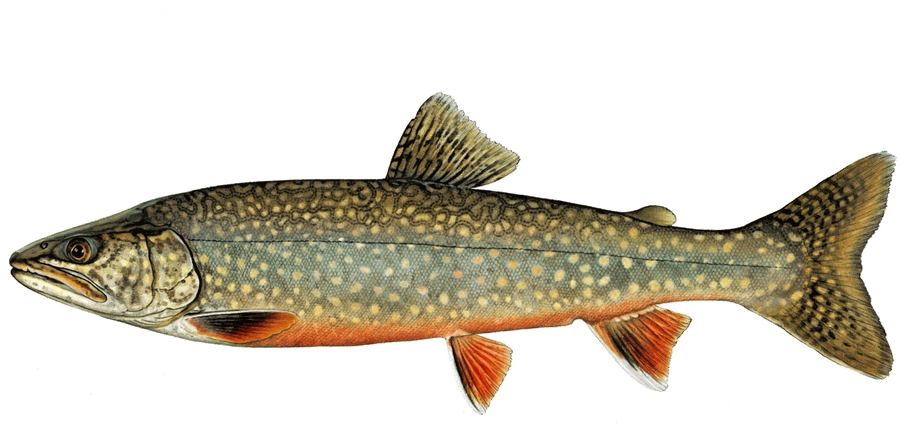
Bump Board's tactics library for Splake — where to fish, what to tie on and how to fish it, season by season. In the app, these tips adapt live to the weather, the front and the light.
Splake — Summer
Where to fish
- Splake's summer is a temperature story, and its evidence tier is stated plainly: this is a DERIVED set capped at Low confidence — but the temperature factor is the anchored part, built on splake's own growth experiments and field bounds rather than on its parents. The model's plateau is 10–14 °C (the overlap of the 10–16 °C habitat optimum, the growth-efficiency plateau from 10.6 °C and the lower half of the agency preferendum bracket of about 12–16 °C), with 16 °C held high rather than perfect: growth is real there in the hatchery, occupancy is not in the field.
- The summer address is the thermocline and the water just under it: Great Lakes hybrids concentrated in the thermocline in summer, Maine gillnetting took most fish in the thermocline and hypolimnion, and at Parvin Lake no splake was caught where the temperature exceeded 15.6 °C. Find the cool layer; the fish are in it, not at a fixed depth.
- Oxygen draws the floor of that layer: optimal habitat carries dissolved oxygen above 5 mg/L, tolerable to about 4, and in the Pallette Lake record the summer feeding zone was cut off at depth by inadequate oxygen while food persisted below it. Summer splake are squeezed between warm surface water and the oxygen wall — fish the band between.
What to tie on
- Summer splake are piscivores in the cool layer: rainbow smelt was the primary diet in all seasons and years in the Lake Superior programme with coregonines second, smelt, sticklebacks and alewives for the Huron fish, and crayfish plus yellow perch for larger Shield-lake fish. Fish-profile offerings matched to the local forage are the supported pattern; where no pelagic forage exists, the crayfish-and-perch menu is the Shield-lake alternative the diet work describes.
How to fish it
- Fish the band, not a depth: locate water in the 10–14 °C plateau that still holds oxygen above the 5 mg/L knee, wherever in the water column that band sits in your water, and present inside it exactly. A bait running above the band is in water the field record says is empty; one below the oxygen wall is under the fish.
- Hold the timing honestly: no diel feeding rhythm has ever been measured for splake — none, by any method — and the model's day shape is carried flat and neutral for exactly that reason. Do not plan a splake day around a splake-proven clock; the splake-measured levers are temperature, depth and season, and those are what this entry fishes.
If it's still tough
- If a shallow, unstratified lake goes dead in a heat wave, believe it: in years when one Maine pond stayed mixed with bottom temperatures above 21 °C, stocked splake were not recovered at all — they survived in stratified years and emigrated in the hot ones. Thermal absence is a population fact in that water, not a presentation problem.
- One identity caveat the set carries everywhere: this entry describes F1 hatchery splake as stocked. Second-generation fish and backcrosses are measurably different fish on the temperature and depth axes — the lake-trout backcross ran broader in summer than lake trout themselves — so a water holding mostly backcross fish will not sit where this entry puts F1 fish.
Splake — Fall
Where to fish
- Fall cooling reopens the shallows and builds toward the spawn: splake approach the spawning shoals from mid-October, and September fish are feeding fish on the move back up — fall stomachs in the Jack Lake record held mayfly nymphs, minnows and crayfish. Fish the cooling littoral and the routes toward the rocky shoals while the water falls back through the plateau.
- This is one of the two best seasons in the fish's own record: Manitoba's park guidance puts splake angling success best in fall and winter in its stocked Duck Mountain lakes, and the season curve peaks in October. Fall is not a wind-down for splake; it is the front half of its best window.
What to tie on
- The fall menu is the year's fullest: minnows and other small fish, crayfish, and the littoral insects of the shallows — fish-profile offerings first for the cooling-water piscivores, crayfish profiles in the Shield-lake pattern. Nothing fall-specific beyond the diet is measured; the seasonal change is in the fish's address, not its menu.
How to fish it
- Fish the cooling as a return to the band: as surface water drops back through the mid-teens into the 10–14 °C plateau, splake leave the summer layer and the whole littoral reopens — cover the shallowing water thoroughly, and expect schools, worked thoroughly when found, to carry the day.
- Late in the season, separate the feeders from the spawners by address: feeding fish work the littoral and the shoal approaches, while fish crowding the rocky shoals themselves from mid-October are arriving on spawning business. The fallspawn entry takes over on the shoals; this entry fishes the feeders around them.
If it's still tough
- If fall littoral fish are scarce at good temperatures, check the calendar against the shoals: the approach begins in mid-October, and a population sliding onto the spawning grounds can empty the feeding shallows before the spawn itself starts — move toward the shoal approaches rather than changing baits.
Splake — Winter
Where to fish
- Winter is a feeding season for splake, not a shutdown: the small wild winter stomach sample at Jack Lake held minnows and crayfish — wild fish with food in them in winter — and the season floor in the model is held at 0.60 on that evidence. In open winter water, fish the shallower feeding ground the stocked-lake pattern uses; winter distribution runs shallower than the summer layer.
- The fishery record agrees at scale: Maine's management plan caps a winter harvest rate explicitly (no more than 0.40 splake per acre) because the winter take is large enough to need one, and Manitoba's guidance names fall and winter as the best splake seasons in its stocked lakes. Winter splake are a target, not an accident.
What to tie on
- The winter menu is the measured one: minnows and crayfish from the winter stomachs — small fish-profile and crayfish-profile offerings, fished slowly in the shallow feeding water. No winter-specific presentation is measured for splake; the diet is the supported pattern.
How to fish it
- Fish winter as a located-fish season: schools and shallow feeding flats, worked thoroughly. The honest limit rides along — splake winterkill tolerance has never been measured, and these are disproportionately small stocked lakes, so late-winter oxygen is the standing question in this fish's winter (see the ice entry for the same point under ice).
- Spread winter effort through the day on located fish: the under-ice and open-water day shapes alike are carried neutral (flagged in the ice entry), never splake measurements — there is no splake clock to fish, so fish the located fish.
If it's still tough
- If a small stocked lake dies late in winter, suspect oxygen before presentation: the risk level in the model is derived from the small-lake class splake are planted into, not from a splake winterkill measurement (none exists) — move toward the best-oxygenated water you can find, or to a deeper water, before changing baits.
Splake — Spring
Where to fish
- Spring splake feed in the shallows: in the Jack Lake record, spring stomachs were full of littoral insects with mayfly nymphs dominant — a shallow, insect-feeding season before the summer depth pattern sets in. Fish the littoral feeding water while the surface is still cold and the fish are on it.
- As the surface warms through the teens, the season turns: splake leave the shallows for the cool layer, and by full summer no fish are found where the temperature exceeds about 15.6 °C. Fish spring as a closing shallow window — the warming itself is the movement cue.
What to tie on
- The spring menu is measured at both ends of the size range: insects (mayfly nymphs first) for the shallow feeders, with the ontogenetic switch behind them — invertebrates in year one, then fish forage, crayfish and perch-type prey for larger splake in the Shield-lake diet work. Insect-profile offerings for the littoral fish and small fish-profile offerings for the larger ones are the supported patterns; no lure is named in the splake literature, and none is invented here.
How to fish it
- Fish the temperature band, not the calendar: splake growth efficiency is already at its plateau from about 10.6 °C in the hatchery work, inside a habitat optimum of 10–16 °C — once the shallows reach the low teens, spring fish are at full activity in their band, and the pattern is strong until the surface pushes them deep.
- Work a found school thoroughly: strong schooling behaviour is part of this fish's record (gill-net catches gave further evidence of it), so a located school is a located fishery — the catch is in the finding, and thorough fishing of the find beats searching new shallows.
If it's still tough
- If the spring shallows are empty in warming water, the fish have already made the summer move — drop to the first cool water off the littoral rather than waiting for a shallow pattern the temperature has ended.
Splake — Fallspawn
Where to fish
- The spawn is directly observed, over ten seasons at Jack Lake: splake spawn on rocky shoals from late October to early November, approaching from mid-October, females selecting redd sites and dominant males turning aggressive, first eggs from about October 22–30 across years and last activity by mid-November. It is an intermediate ritual — redd-site selection from one parent's heritage on the other parent's lake-shoal ground — and it happens on the shoals, every year.
- The aggregation is a population event because of the hybrid's own clock: splake mature on the brook parent's schedule, not the lake parent's — a third of males and some females mature at age two, all fish by age four, against the lake parent's six to seven years. A stocked population runs a spawning aggregation every fall from its second year, in lakes where the lake parent would barely have begun.
What to tie on
- No spawn-specific offering is measured for splake, and no feeding bonus is issued for this window: shoal fish are there to spawn, not to feed, and their catchability is presence and aggression. Offerings fished at the shoal edges — where staging and post-spawn fish hold — are the honest pattern; baits worked over the redds are fishing the aggression, and the entry says so.
How to fish it
- Fish the edges and the staging water, not the redds: the programme-wide rule applies here on splake's own observed behaviour — a fish that charges on the shoal is defending a site, not feeding. Whether spawning splake also feed less has never been measured for this species, and no suppression coefficient is claimed; the location is the whole sourced pattern.
- Time the window by the observed calendar: approach from mid-October, peak spawning late October into early November, done by mid-November. Outside that bracket the shoals are just rocky shallows again, and the fall and winter entries are the better guides.
If it's still tough
- If shoal fish will not eat, they are working as observed — spawning fish on redds are not a feeding pattern to crack. Move off the shoals to the deeper staging water nearby, where pre- and post-spawn fish are the catchable ones.
Splake on the ice — Through the ice season
Where to fish
- The ice set for splake is issued as part of a DERIVED set, capped at Low confidence, and the entry carries that flag openly: winter feeding and a substantial winter fishery are documented for splake itself — wild winter stomachs with food in them, a record-class fish taken through a complete creel in December, agency winter-harvest management in Maine, and Manitoba guidance naming fall and winter as its best splake seasons, with the provincial record (25.75 in, Laurie Lake, February 2025) an ice fish. What has never been measured is under-ice activity structure, so the timing below is carried neutral and no oxygen level is scored — Low is exactly where that evidence sits.
- Fish the shallow end of the winter pattern: the northern stocked-trout canon (expert consensus, graded as such) puts winter splake over shallow, food-rich flats under about 10 ft, light-sensitive and easily spooked — consistent with the parents' under-ice shallowing. Step lightly, keep the hole shaded, and work the flats and their first edge.
What to tie on
- The winter diet is the tackle story: minnows and crayfish from the winter stomachs — small fish-profile and crayfish-profile offerings fished slowly over the shallow flats. No ice-specific presentation has ever been measured for splake; small and slow is the winter diet applied honestly, not an ice finding.
How to fish it
- Treat oxygen as the address in small stocked lakes: splake are planted into exactly the small, sometimes aerated parkland and Shield lakes where late-winter oxygen fails first, and the model's risk level (15, between its parents' 5 and 20, argued toward the small-lake parent by lake class) prices that. As the winter depletes a small lake, fish toward its best-oxygenated water — and know the level is derived, not a splake winterkill measurement: none exists.
- Timing under ice is carried neutral, and the entry says so: no under-ice day shape has ever been measured for splake, by any method. Spread effort through the day on located schools rather than betting the trip on a splake dawn that no study has ever timed.
If it's still tough
- Mid-winter silence in a small stocked lake is oxygen until proven otherwise: move toward better-oxygenated water before changing a single bait — and if the whole lake is depleted, absence can be a population fact (winterkill tolerance is unmeasured, so no lake's survival is promised), not a tactics failure.
Manitoba Master Angler
A Splake of 51 cm (20 in) or better qualifies for Manitoba's Master Angler Program.
Where Splake live
574 waters in the Bump Board dataset hold Splake. A selection:
Manitoba
- Aikens Lake
- Camp Lake
- Childs Lake
- Clearwater Lake
- Davidson Lake
- Deep Lake
- East Blue Lake
- Falcon Creek
- Falcon Lake
- Garner Lake
- Glad Lake
- Gull Lake
- Gull Lake
- High Lake
- Hunt Lake
- Lake Athapapuskow
- Laurie Lake
- Lyons Lake
- Marge Lake
- Mid Lake
- Olson Lake
- Perch Lake
- Persse Lake
- Two Mile Lake
Plus 4 more Manitoba waters — browse Manitoba lakes.
Ontario
- Albion Lake
- Alexander Lake
- Allan Lake
- Anderson Lake
- Anson Lake
- Anstruther Lake
- Arpin Lake
- Avery Lake
- Balancing Lake
- Banting Lake 55 (Unofficial Name)
- Bat Lake
- Battery Lake
- Bay Lake
- Bear Lake
- Beaver Lake
- Beaver River
- Beckett Lake
- Beebe L. 97
- Beishlag Lake
- Belle L.
- Big East Lake
- Big Mair L.
- Big McDougal Lake
- Bighead River
Plus 347 more Ontario waters — browse Ontario lakes.
Colorado
- Antero Reservoir
- Big Creek Lakes
- Carter Lake Reservoir
- Continental Reservoir
- Deep Ward Lake
- Gross Reservoir
- Horsetooth Reservoir
- Island Lake
- Jackson Gulch Reservoir
- Lake Dorothey
- Lake Isabel
- Lemon Reservoir
- Little Gem Reservoir
- Monument Lake
- North Lake
- Parvin Lake
- Platoro Reservoir
- Ridgway Reservoir
Idaho
- Granite Lake
- Horsethief Reservoir
- Lake Waha
- Little Payette Lake
- Lost Valley Reservoir
- Payette Lake
- Upper Payette Lake
Maine
- Basin Pond
- Beddington Lake
- Big Bennett Pond
- Biscay Pond
- Bradbury Lake
- Cochrane Lake
- Conroy Lake
- Deer Pond
- First Davis Pond
- Garland Pond
- Heart Pond
- Holbrook Pond
- Jimmie Pond
- Kingsbury Pond
- Lower Springy Pond
- Mayfield Pond
- Minnehonk Lake
- Round Mountain Pond
- Rowe Lake
- Toddy Pond
Michigan
- Bass Lake
- Beaver Lake
- Beaverhouse Lake
- Big Blue Lake
- Bills Lake
- Blind Lake
- Brush Lake
- Burt Lake
- Cass Lake
- Dodge Lake
- Elk Lake
- Glen Lake
- Golden Lake
- Grand Sable Lake
- Green Lake
- Hannah Webb Lake
- Imp Lake
- Island Lake
- Lake Bellaire
- Lake Ellen
- Lake Fanny Hooe
- Littlefield Lake
- Maceday Lake
- McComb Lake
Plus 7 more Michigan waters — browse Michigan lakes.
Minnesota
- Alder Lake
- Bath Lake
- Bean Lake
- Bear Lake
- Beaver Hut Lake
- Bogus Lake
- Bone Lake
- Boys Lake
- Dan Lake
- Divide Lake
- Dry Lake
- Echo Lake
- Esther Lake
- Hanson Lake
- High Lake
- Hogback Lake
- Iron Lake
- Kemo Lake
- Kimball Lake
- Lake Erskine
- Larson Lake
- Little Dry Lake
- Loft Lake
- Long Lake
Plus 17 more Minnesota waters — browse Minnesota lakes.
New York
- Connery Pond
- Debar Pond
- Goose Pond
- Green Pond
- Lake Ozonia
- Limekiln Lake
- Little Long Pond
- Meacham Lake
- Saint Regis Pond
- Stillwater Reservoir
- West Caroga Lake
Utah
- East Canyon Reservoir
- Fish Lake
- Forsyth Reservoir
- Huntington Reservoir
- Joes Valley Reservoir
- Jordanelle Reservoir
- Koosharem Reservoir
- Lost Creek Reservoir
- Mill Meadow Reservoir
- Millsite Reservoir
- Moon Lake
- Navajo Lake
- Panguitch Lake
- Red Creek Reservoir
Wyoming
- Adelaide Lake
- Bear Lake
- Brooklyn Lake
- Brooks Lake
- Calvert Lakes
- Class Lake
- Cloud Peak Reservoir
- Double Lake
- Granite Springs Reservoir
- Grassy Lake
- Kemmerer Reservoir
- Klondike Lake
- Lake Marie
- Lake Viva Naughton
- Lewis Lake
- Libby Lake
- Louis Lake
- Lower Medicine Lodge Lake
- Lower Sunshine Reservoir
- Martin Lake
- Mirror Lake
- Moon Lake
- Park Reservoir
- Rob Roy Reservoir
Plus 9 more Wyoming waters — browse Wyoming lakes.