Fishing tips & tactics
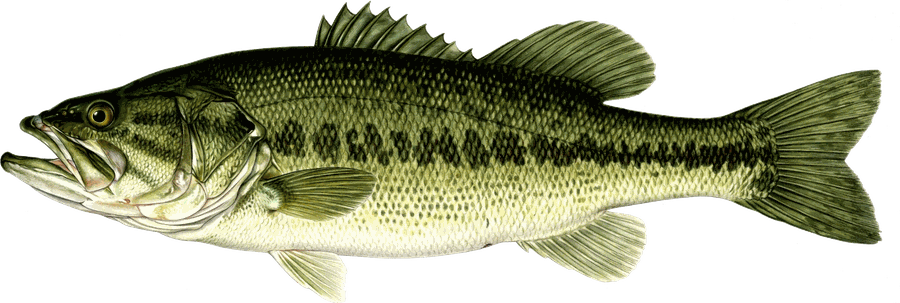
How to catch Largemouth Bass
Micropterus salmoides
Bump Board's tactics library for Largemouth Bass — where to fish, what to tie on and how to fish it, season by season. In the app, these tips adapt live to the weather, the front and the light.
Largemouth Bass — Prespawn
Where to fish
- Prespawn bass travel: from the ends of winter bluffs along migration routes — ditches, contours, tapering points, fallen trees — toward the spawning flats. They stage on isolated cover beside sheltered coves: stumps in murky lakes, and the boat docks near cove entrances.
What to tie on
- Search with power first: a lipless crankbait combs the expanses, and in stained prespawn water a deep crawfish-pattern crankbait rooted along the bottom is the classic. For the staged fish, flip a ½-oz jig in a Texas craw colour to the outside corners of dock pilings.
- Three jig colours cover 90% of everything for the jig school: black-and-blue, green pumpkin, Texas craw. Depth is the critical variable — get it right before you worry about anything else.
How to fish it
- The general sequence: search fast to find them, then slow down on them. Watch how the fish are hooked — a bass hooked outside the mouth, or lost fish, is the signal to change colour, not location.
If it's still tough
- Slow down on the staging cover itself — isolated stumps and dock corners beside the coves, pitched at precisely, more than once. Prespawn fish on a spot are worth repeated exact casts.
Largemouth Bass — Spawn
Where to fish
- Spawning bass are on flat, protected water — 10 ft or less on natural lakes — on beds you can often see. The biggest bass spawn first. Worth knowing: one of the great power fishermen personally skips the beds and stays with prespawn fish, which are more aggressive and heavier.
What to tie on
- For bedding fish, a jig worked so the skirt writhes while the head stays pinned in place — the movement is in the tip of the rod, not the retrieve. Soft plastics that stay in front of a guarding fish do the same job.
How to fish it
- On a bed, patience and precision beat variety: put the bait in the bed and keep it there, shaking it in place. Off the beds, the prespawn pattern is still running a cast away in slightly deeper water.
If it's still tough
- If bed fish won't commit, leave them and fish the staging cover — you'll catch more and bother the spawn less. Come back to the stubborn ones with the light change at the end of the day.
Largemouth Bass — Postspawn
Where to fish
- Postspawn is a real tough time — the books say so plainly. The fish rest at vertical cover: dock pilings, submerged bushes, standing-tree trunks — and they suspend near the surface, sunning themselves, close to the bedding areas. The shady side of the rest stations — flooded bushes, stumps, laydowns, weed patches — fishes first.
What to tie on
- Baits that stay in the strike zone instead of falling through it: walking topwaters, soft jerkbaits, stickworms, drop-shot rigs — presentations that hang high in the column where the resting fish are.
How to fish it
- Fish high and slow around the vertical cover, shade side first. A postspawn bass near the surface will rise a few inches for a bait that hovers; it won't dive for one that sinks past.
If it's still tough
- If the resting fish refuse everything, go back to prespawn water — the earliest spawners are already recovered and feeding there while the late spawners rest.
Largemouth Bass — Summer
Where to fish
- On northern natural lakes, summer largemouth are a weedline story — the whole game. The outside edge of the weeds, down to 20 ft and more, with the inside corners, dips and deeper cuts in the line as the prime ambush points. Weeds' irregularities — holes, pockets, points in the grass — are where the fish are.
What to tie on
- Pitch and punch: a 1-oz jig punched through the mats on braid, jigs and soft plastics along the outside edge. Crankbaits should run slightly deeper than the water you're fishing so they stay in contact and rip free through the weed tops.
- Blades follow conditions: Colorado blades for vibration and thump in cold, stained water and low light; willow blades for flash in clear, warm, baitfish situations; a tandem for stained water in the in-between temperatures.
How to fish it
- Flipping rules: most strikes come on the first fall, so the jig must fall vertically on slight slack — then shake it twice and feel. Heavy line is part of the technique: 25-lb fluorocarbon in cover, 60-lb braid in the extreme stuff.
- For big bass specifically, the old masters' rule runs against the power game: big bass come on quiet, slow baits — worms, tubes, jigs, grubs — presented with more triggering quality than attraction: small, natural, with eyespots and a random bottom-contact action.
If it's still tough
- When the weedline goes quiet at midday, the fish haven't left — they're in the thickest, shadiest part of it. Punch the mat itself, or wait for low light and fish the outside edge with topwater: dawn, dusk and overcast are topwater's hours.
Largemouth Bass — Early fall
Where to fish
- Fall is the most baitfish-oriented season of the year, and our lakes have no shad — here, bass feed on bluegill and shiners, and both are grass-oriented. So fall largemouth are in the weedy areas with their food, not chasing open-water bait.
What to tie on
- Shallow and medium crankbaits matched to the local baitfish's size, square-bills bounced tentatively through riprap and stumps, and always a noisy chugger tied on in fall — the books insist on the chugger. Match the forage's belly and back colours to your lake's bluegill and shiners.
How to fish it
- Keep lures off the bottom — fall baitfish suspend, and so do the bass. Pay more attention to where the baitfish are than to the surface temperature; the bait map is the bass map now.
- A white 3/4-oz jig with a chunk trailer, counted down to the baitfish's depth and swum with a slow, constant retrieve, is the jig school's fall play.
If it's still tough
- Turnover — when the water's in the low 60s to upper 50s °F — is short and difficult fishing. It stabilizes in the low to mid 50s; if you're in the churn, fish the clearest, most stable water you can find and slow down.
Largemouth Bass — Fall
Where to fish
- Cooling fall water keeps bass on the baitfish in the grass — weedy areas, weedline edges, and any shore the bait is using. It's still a baitfish season first and a temperature season second.
What to tie on
- Medium crankbaits at baitfish depth, the counted-down white jig swum slowly, and the chugger whenever the light is low or the surface is broken.
How to fish it
- Swim baits at the bait's level, not on the bottom. As the water drops through the 50s °F, slow the whole programme down a step at a time.
If it's still tough
- Fronts in fall are not the enemy they are in spring — one veteran calls fall fronts a good thing for bass. If a front just passed, stay on the bait instead of retreating to deep water.
Largemouth Bass — Late fall
Where to fish
- Late-fall bass slide toward winter: the deepest structure near the remaining green weeds, steep banks and the basins they'll winter in — 15–30 ft on natural lakes. Northern banks still warm fastest on sunny days.
What to tie on
- The winter kit arriving early: suspending jerkbaits, heavy football jigs dragged slowly, and crankbaits only on the warmer afternoons.
How to fish it
- Drag slowly, pause long, and fish the warmest part of the day. The year's metabolism is winding down — match it.
If it's still tough
- Downsize the trailer and trim the skirt. Late-fall bass target smaller prey, and a smaller profile is often the whole fix.
Largemouth Bass — Earlyspring
Where to fish
- The year's coldest bass live in the deepest water they'll use — on natural lakes, the deep flats and basins in about 15–30 ft. Structure is vertical and fast-sloping, close to a flat, and northern banks are warmest. Avoid water a cold north wind is hitting. This is the least active bass fishing of the year, and it's a patience game.
What to tie on
- A suspending jerkbait is the favourite winter artificial of the power-fishing school — toward the upper end of the cold range, a crankbait joins it. With a jig: in clear lakes, a heavy 3/4- to 1-oz green pumpkin football jig; in murky water, a ½-oz black-and-blue flipping jig on steep channel banks.
How to fish it
- Drag the football jig slowly on points, humps and rockpiles. Cold bass target small prey — if you're not getting bit, trim the jig's skirt and downsize the trailer before you change spots.
If it's still tough
- Go smaller and slower still, and fish the warmest bank you can find. In near-freezing water a bass may inspect a bait for a long time — the pause is the presentation.
Largemouth Bass on the ice — Through the ice season
Where to fish
- Through the ice, bass winter in the deepest water of their year — deep flats and basins, 15–30 ft on natural lakes, near the cover they'll use in spring. They're most active in the first weeks after freeze-up and again at late ice; the middle of winter is their quietest time.
What to tie on
- The one book teaching there is: ice-bound bass can be tempted with a small jig or live bait. Small is the operative word — winter bass target small prey in everything the books describe.
How to fish it
- Fish it small, slow and close to the bottom over the deep flats near spring structure — and give late ice a second look, when the season's second activity window opens.
If it's still tough
- If mid-winter bass won't go, that's the season, not your technique — the books describe this as their least active time of year. Save the effort for early and late ice.
Manitoba Master Angler
A Largemouth Bass of 46 cm (18 in) or better qualifies for Manitoba's Master Angler Program.
Where Largemouth Bass live
11,756 waters in the Bump Board dataset hold Largemouth Bass. A selection:
Manitoba
- Barren Lake
- Bower Lake
- Deloraine Reservoir
- Falcon Lake
- Goudney Reservoir
- Gull Lake
- Gull Lake
- Irwin Lake
- Jackfish Lake
- Jessica Lake
- Killarney Lake
- Lac Du Bonnet
- Lake Irwin
- Lake Minnewasta
- Lake of the Woods
- Lake Wahtopanah
- Mary Jane Reservoir
- Max Lake
- Minnedosa Lake
- Minnewasta Lake
- Moose Lake
- Rock Lake
- Sandy Lake
- Shoal Lake
Plus 5 more Manitoba waters — browse Manitoba lakes.
Ontario
- Abes Lake
- Ada Lake
- Adams Lake
- Adams Lake
- Agate Lake
- Ague Lake
- Ahmic Lake
- Ainslie Lake
- Aird Lake
- Ajax Lake
- Albert Lake
- Alder Creek
- Alder Lake
- Allen Lake
- Allumette Lake
- Amable du Fond River
- Amable Lakes
- Amaleen Lake
- Andrews Lake
- Anna Lake
- Annies Lake
- Anstruther Lake
- Arab Lake
- Aremis Lake
Plus 1,722 more Ontario waters — browse Ontario lakes.
Alabama
- Aliceville Lake
- Bankhead Lake
- Bartletts Ferry Lake
- Bear Creek Reservoir
- Cedar Creek Reservoir
- Claiborne Lake
- Coffeeville Lake
- Gantt Lake
- Guntersville Lake
- H Neely Henry Lake
- Holt Lake
- Jordan Lake
- Lake Demopolis
- Lake Tholocco
- Lake Tuscaloosa
- Lay Lake
- Little Bear Creek Reservoir
- Logan Martin Lake
- Martin Lake
- Mitchell Lake
- Pickwick Lake
- Point A Lake
- R E 'Bob' Woodruff Reservoir
- R L Harris Reservoir
Plus 9 more Alabama waters — browse Alabama lakes.
Arkansas
- Beaver Lake
- Blue Mountain Lake
- Bull Shoals Lake
- De Gray Lake
- Greers Ferry Lake
- Harris Brake
- Lake Atkins
- Lake Chicot
- Lake Dardanelle
- Lake Greeson
- Lake Maumelle
- Lake Monticello
- Millwood Lake
- Nimrod Lake
- Norfork Lake
- Upper White Oak Lake
Arizona
- Alamo Lake
- Bartlett Reservoir
- Bear Canyon Lake
- Becker Lake
- Black Canyon Lake
- C.C. Cragin Reservoir
- Canyon Lake
- Cataract Lake
- Chevelon Canyon Lake
- Dogtown Reservoir
- Horseshoe Reservoir
- Knoll Lake
- Lake Pleasant
- Patagonia Lake
- Theodore Roosevelt Lake
- Willow Springs Lake
- Woods Canyon Lake
California
- Antelope Lake
- Diamond Valley Lake
- Don Castro Reservoir
- Horseshoe Lake
- Jordan Pond
- Lake Almanor
- Lake Anza
- Lake Chabot
- Lake Davis
- Lake del Valle
- Lake Temescal
- Perris Reservoir
- Rock Lake
- Round Valley Reservoir
- Rucker Lake
- Shinn Pond
- Silverwood Lake
- Skinner Reservoir
- Tule Lake
- White Pines Lake
Colorado
- Aurora Reservoir
- Banner Lakes
- Barr Lake
- Bear Creek Lake
- Berkeley Lake
- Blackrock Lake
- Boyd Lake
- Brush Hollow Reservoir
- Bufflehead Lake
- Carter Lake Reservoir
- Chatfield Lake
- Cherry Creek Lake
- Cottonwood Lake
- Crawford Reservoir
- Croke Reservoir
- Crown Hill Lake
- Daigre Reservoir
- Dawn Reservoir
- Denny Lake
- Dixon Reservoir
- Douglass Lake
- Eaglewatch Lake
- Echo Canyon Reservoir
- Erie Lake
Plus 59 more Colorado waters — browse Colorado lakes.
Connecticut
- Alexander Lake
- Amos Lake
- Amston Lake
- Anderson Pond
- Andover Lake
- Angus Park Pond
- Ashland Pond
- Aspetuck Reservoir
- Aspinook Pond
- Avery Pond
- Babcock Pond
- Baldwins Pond
- Ball Pond
- Baltic Reservoir
- Bantam Lake
- Barkhamsted Reservoir
- Bashan Lake
- Batterson Park Pond
- Beach Pond
- Beachdale Pond
- Beseck Lake
- Bigelow Pond
- Billings Lake
- Birge Pond
Plus 215 more Connecticut waters — browse Connecticut lakes.
Delaware
- Abbotts Pond
- Andrews Lake
- Becks Pond
- Blairs Pond
- Chipman Pond
- Concord Pond
- Coursey Pond
- Craigs Pond
- Derby Pond
- Garrisons Lake
- Griffith Lake
- Hearns Pond
- Horseys Pond
- Ingram Pond
- Killen Pond
- Lums Pond
- McColley Pond
- McGinnis Pond
- Millsboro Pond
- Moores Lake
- Mud Millpond
- Portsville Millpond
- Raccoon Pond
- Records Pond
Plus 4 more Delaware waters — browse Delaware lakes.
Florida
- Alligator Lake
- Blue Cypress Lake
- Crescent Lake
- Dead Lakes
- Deer Point Lake
- Hurricane Lake
- Lake George
- Lake Istokpoga
- Lake Jackson
- Lake Kissimmee
- Lake Monroe
- Lake Okeechobee
- Lake Panasoffkee
- Lake Parker
- Lake Rousseau
- Lake Rowell
- Lake Sampson
- Lake Talquin
- Lake Tarpon
- Lake Tohopekaliga
- Lake Trafford
- Lake Victor
- Lake Weir
- Lake Weohyakapka
Plus 7 more Florida waters — browse Florida lakes.
Georgia
- Allatoona Lake
- Blue Ridge Lake
- Carters Lake
- Hamburgh Millpond
- Hartwell Lake
- High Falls Lake
- J. Strom Thurmond Reservoir
- Jackson Lake
- Lake Blackshear
- Lake Burton
- Lake Oconee
- Lake Oliver
- Lake Rabun
- Lake Seminole
- Lake Sidney Lanier
- Lake Sinclair
- Lake Tobesofkee
- Nottely Lake
- Randy Poynter Lake
- Richard B Russell Lake
- West Point Lake
Hawaii
Iowa
- Ada Hayden Heritage Park Lake
- Alice Wyth Lake
- Alligator Lake
- Arrowhead Lake
- Backbone Lake
- Badger Lake
- Beaver Lake
- Beeds Lake
- Big Creek Lake
- Big Lake
- Big Woods Lake
- Black Hawk Lake
- Blue Lake
- Browns Lake
- Brushy Creek Lake
- Bussey Lake
- Butler Lake
- Cedar Lake
- Cedar Lake
- Center Lake
- Central Park Lake
- Clear Lake
- Cold Springs
- Coralville Lake
Plus 104 more Iowa waters — browse Iowa lakes.
Idaho
- Anderson Lake
- Avondale Lake
- Ben Ross Reservoir
- Benewah Lake
- Black Canyon Reservoir
- Black Lake
- Blue Lake
- Blue Lake
- Brush Lake
- C J Strike Reservoir
- Campbell Ponds
- Carey Lake
- Cave Lake
- Chase Lake
- Chatcolet Lake
- Cocolalla Lake
- Coeur d'Alene Lake
- Condie Reservoir
- Crane Creek Reservoir
- Crane Falls Lake
- Crowthers Reservoir
- Dawson Lake
- Deep Creek Reservoir
- Devil Creek Reservoir
Plus 48 more Idaho waters — browse Idaho lakes.
Illinois
- Argyle Lake
- Baldwin Lake
- Braidwood Power Plant Cooling Pond
- Canton Lake
- Carlyle Lake
- Cedar Lake
- Coffeen Lake
- Crab Orchard Lake
- Dawson Lake
- Devils Kitchen Lake
- Eureka Lake
- Evergreen Lake
- Forbes Lake
- Governor Bond Lake
- Heidecke Lake
- Horseshoe Lake
- Kinkaid Lake
- Lake Clinton
- Lake Decatur
- Lake Glenn Shoals
- Lake Jacksonville
- Lake Le-Aqua-Na
- Lake Lou Yaeger
- Lake Mattoon
Plus 20 more Illinois waters — browse Illinois lakes.
Indiana
- Adams Lake
- Appleman Lake
- Atwood Lake
- Ball Lake
- Banning Lake
- Barr Lake
- Barton Lake
- Bass Lake
- Baugher Lake
- Bear Lake
- Beaver Dam Lake
- Bell Lake
- Big Chapman Lake
- Big Lake
- Big Long Lake
- Big Otter Lake
- Bixler Lake
- Black Lake
- Blue Lake
- Bower Lake
- Brokesha Lake
- Buck Lake
- Cass Lake
- Cedar Lake
Plus 133 more Indiana waters — browse Indiana lakes.
Kansas
- Big Hill Lake
- Cedar Bluff Reservoir
- Cheney Reservoir
- Clinton Lake
- Coffey County Lake
- Douglas Lake
- El Dorado Lake
- Fall River Lake
- Hillsdale Lake
- Kanopolis Lake
- Keith Sebelius Lake
- Kirwin Reservoir
- La Cygne Lake
- Lovewell Reservoir
- Marion Reservoir
- Melvern Lake
- Milford Lake
- Perry Lake
- Toronto Lake
- Tuttle Creek Lake
- Waconda Lake
- Webster Reservoir
- Wilson Lake
Kentucky
- Barren River Lake
- Beaver Lake
- Beulah Lake
- Boltz Lake
- Briggs Lake
- Buckhorn Lake
- Bullock Pen Lake
- Cannon Creek Lake
- Cap Mauzy Lake
- Carpenters Lake
- Cave Run Lake
- Cedar Creek Lake
- Clear Creek Lake
- Combs Lake
- Corinth Lake
- Dewey Lake
- Elmer Davis Lake
- Fagan Branch Lake
- Fishpond Lake
- Fishtrap Lake
- Grayson Lake
- Green River Lake
- Greenbo Lake
- Guist Creek Lake
Plus 22 more Kentucky waters — browse Kentucky lakes.
Louisiana
- Anacoco Lake
- Bayou D'Arbonne Lake
- Black Bayou Lake
- Black Lake
- Caddo Lake
- Caney Creek Reservoir
- False River
- Ivan Lake
- John K. Kelly Grand Bayou Reservoir
- Kepler Creek Lake
- Lake Bistineau
- Lake Cataouatche
- Lake Chicot
- Lake Maurepas
- Lake Rodemacher
- Lake Saint Joseph
- Lake Salvador
- Mill Creek Reservoir
- Saline Lake
Massachusetts
- Aldrich Lake
- Althea Lake
- Alum Pond
- Ames Long Pond
- Arcadia Lake
- Ashfield Pond
- Ashland Reservoir
- Ashmere Lake
- Ashumet Pond
- Asnacomet Pond
- Baddacook Pond
- Badluck Lake
- Baker Pond
- Baldpate Pond
- Bare Hill Pond
- Barret Pond
- Barrett Pond
- Bartlett Pond
- Beaver Pond
- Beck Pond
- Bell Pond
- Benedict Pond
- Benton Pond
- Berry Pond
Plus 252 more Massachusetts waters — browse Massachusetts lakes.
Maryland
- Blairs Valley Lake
- Centennial Lake
- Clopper Lake
- Deep Creek Lake
- Johnson Pond
- Lake Artemesia
- Leonard Pond
- Liberty Lake
- Little Seneca Lake
- Loch Raven Reservoir
- Piney Run Lake
- Prettyboy Reservoir
- Saint Marys Lake
- Unicorn Mill Pond
- Wheatley Lake
- Wye Mills Community Lake
Maine
- Adams Pond
- Adams Pond
- Allen Pond
- Beaver Pond
- Belden Pond
- Berry Pond
- Biscay Pond
- Black Pond
- Bonny Eagle Pond
- Brainard Pond
- Buker Pond
- Burgess Pond
- Cain Pond
- Cargill Pond
- Clark Cove Pond
- Cochnewagon Lake
- Coffee Pond
- Coleman Pond
- Collins Pond
- Crescent Lake
- Cross Pond
- Crystal Lake
- Crystal Pond
- Crystal Pond
Plus 83 more Maine waters — browse Maine lakes.
Michigan
- Ackerman Lake
- Adams Lake
- Alderman Lake
- Algoe Lake
- Algonquin Lake
- Allen Lake
- Alma Lake
- Amaung Lake
- Anderson Lake
- Andrus Lake
- Appleton Lake
- Archer Lake
- Armstrong Lake
- Arnold Lake
- Ashford Lake
- Atodd Lake
- Au Sable Lake
- Au Train Lake
- Austin Lake
- Avalon Lake
- Avery Lake
- Badger Lake
- Bailey Lake
- Bair Lake
Plus 1,074 more Michigan waters — browse Michigan lakes.
Minnesota
- Achman Lake
- Adney Lake
- Airport Lake
- Aitkin Lake
- Albert Lake
- Alden Lake
- Alice Lake
- Amber Lake
- Amelia Lake
- Anderson Lake
- Anderson Lake
- Andrew Lake
- Andrusia Lake
- Ann Lake
- Ann Lake
- Anna Lake
- Annie Battle Lake
- Antler Lake
- Armstrong Lake
- Arrowhead Lake
- Arrowhead Lake
- Arthur Lake
- Artichoke Lake
- August Lake
Plus 1,592 more Minnesota waters — browse Minnesota lakes.
Missouri
- Atkinson Lake
- Binder Lake
- Blind Pony Lake
- Blue Springs Lake
- Clearwater Lake
- Crowder Lake
- Edwin A Pape Lake
- Fellows Lake
- Forest Lake
- Hamilton Reservoir
- Harry S Truman Reservoir
- Higginsville Reservoir
- Hunnewell Lake
- Kellogg Lake
- Lake Jacomo
- Lake of the Ozarks
- Lake Paho
- Lake Taneycomo
- Lawson Lake
- Limpp Lake
- Little Dixie Lake
- Long Branch Lake
- Longview Lake
- Marceline Old Reservoir
Plus 14 more Missouri waters — browse Missouri lakes.
Mississippi
- Aberdeen Lake
- Aliceville Lake
- Arkabutla Lake
- Bailey Lake
- Bay Springs Lake
- Bee Lake
- Chotard Lake
- Columbus Lake
- Enid Lake
- Geiger Lake
- Grenada Lake
- Horseshoe Lake
- Jefferson Davis Lake
- Lake Bill Waller
- Lake Bogue Homo
- Lake Claude Bennett
- Lake Columbia
- Lake Ferguson
- Lake Lamar Bruce
- Lake Lowndes
- Lake Mary Crawford
- Lake Monroe
- Lake Tangipahoa
- Lake Walthall
Plus 10 more Mississippi waters — browse Mississippi lakes.
Montana
- Alvord Lake
- Anita Reservoir
- Arapooish Pond
- Ayers Reservoir
- Bighorn Lake
- Blanchard Lake
- Bootjack Lake
- Broadview Pond
- Bull Lake
- Butch Reservoir
- Canyon Ferry Lake
- Carters Pond
- Castle Rock Lake
- Church Slough
- Cow Creek Reservoir
- Crystal Lake
- Don Reservoir
- Dry Lake Reservoir
- Eightmile Springs
- Faber Reservoir
- Fennon Slough
- Flathead Lake
- Forsman Reservoir
- Fort Peck Lake
Plus 44 more Montana waters — browse Montana lakes.
North Carolina
- B. Everett Jordan Lake
- Buckhorn Reservoir
- Chatuge Lake
- Lake Cammack
- Lake Gaston
- Lake Mattamuskeet
- Lake Norman
- Lake Waccamaw
- Phelps Lake
- Santeetlah Lake
- Shearon Harris Reservoir
North Dakota
- Camels Hump Lake
- Crown Butte Lake
- Fish Creek Lake
- Harmon Lake
- Horseshoe Lake
- Kettle Lake
- Nelson Lake
- North Lemmon Lake
- Raleigh Reservoir
- Red Willow Lake
- Sather Lake
- Wood Lake
Nebraska
- Agate Dam Reservoir
- Alexandria Reservoir
- Ansley Reservoir
- Arnold Lake
- Atkinson Lake
- Big Alkali Lake
- Birdwood Lake
- Blue Lake
- Bluestem Lake
- Board Gate Dam Reservoir
- Bowling Lake
- Bowman Lake
- Box Butte Reservoir
- Branched Oak Lake
- Buckskin Hills Lake
- Burchard Lake
- Carter Lake
- Clear Lake
- Clear Lake
- Conestoga Lake
- Cottonmill Reservoir
- Cottonwood Lake
- Cozad Lake
- Crescent Lake
Plus 77 more Nebraska waters — browse Nebraska lakes.
New Hampshire
- Akers Pond
- Angle Pond
- Ashuelot Pond
- Ayers Pond
- Ayers Pond
- Baboosic Lake
- Back Lake
- Badger Pond
- Bagley Pond
- Bagley Pond
- Bailey Pond
- Balch Pond
- Baxter Lake
- Bear Hill Pond
- Bear Pond
- Beaver Lake
- Beaver Pond
- Bellamy Reservoir
- Berry Bay
- Berry Pond
- Black Pond
- Bolster Pond
- Bow Lake
- Brindle Pond
Plus 224 more New Hampshire waters — browse New Hampshire lakes.
New Jersey
- Alcyon Lake
- Allamuchy Pond
- Alloway Lake
- Atsion Lake
- Barbour Pond
- Bargaintown Pond
- Batsto Lake
- Bennetts Pond
- Best Lake
- Big Pine Lake
- Blair Lake
- Bloodgoods Pond
- Bostwick Lake
- Brainerd Lake
- Briant Pond
- Budd Lake
- Canistear Reservoir
- Cantys Lake
- Carnegie Lake
- Cedar Brook Lake
- Cedar Lake
- Clarks Pond
- Clarks Pond
- Clinton Reservoir
Plus 170 more New Jersey waters — browse New Jersey lakes.
New Mexico
Nevada
- Adams-McGill Reservoir
- Bassett Lake
- Bilk Creek Reservoir
- Boies Reservoir
- Chimney Reservoir
- Comins Lake
- Dacey Reservoir
- Dry Creek Reservoir
- Echo Canyon Reservoir
- Fort Churchill Cooling Ponds
- Granite Mountain Reservoir
- Hinkson Slough
- Lahontan Reservoir
- Lake Mead
- Little Washoe Lake
- Nesbitt Lake
- Ruby Lake Unit Twenty-one
- Rye Patch Reservoir
- South Fork Reservoir
- Topaz Lake
- Upper Pahranagat Lake
- Virginia Lake
- Washoe Lake
- Wild Horse Reservoir
Plus 3 more Nevada waters — browse Nevada lakes.
New York
- Alexander Lake
- Amawalk Reservoir
- Ann Lee Pond
- Argyle Lake
- Artist Lake
- Baisley Pond
- Ballston Lake
- Basic Creek Reservoir
- Bear Lake
- Belmont Lake
- Big Pond
- Big Reed Pond
- Black Lake
- Bog Brook Reservoir
- Boyd Corners Reservoir
- Bradley Lake
- Brant Lake
- Buck Pond
- Burden Lake
- Canaan Lake
- Canada Lake
- Canadarago Lake
- Canadice Lake
- Canandaigua Lake
Plus 184 more New York waters — browse New York lakes.
Ohio
- Acton Lake
- Adams Lake
- Aldrich Pond
- Alum Creek Lake
- Amann Reservoir
- Atwood Lake
- Belmont Lake
- Buckeye Lake
- Burr Oak Reservoir
- Caldwell Lake
- City Reservoir
- Clark Lake
- Clear Fork Reservoir
- Clendening Lake
- Clouse Lake
- Cowan Lake
- Decker Lake
- Deer Creek Lake
- Delaware Lake
- Dillon Lake
- Dow Lake
- East Branch Reservoir
- East Reservoir
- Evergreen Lake
Plus 88 more Ohio waters — browse Ohio lakes.
Oklahoma
- Broken Bow Lake
- Canton Lake
- Copan Lake
- Eufaula Lake
- Fort Cobb Reservoir
- Fort Gibson Lake
- Foss Reservoir
- Grand Lake O' The Cherokees
- Greenleaf Lake
- Hugo Lake
- Keystone Lake
- Lake Altus
- Lake Arcadia
- Lake Ellsworth
- Lake Eucha
- Lake Hudson
- Lake Lawtonka
- Lake of the Arbuckles
- Lake Thunderbird
- Oologah Lake
- Robert S Kerr Reservoir
- Tenkiller Ferry Lake
- Waurika Lake
- Webbers Falls Reservoir
Oregon
- Aaron Mercer Reservoir
- Agate Reservoir
- Agency Lake
- Altnow Reservoir
- Applegate Lake
- Babyfoot Lake
- Beale Lake
- Ben Irving Reservoir
- Bibby Pond
- Big Swamp Reservoir
- Blue Gill Lake
- Blue Lake
- Blue River Lake
- Bluebill Lake
- Bonner Lake
- Bounds Reservoir
- Brownlee Reservoir
- Bully Creek Reservoir
- Bumphead Reservoir
- Butterfield Lake
- Bybee Lake
- Campbell Reservoir
- Cape Meares Lake
- Carpenter Pond
Plus 135 more Oregon waters — browse Oregon lakes.
Pennsylvania
- Acme Lake
- Bear Gap Reservoir
- Bearwallow Pond
- Beechwood Lake
- Blue Marsh Lake
- Bradys Run Lake
- Briar Creek Reservoir
- Bridgeport Reservoir
- Canoe Creek Lake
- Canonsburg Lake
- Carbaugh Reservoir
- Carsonia Lake
- Chapman Dam Reservoir
- City Reservoir
- Clear Lake
- Cloe Lake
- Colver Reservoir
- Colyer Lake
- Conemaugh River Lake
- Conneaut Lake
- Cooks Pond
- Cowanesque Lake
- Cowans Gap Lake
- Cranberry Glade Lake
Plus 135 more Pennsylvania waters — browse Pennsylvania lakes.
Puerto Rico
Rhode Island
South Carolina
- Ashwood Lake
- Jonesville Town Pond
- Lake Brown
- Lake Cherokee
- Lake George Warren
- Lake Greenwood
- Lake Jocassee
- Lake John D Long
- Lake Johnson
- Lake Keowee
- Lake Marion
- Lake Moultrie
- Lake Murray
- Lake Robinson
- Lake Wateree
- Lancaster Reservoir
- Monticello Reservoir
- Secession Lake
- Star Fort Pond
- Sunrise Lake
- Thicketty Creek WCD Lake Number Twenty-six
South Dakota
- Angostura Reservoir
- Bear Butte Lake
- Beaulieu Lake
- Bismark Lake
- Brakke Dam
- Bullhead Lake
- Byre Lake
- Clear Lake
- Corsica Lake
- Cottonwood Lake
- Cottonwood Springs Lake
- Curlew Lake
- Dog Ear Lake
- Durkee Lake
- Eagle Butte Lake
- Enemy Swim Lake
- Fairfax Lake
- Fate Dam
- Flat Creek Lake
- Hayes Lake
- Herrick Lake
- Hiddenwood Lake
- Horseshoe Lake
- Iron Creek Lake
Plus 48 more South Dakota waters — browse South Dakota lakes.
Tennessee
- Boone Lake
- Calderwood Lake
- Center Hill Lake
- Cheatham Lake
- Cherokee Lake
- Chickamauga Lake
- Chilhowee Lake
- Cordell Hull Reservoir
- Dale Hollow Lake
- Douglas Lake
- Fort Loudoun Lake
- Fort Patrick Henry Lake
- Great Falls Lake
- J Percy Priest Reservoir
- John Sevier Detention Reservoir
- Kentucky Lake
- Melton Hill Lake
- Nickajack Lake
- Normandy Lake
- Norris Lake
- Old Hickory Lake
- Reelfoot Lake
- South Holston Lake
- Tellico Lake
Plus 4 more Tennessee waters — browse Tennessee lakes.
Texas
- Amistad Reservoir
- Aquilla Lake
- B A Steinhagen Lake
- Bachman Lake
- Ballinger City Lake
- Balmorhea Lake
- Belton Lake
- Benbrook Lake
- Bois d'Arc Lake
- Bonham State Park Lake
- Brady Reservoir
- Braunig Lake
- Bryan Utilities Lake
- Buffalo Springs Lake
- Caddo Lake
- Calaveras Lake
- Canyon Lake
- Cedar Creek Reservoir
- Champion Creek Reservoir
- Choke Canyon Reservoir
- Cleburne State Park Lake
- Coffee Mill Lake
- Coleto Creek Cooling Pond
- Comanche Creek Reservoir
Plus 126 more Texas waters — browse Texas lakes.
Utah
- Adams Reservoir
- Brough Reservoir
- Cutler Reservoir
- Deer Creek Reservoir
- Gunlock Reservoir
- Holmes Reservoir
- Huntington Lake
- Jordanelle Reservoir
- Kaysville Ponds
- Kens Lake
- Lake Powell
- Mantua Reservoir
- Minersville Reservoir
- Mona Reservoir
- Newton Reservoir
- Pelican Lake
- Pineview Reservoir
- Quail Creek Reservoir
- Recapture Reservoir
- Red Fleet Reservoir
- Salem Lake
- Sand Hollow Reservoir
- Spring Lake
- Steinaker Reservoir
Plus 5 more Utah waters — browse Utah lakes.
Virginia
- Abel Lake
- Airfield Pond
- Amelia Lake
- Banister Lake
- Bark Camp Lake
- Bear Creek Lake
- Beaver Creek Reservoir
- Beaverdam Swamp Reservoir
- Braley Pond
- Briery Branch Reservoir
- Burke Lake
- Chandlers Millpond
- Chris Greene Lake
- Claytor Lake
- Clifton Forge Reservoir
- Conner Lake
- Curtis Park Lake
- Diascund Creek Reservoir
- Douthat Lake
- Echo Lake
- Elkhorn Lake
- Emporia Lake
- Fairy Stone Lake
- Fluvanna Ruritan Lake
Plus 61 more Virginia waters — browse Virginia lakes.
Vermont
- Arrowhead Mountain Lake
- Baker Pond
- Berlin Pond
- Black Pond
- Breese Pond
- Bristol Pond
- Bullhead Pond
- Burr Pond
- C C C Pond
- Cedar Lake
- Charleston Pond
- Chittenden Reservoir
- Clyde Pond
- Coits Pond
- Colton Pond
- Curtis Pond
- Danby Pond
- Echo Lake
- Fairfield Pond
- Fern Lake
- Gale Meadows Pond
- Glen Lake
- Great Hosmer Pond
- Halls Lake
Plus 58 more Vermont waters — browse Vermont lakes.
Washington
- Alder Lake
- American Lake
- Ancient Lake
- Anderson Lake
- Angle Lake
- Ashes Lake
- Banks Lake
- Bass Lake
- Battle Ground Lake
- Bay Lake
- Bear Lake
- Beaver Lake
- Beaver Lake
- Beaver Lake
- Benson Lake
- Big Lake
- Billy Clapp Lake
- Bitter Lake
- Black Lake
- Black Lake
- Blackmans Lake
- Bonney Lake
- Bonnie Lake
- Bosworth Lake
Plus 218 more Washington waters — browse Washington lakes.
Wisconsin
- 13 Reservoir
- 2780 Reservoir
- Abbotsford Pond
- Ace-In-The-Hole Lake
- Ackerman Lake
- Ada Lake
- Adams Lake
- Adams Lake
- Adeline Lake
- Adina Lake
- Adventure Lake
- Ahmeek Lake
- Airhole Lake
- Alabama Lake
- Albany Lake
- Alder Lake
- Alder Lake
- Alderwood Lake
- Aldridge Lake
- Alexander Lake
- Alexander Lake
- Alice Lake
- Alice Lake
- Allen Lake
Plus 3,699 more Wisconsin waters — browse Wisconsin lakes.
West Virginia
- Beech Fork Lake
- Bluestone Lake
- Burnsville Lake
- Cheat Lake
- Coopers Rock Lake
- Deegan Lake
- East Lynn Lake
- Horse Creek Lake
- Lake Berwind
- Laurel Lake
- Little Beaver Lake
- Moncove Lake
- Mount Storm Lake
- Plum Orchard Lake
- R. D. Bailey Lake
- Rollins Lake
- Seneca Lake
- Sleepy Creek Lake
- Stonewall Jackson Lake
- Summersville Lake
- Summit Lake
- Sutton Lake
- Teter Creek Lake
- Tomlinson Run Lake
Plus 4 more West Virginia waters — browse West Virginia lakes.
Wyoming
- Beck Lake
- Bighorn Lake
- Black Hills Power and Light Reservoir
- Boysen Reservoir
- Carothers Lake
- Driskill Reservoir
- Flat Bottom Reservoir
- Gillette Fishing Lake
- Glendo Reservoir
- Goshen Hole Reservoir
- Grayrocks Reservoir
- Guernsey Fish Pond
- Harrington Reservoir
- Hawk Springs Reservoir
- Healy Reservoir
- Horseshoe Reservoir
- Hume Ponds
- Kellog Reservoir
- Lake Absarraca
- Lake Cameahwait
- Little Thunder Reservoir
- Midwest Number 23 Reservoir
- Ocean Lake
- Packer Lake
Plus 3 more Wyoming waters — browse Wyoming lakes.