
Fishing tips & tactics
How to catch Hybrid Striped Bass
Morone chrysops × Morone saxatilis
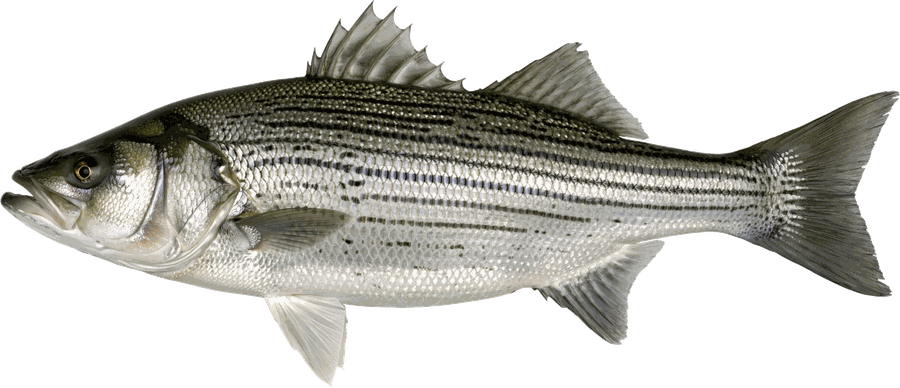
Bump Board's tactics library for Hybrid Striped Bass — where to fish, what to tie on and how to fish it, season by season. In the app, these tips adapt live to the weather, the front and the light.
Hybrid Striped Bass — Summer
Where to fish
- Same squeeze, warmer fish: the hybrid plateau is 22–25 °C, shifted about 2 °C above striped bass (a field finding with a kept caveat — the hybrids studied were smaller fish, and size alone predicts warmer choices). Summer fish of both taxa at Claytor selected the coolest water that still held oxygen above 2.0 mg/L. Fish that layer.
What to tie on
- Present exactly at the cool, oxygenated layer, forage-matched. The squeeze discipline is identical to the striper's; only the temperature of the layer differs.
How to fish it
- The hybrid oxygen rule is an interaction, and it's the factorial's actual finding: low oxygen hurts consumption especially at high temperature, and matters much less when the water is cool. In plain terms — the hotter the day, the more oxygen decides where these fish can feed; on cool summer water, forgive a lower-oxygen spot that a hot day would rule out.
If it's still tough
- On the hottest, stillest days, treat the hybrid like the striper at its floor: find water that is both cool enough and above the 2 mg/L occupancy floor, and fish nothing else until conditions ease. Hybrid summer habitat was measurably less degraded than the striper's in both Claytor summers — they get a little more squeeze room, not immunity.
Hybrid Striped Bass — Fall
Where to fish
- Fall releases the hybrid squeeze — the hybrid's own telemetry shows the fall movement back toward the feeding shallows, and its own warmer temperature curve applies: expect hybrids to stay active on warmer fall water a step longer.
What to tie on
- Forage-matching offerings through the re-opening column, following the bait as in the striped fall pattern.
How to fish it
- Search the routes between the summer refuge layer and the feeding shallows at dawn and dusk (low-light practice; the hybrid's own clock is unmeasured).
If it's still tough
- If fall hybrids are scattered, intercept the travel routes off the refuge — the season pattern's most reliable piece, and consistent with everything the Claytor telemetry measured.
Hybrid Striped Bass — Winter
Where to fish
- Winter hybrids: deep, stable holding water and low movement is the general expectation — stated plainly, no hybrid winter study exists to grade it higher, and the rating's winter rests on its measured factors.
What to tie on
- Slow, deep, forage-matched, over located fish. Sonar first.
How to fish it
- Fish the light changes over located schools and give them time.
If it's still tough
- Honest limit: winter is where the hybrid entry is thinnest — no direct hybrid winter data exists. Fish it as a suggestion, not as hybrid science.
Hybrid Striped Bass — Springrun
Where to fish
- The hybrid run opens earlier and colder than the striper's: Claytor Lake fish ran in March at about 9–10 °C, against the 13–18 °C striped tradition — a discrepancy the monograph keeps rather than merging. Fish the tributary arms from the first cold rise.
What to tie on
- Forage-matching offerings on the run routes — the hybrid evidence is movement and habitat, and names no lure. (The season shape rests on the hybrid's own telemetry — reservoir fish tracked through their spring runs and fall movements — not on a borrowed run study; the entry grades it that way.)
How to fish it
- Dawn and dusk on the travel lanes — general low-light practice, stated honestly: no hybrid diel study exists, so the rating carries its time-of-day factor neutral rather than on any other fish's clock.
If it's still tough
- If the arms are quiet at striper temperatures, remember the hybrid clock runs colder — you may be late, not early. Check the staging water back toward the lake.
Hybrid Striped Bass on the ice — Through the ice season
Where to fish
- No ice set is issued for hybrids, for the same reason as striped bass: no under-ice study of either taxon exists. The winter open-water holding pattern is the only sourced guidance, labelled as open-water guidance.
What to tie on
- No ice presentation is sourced for hybrid striped bass.
How to fish it
- If you fish them under ice, you are outside the studied water for this fish — the entry says so plainly rather than borrowing a pattern.
If it's still tough
- The sourced hybrid seasons are the early cold run, the warm squeeze summer and the fall. Ice is a documented gap for the whole Morone pair in fresh water.
Where Hybrid Striped Bass live
198 waters in the Bump Board dataset hold Hybrid Striped Bass. A selection:
Alabama
- Bankhead Lake
- Cedar Creek Reservoir
- Holt Lake
- Jordan Lake
- Lake Demopolis
- Lake Tuscaloosa
- Lay Lake
- Logan Martin Lake
- Mitchell Lake
- R E 'Bob' Woodruff Reservoir
- Warrior Lake
- Wheeler Lake
- Wilson Lake
Arkansas
Colorado
- Aurora Reservoir
- Barr Lake
- Cherry Creek Lake
- Douglass Lake
- Jackson Lake
- John Martin Reservoir
- Lagerman Reservoir
- Martin Lake Reservoir
- McCall Lake
- North Sterling Reservoir
- Prewitt Reservoir
- Prospect Lake
- Pueblo Reservoir
- Quail Lake
- Standley Lake
- Trinidad Lake
- Turks Pond
Georgia
- Allatoona Lake
- Carters Lake
- Hartwell Lake
- J. Strom Thurmond Reservoir
- Lake Blackshear
- Lake Oconee
- Lake Oliver
- Lake Seminole
- Lake Sinclair
- Lake Tobesofkee
- Nottely Lake
- Randy Poynter Lake
- West Point Lake
Iowa
- Ada Hayden Heritage Park Lake
- Big Creek Lake
- Coralville Lake
- George Wyth Lake
- Grays Lake
- Lake Icaria
- Lake MacBride
- Lake Manawa
- Lake Red Rock
- Lake Wapello
- North Twin Lake
- Rathbun Lake
- Roberts Creek
- Saylorville Lake
- Three Mile Lake
- West Lake
Illinois
- Baldwin Lake
- Braidwood Power Plant Cooling Pond
- Carlyle Lake
- Forbes Lake
- Governor Bond Lake
- Heidecke Lake
- Lake Clinton
- Lake Decatur
- Lake Glenn Shoals
- Lake Jacksonville
- Lake Mattoon
- Lake Pittsfield
- LaSalle County Nuclear Station Cooling Pond
- Powerton Cooling Lake
- Rend Lake
- Sam Parr Lake
- Shabbona Lake
Indiana
Kansas
- Cedar Bluff Reservoir
- Cheney Reservoir
- Clinton Lake
- Coffey County Lake
- El Dorado Lake
- John Redmond Reservoir
- Kanopolis Lake
- Keith Sebelius Lake
- Kirwin Reservoir
- La Cygne Lake
- Lovewell Reservoir
- Marion Reservoir
- Milford Lake
- Pomona Lake
- Waconda Lake
- Webster Reservoir
Kentucky
- Barren River Lake
- Fishtrap Lake
- Grayson Lake
- Guist Creek Lake
- Herrington Lake
- Paintsville Lake
- Rough River Lake
- Taylorsville Lake
Louisiana
Missouri
- Blue Springs Lake
- Hamilton Reservoir
- Harry S Truman Reservoir
- Lake of the Ozarks
- Limpp Lake
- Long Branch Lake
- Perry County Community Lake
- Thomas Hill Reservoir
- Watkins Mill Lake
North Carolina
New Mexico
Nevada
Ohio
- Buckeye Lake
- Charles Mill Lake
- Dillon Lake
- Griggs Reservoir
- Guilford Lake
- Kiser Lake
- Michael J Kirwan Reservoir
- O'Shaughnessy Reservoir
- Sippo Lake
- Walborn Reservoir
- William H Harsha Lake
Oklahoma
- Birch Lake
- Broken Bow Lake
- Canton Lake
- Fort Cobb Reservoir
- Foss Reservoir
- Grand Lake O' The Cherokees
- Kaw Lake
- Lake Arcadia
- Lake Hudson
- Lake Thunderbird
- Oologah Lake
- Skiatook Lake
- Sooner Lake
- Tom Steed Reservoir
- Waurika Lake
Pennsylvania
Tennessee
- Boone Lake
- Cheatham Lake
- Cordell Hull Reservoir
- Douglas Lake
- Fort Loudoun Lake
- Fort Patrick Henry Lake
- J Percy Priest Reservoir
- Melton Hill Lake
- Nickajack Lake
- Old Hickory Lake
- Tellico Lake
- Tims Ford Lake
Texas
- Braunig Lake
- Calaveras Lake
- Lake Alice
- Lake Casa Blanca
- Lake Coleman
- Proctor Lake
- Red Bluff Reservoir
- Walter E. Long Lake
Utah
- Adams Reservoir
- Baker Reservoir
- Bullock Draw Reservoir
- East Canyon Reservoir
- Huntington Lake
- Jordanelle Reservoir
- Lost Creek Reservoir
- Maple Lake
- Mill Meadow Reservoir
- Minersville Reservoir
- Mona Reservoir
- Newcastle Reservoir
- Otter Creek Reservoir
- Panguitch Lake
- Piute Reservoir
- Red Fleet Reservoir
- Salem Lake
- Scofield Reservoir
- Settlement Canyon Reservoir
- Sevier Bridge Reservoir
- Spring Lake
- Wellsville Reservoir
- Willard Bay Reservoir