
Fishing tips & tactics
How to catch Freshwater Drum
Aplodinotus grunniens
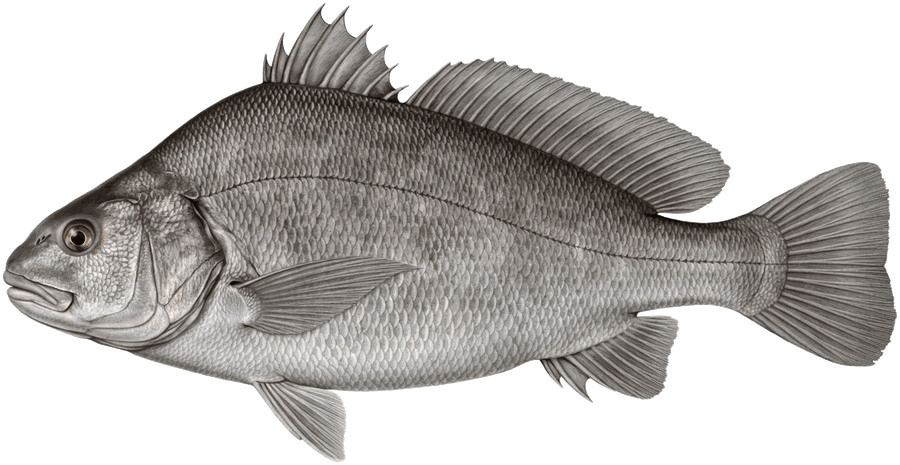
Bump Board's tactics library for Freshwater Drum — where to fish, what to tie on and how to fish it, season by season. In the app, these tips adapt live to the weather, the front and the light.
Freshwater Drum — Prespawn
Where to fish
- Prespawn drum are a movement season before they are a feeding season: seasonal migrations begin as the water passes about 5 °C, and Manitoba fish moved an average of about 161 km through the spring in the Red River telemetry programme. Fish the travel water and the staging depths on the way to the spawning reaches, not a single summer address.
- The Manitoba chronology is the entry's spine: drum entered the rivers in May, before ice-off, on the earliest warming — the run starts while the season still looks like winter. Work the deep staging pools along the entry route from the first warming, weeks before the spawn itself.
- Fish staging for the river runs hold in the basin water off the mouths through spring — summer telemetry later spreads lake fish across broad depths of about 6 to 16 m over fine substrate, and the prespawn concentration sits at the deep end of that range near the mouths.
What to tie on
- Fish the bottom menu this species actually eats in Manitoba water: caddisfly larvae were 79% of prey items and in over 80% of stomachs in the Lake Winnipeg study, with mayfly nymphs in 72% — a benthic insect-larvae diet, confirmed by isotopes. No lure is named for drum in the research behind this entry, and none is invented here: small, bottom-presented, larvae-sized is the supported shape for a fish that roots prey out of the bottom and processes it with pharyngeal teeth.
How to fish it
- Time the day backwards from most species: drum are night-led — the model's shape is night 1.0, dusk 0.85, dawn 0.55, day 0.35 — and the prespawn movement and feeding follow that clock. Put the best hours at dusk and into the night on the staging water; a midday prespawn session is fishing this species' quiet shift.
- Respect the cold floor underneath the season: growth stops below about 10 °C and juveniles were incapacitated at 1 °C and below in the laboratory record, so early prespawn fish in single-digit water are travelling on a slow metabolism. Slow everything down until the water is honestly into double digits.
If it's still tough
- If the staging water is empty, the run may simply not have arrived — a May, pre-ice-off entry means the calendar lies about this season in both directions. Check the warmest staging water first, and check it at dusk, before concluding the fish are not there.
Freshwater Drum — Spawn
Where to fish
- The spawn is a broadcast over open water, not a nest season: it begins at 18 °C and runs six to seven weeks through June and July inside a band of 18 to just under 23 °C in the Manitoba telemetry intervals, with buoyant eggs released into the water and abandoned. Spawning fish gather over the open spawning water rather than holding any structure an angler can target nest by nest.
- Post-spawn exit in the Manitoba record ran from mid-June through July, and spawning-site fidelity between years was near-total — the same reaches host the run every year. A reach that held spawning drum last June is the first place to look this June.
- Basin fish spawn on the same 18 °C trigger after staging off the mouths; through the window they are spread across the broad 6 to 16 m summer depth band over fine substrate rather than crowded into the shallows.
What to tie on
- The spawning-season menu stays the benthic one — insect larvae rooted from the bottom — and the drumming you may hear is not part of it: male chorusing builds toward evening and peaks late in the evening in the Lake Champlain acoustic record, but chorusing is a spawning-aggregation signal, and the research files 'chorus equals feeding' as a misuse. No spawn lure is named in the drum literature; larvae-sized and on the bottom is the whole supported story.
How to fish it
- Fish the evening build, because two clocks agree on it: the diel shape puts dusk at 0.85 rising to a night maximum, and spawning-season calling builds from sporadic daytime calls to a full chorus by late afternoon and evening. The practical overlap — active, gathered fish in the evening — is real; just credit it to the diel pattern and the aggregation, not to feeding on the chorus.
- Do not apply a guarding-fish rule to this species: drum broadcast buoyant eggs and leave them, so there is no nest defence, no guarding strike, and no measured spawn feeding bonus or penalty in either direction. The June-to-July strength in the rating rests on the measured movement and feeding season underneath the spawn, not on the spawn itself.
If it's still tough
- If spawning aggregations will not take, fish the fish that are not spawning: in a six-to-seven-week season, part of the population is always between bouts, feeding on the bottom in the same depth band. Drop off the aggregation's edge, fish after dark, and let the night-led pattern do the work.
Freshwater Drum — Summer
Where to fish
- Summer is the measured maximum: movement peaked through the warm months — about 219 km across summer and fall for Red River fish — on water inside the adult thermal plateau of 22 to 26.5 °C. By day the fish hold deep and offshore; the shallows are a night address, and the entry is organised around that split.
- River summer fish range widely on the telemetry record, and part of that summer travel tracks episodic mayfly hatches — when a hatch is on, the fish move to it. A summer reach that was empty last week can hold travelling, hatch-focused fish this week.
- Summer lake fish used broad depths of about 6 to 16 m over fine substrate by day. Start on that deep fine-bottom band, and treat the shallow shoreline as the night shift's water only.
What to tie on
- In Manitoba water, tie on the insect-larvae menu without apology: caddisfly and mayfly larvae dominate the stomachs and the isotopes, and growth was equal or better on that diet in the modern sample. The famous mussel story belongs to another basin's record — in the 2019 Lake Winnipeg stomachs, zebra mussels appeared in only 4 of 51 fish, and over 80% of those mussels were in a single fish — so mussel-based tactics are not written into this entry. Where a mayfly hatch is running, the diet-supported move is to match the hatch, because summer movement demonstrably keys onto hatches. No lure is named in the drum research itself; bottom-presented and larvae-sized is the supported form.
How to fish it
- Fish the night as the main event: adults and juveniles moved into the shallows at night to feed along the shoreline and retreated deep and offshore by day, night sampling and night angling produced the bulk of catches, and a second river's night electrofishing found this family's catch rates significantly higher after dark. Set up on the shoreline feeding ground before dark and fish it into the night; dawn, at 0.55, is the tail of the shift.
- Use the warmth while it lasts, and note the top edge: swimming performance rose steadily from 10 to 30 °C in the factorial experiment, but field fish avoided about 30 °C and the standardised tolerance metrics sit near 30 to 32 °C. Inside the 22 to 26.5 °C plateau the fish are at their measured best; as the water pushes toward 30 °C, expect them in the deepest, coolest water available rather than on the night shallows.
- Handle summer fish knowing the Red River angling record: about 31% of angled drum were deep-hooked in the oesophagus, and stress markers ran higher in summer than spring. A drum bound for release earns a quick, careful unhooking — and deep-hooked summer fish are the known cost of passive bottom presentations, so check baits promptly.
If it's still tough
- If a summer day shift produces nothing, believe the diel data rather than changing baits: the day value is 0.35, a real but low floor on an all-hours-capable feeder, and the fix the research supports is the clock — come back at dusk and fish the shoreline movement as it starts.
Freshwater Drum — Fall
Where to fish
- Fall drum keep moving and feeding as the water cools through the teens — the telemetry shoulder is real, including a warm-October movement peak in the warm autumn of the study — then slide toward the deep, stable wintering water. In the Lake Erie record the same pattern reads as shallow warm water in summer giving way to deeper water in late fall.
- River fish stage back toward the deep pools on their way out; post-spawn exit had already shown the pattern of long seasonal travel, and fall movement stays high until the cold arrives. Work the deep staging pools on the travel route rather than the summer shoreline.
- Basin fish narrow their depth range as the season turns — from the broad summer band toward the tighter, deeper winter selection. Follow them down and out: the late-fall address is deep water over fine substrate, close to where they will spend the winter.
What to tie on
- The fall menu is the summer menu cooling down: benthic insect larvae on the bottom, with fish becoming a major food through late summer and fall in the one long Erie diet record — 52 to 94% fish, mostly young-of-year shad, from August to November. That is a different basin's stomach record, carried as such; in Manitoba water the larvae stay the proven base. No fall lure is named in the research.
How to fish it
- The night-led clock still runs the fall day — dusk into night on the staging and feeding water — but the temperature floor is approaching: below about 10 °C growth has stopped and the fish are sliding toward the winter minimum. On cold fall days, fish the warmest part of the afternoon into dusk as one combined window and slow the presentation down.
- Credit a warm fall honestly: the October shoulder in the season curve is this species' own telemetry, not a guess — a warm October produced a movement peak, so a mild autumn extends real fishing, and an early cold one ends it. Let the water temperature, not the calendar, call the season over.
If it's still tough
- If fall fish vanish from the shallows, they have started the winter slide, not left the system: drop to the deep, stable water and fish it at dusk. Below the high single digits, expect the near-winter pattern — present, deep, and barely feeding — and set expectations with it.
Freshwater Drum — Winter
Where to fish
- Winter drum are present, located, and barely feeding — all three are measured, and the entry holds them together: telemetry detected fish all winter, aggregated in deep water over clay and fine substrate at about 8 to 12 m, selecting the warmest, stillest bottom water available, which in the Manitoba record ran over 2 °C warmer than the flowing water nearby. They are not gone. They are sitting out the cold at the edge of a measured physiological floor — juveniles were incapacitated at 1 °C and below.
- River fish in the telemetry record wintered out on the big water rather than in the channels — winter movement fell to about 44.5 km for the season against 161 km in spring, and the winter hotspots sat on the basin side of the system. Expect the channels to feel empty in winter because, measurably, the fish have left them.
- The basin holds the winter fish, and detection probability for the tracked fish was actually highest in winter — about 0.57 — because the fish aggregate and stay put in the deep mid-basin and bay hotspots over fine substrate. Winter lake drum are findable; feeding them is the hard part.
What to tie on
- On the rare winter day this is attempted, the offering is the smallest end of the bottom menu, delivered to a located fish: winter prey consumption is measured to be limited, so the presentation has to arrive at the fish, because the fish is not travelling to it. No winter presentation is named in the drum research, and none is invented here.
How to fish it
- Set the expectation the evidence sets: the winter section of the model runs on presence, depth and oxygen, not on a feeding pattern, because winter feeding was measured to be near-absent — the fish are not actively feeding in winter on the telemetry programme's own reading of the diet evidence. Any winter drum is an individual event, not a pattern to build a day around.
- Fish the warmest deep water you can find if you fish at all: the winter selection of bottom water over 2 °C warmer than the surroundings is a survival behaviour at a northern range edge where ambient water sits at the species' cold threshold, and it is the only winter location rule the research actually measures.
If it's still tough
- A silent winter is the measured normal for this species, not a tactics failure: rarity of winter catches is behaviour — near-zero feeding plus deep aggregation — not absence, and the telemetry proves the fish are down there. The honest winter advice is to note the deep aggregation for spring and spend the feeding season's effort on a species that eats in winter.
Freshwater Drum on the ice — Through the ice season
Where to fish
- The ice set for freshwater drum is PROVISIONAL, and the entry carries that flag openly with its measured reason: drum are present under ice all winter in Manitoba telemetry — aggregated in deep, warm, still water at about 8 to 12 m over clay and fine substrate — but they are barely feeding, with winter prey consumption measured to be limited and the fish described by the telemetry programme as not actively feeding in winter. No under-ice diel or ice catch-rate study exists. Drill over the deep fine-bottom aggregations if you drill at all, and expect presence, not a bite.
- The tracked basin fish were detected most reliably in winter — probability about 0.57 — holding mid-basin and bay hotspots in the warmest bottom water available, over 2 °C warmer than the nearby flowing water. The location is measurable; the feeding is the missing part.
What to tie on
- The smallest bottom offering you would use in summer, set down to a located fish and left patient: there is no measured ice presentation for drum, and this entry claims none. With feeding near-absent, the offering's job is to be in front of the one fish in a hundred that takes — size and patience are the whole honest story.
How to fish it
- Fish it as a low-expectation pattern from the first hole: winter oxygen depletion is a measured threat to this species' cold refuges — declining oxygen helped break up the warm backwater refuges and drive die-offs in the winter study — so the deepest, best-oxygenated aggregations are both the likeliest holding water and the only water worth the attempt. The night-led timing is the open-water diel shape carried under ice as a labelled transfer; the under-ice shape itself has never been measured.
- Keep the attempt located rather than mobile: winter movement in the telemetry record fell to under 25 km a month, a fraction of the spring and summer travel, because the fish aggregate and stay. Drilling a long search line across a basin fishes water the fish crossed in October; sitting over one known deep aggregation fishes the winter behaviour that was actually measured.
If it's still tough
- Silence through the ice is the measured expectation for drum, and the entry will not dress it up as a solvable problem: the fish are present, aggregated and not feeding, and winter catches are extremely rare for behavioural reasons the telemetry established. If you need a winter bite, the honest move is a different species over the same deep water — the drum will be there, feeding, in May.
Manitoba Master Angler
A Freshwater Drum of 61 cm (24 in) or better qualifies for Manitoba's Master Angler Program.
Where Freshwater Drum live
241 waters in the Bump Board dataset hold Freshwater Drum. A selection:
Manitoba
Ontario
- Abitibi River
- Big Creek
- Big Otter Creek
- Catfish Creek
- Clay Creek
- Consecon Lake
- Credit River
- Dodd Creek
- Duffins Creek
- East Two Creeks
- Etobicoke Creek
- French River
- Frenchman's Bay
- Grand River
- Grindstone Creek
- Humber River
- Kettle Creek
- Lac des Chats
- Lac Dollard-des-Ormeaux
- Lac du Rocher-Fendu
- Lac Georges
- Lake Abitibi
- Lake Erie
- Lake Huron
Plus 25 more Ontario waters — browse Ontario lakes.
Alabama
Colorado
Iowa
- Big Creek Lake
- Big Lake
- Big Pond
- Bussey Lake
- Butler Lake
- Cedar Lake
- Coralville Lake
- East Okoboji Lake
- Gimmel Lake
- Grays Lake
- Lake MacBride
- Lake Red Rock
- North Twin Lake
- Norwegian Lake
- Roberts Creek
- Saylorville Lake
- Spirit Lake
- West Okoboji Lake
- Wood Duck Slough
Illinois
- Braidwood Power Plant Cooling Pond
- Heidecke Lake
- Lake Decatur
- Lake Mattoon
- Lake Springfield
- Lake Taylorville
- Powerton Cooling Lake
- Rend Lake
- Sangchris Lake
Indiana
Louisiana
Michigan
Minnesota
- Amber Lake
- Andrew Lake
- Ann Lake
- Artichoke Lake
- Ballantyne Lake
- Barrett Lake
- Big Pine Lake
- Big Stone Lake
- Big Twin Lake
- Black Dog Lake
- Blackduck Lake
- Bright Lake
- Budd Lake
- Burandt Lake
- Cannon Lake
- Caron Lake
- Cedar Lake
- Cedar Lake
- Chippewa Lake
- Circle Lake
- Clam Lake
- Clear Lake
- Clear Lake
- Cross Lake
Plus 83 more Minnesota waters — browse Minnesota lakes.
Mississippi
Montana
North Dakota
Nebraska
- Branched Oak Lake
- Harry Strunk Lake
- Jeffrey Reservoir
- Johnson Lake
- Lake Maloney
- Lake McConaughy
- Lake North
- Merritt Reservoir
- Pawnee Lake
- Sutherland Reservoir
- Swanson Lake
New York
Oklahoma
South Dakota
- Belle Fourche Reservoir
- Cox Lake
- Fish Lake
- Lake Byron
- Lake Francis Case
- Lake Mitchell
- Lake Pocasse
- Lake Redfield
- Lake Sharpe
- Lewis and Clark Lake
- McCook Lake
- Mud Lake
- Twin Lakes