
Fishing tips & tactics
How to catch Burbot
Lota lota
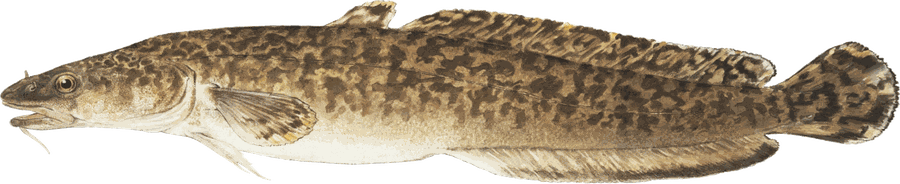
Bump Board's tactics library for Burbot — where to fish, what to tie on and how to fish it, season by season. In the app, these tips adapt live to the weather, the front and the light.
Burbot — Summer
Where to fish
- Summer burbot live deep and cold, in the same water as lake trout and whitefish — cold, well-oxygenated depths (their comfort tops out in the low-to-mid teens Celsius; about 74 °F is their upper limit). They're a night fish on top of a deep fish: the standard open-water pattern is bottom fishing at night over 20–50 ft near rocky bottom, with fish moving shallower after dark to feed.
What to tie on
- Glow jig or spoon with cut bait on the bottom. Freshness is the rule from the agency guidance: fresh bait, never spoiled — burbot will not feed on rotten food.
How to fish it
- Anchor over the rocky depth, fish after dark, and give a spot time — scent trails build. Trolling or bottom-bouncing near deep structure works but is the less common route; still bait at night is the standard for a reason.
If it's still tough
- If summer burbot are the goal and the deep night bite won't go, the honest advice is seasonal: this fish is made for the cold months. The fall shore pattern and the ice season are burbot season; summer is the off-season you fish through, not the one you plan around.
Burbot — Fall
Where to fish
- Fall brings burbot shallow along the shore again, and toward the spawning season: the agency-taught prespawn pattern (from Wyoming's Flaming Gorge water, mid-October into November) is rocky points and benches — burbot rise out of deep water at dusk to forage on the rocky shelves where the slope eases, not in the deep water in front of sheer cliffs.
- Fall brings burbot shallow along the shore again, and toward the spawning season: the agency-taught prespawn pattern (from Wyoming's Flaming Gorge water, mid-October into November) is river arms, rocky points and benches — burbot rise out of deep water at dusk to forage on the rocky shelves where the slope eases, not in the deep water in front of sheer cliffs.
What to tie on
- Glow jigs and jigging spoons, 1/4–1/2 oz on 2/0–4/0 hooks, tipped with a small skin-on strip of sucker or chub meat — plenty of scent without swamping the jig. Charge the glow hard with a UV light; bites often come right after a fresh charge.
How to fish it
- Spread lines across a rocky point from about 10 ft out to 50 ft first, find the depth band that produces, then consolidate into it. Fish the dusk rise — that's when they come up onto the shelves.
If it's still tough
- After you catch one, get back down fast — burbot travel in small schools and the second fish is usually right there. Give a dead spot about 15 minutes, then move the line.
Burbot — Spring
Where to fish
- In spring, burbot move into shallow water along the shore — then, as the water warms, they retreat to the deep holes and cold water and largely stay there until autumn. Spring shore water at night is the last of the shallow season.
What to tie on
- The open-water standard from the agency guidance: a glow jig or spoon sweetened with cut bait, fished on bottom at night — glow, noise and scent are the whole attraction package for a fish that hunts by smell and feel as much as sight.
How to fish it
- Fish it after dark, on bottom, near rocky shore structure. Let scent do the work — burbot follow their noses to a still bait.
If it's still tough
- As the water warms, go deeper or wait for fall — a summer burbot is a deep, cold, night fish, and spring's shallow window closes fast.
Burbot on the ice — Early ice
Where to fish
- First ice is tied to the fall cisco spawn: burbot feed on the spawning and spent ciscoes, their eggs, and everything sharing that bounty. Best water: deep, rocky main-lake points and the first major drop-offs near current areas — carefully, current ice is thin ice early. The best bite comes out of the deepest holes, the same holes holding first-ice walleye, and burbot usually start biting after the walleye quit for the night. Tip-ups set just past the deepest holes even produce daytime burbot now.
What to tie on
- Big, heavy, noisy, glowing — that's the system. Jig the same lures you'd use for walleye, doubled or tripled in size: a 3/4-oz flasher jig, up to a 1½-oz jigging spoon for burbot where the walleye versions are 1/4–1/2 oz. Colour: 'glow in any shade is king,' hot fluorescents — pink, orange, chartreuse — second.
- The bait is steaked ciscoe belly — 'burbot candy': steak the belly into roughly seven 1/4-in pieces and hook each through the tendon at the bottom of the U; it moves, flashes and gives off scent. Anything meaty works — beef heart, salted shiners, scented plastics — but fresh beats everything; burbot refuse rotten bait.
How to fish it
- Pounding bottom is the signature: rip the lure as high as you can reach, let it crash to the bottom — a thud on soft bottom, a whack on rock — then bottom-dance it, then pause it about 2 ft up and watch the sonar. The noise is the point: spawning burbot drum their swim bladders to communicate, anglers traditionally mimicked it by banging the rocky bottom, and the modern version is this jig. When a fish moves in, dance it gently on bottom or creep it up a couple of feet to seal the deal.
- Tackle for the heavy work: pike/walleye-class gear — a 32-in medium-heavy rod in the shack, a 42-in heavy rod for running and gunning; 20-lb braid, a 4-ft leader of 17–20 lb fluorocarbon, and a barrel swivel between them. The swivel is also a landing tool: burbot roll and often won't come through the hole straight, so grab the swivel and hold the fish until it relaxes and slides up.
- Fish it at twilight and after dark. Drill your holes in the afternoon — auger noise after dark costs fish — and be set up and quiet before dark.
If it's still tough
- Searching is a tip-up job: string them from the shallow shoal, down the drop-off, onto the basin flat — plain 3/8-oz 'do-nothing' jigs dropped to bottom with chunked ciscoe (hook exposed) or a jumbo salted shiner cut in three and skewered. When you check a line, hand-jig it a few times: burbot can swallow a bait without ever tripping the flag.
Burbot on the ice — Mid ice
Where to fish
- Mid-winter, burbot scatter through the whole basin and get hard to pattern. Two patterns hold: deep rock structure and current areas. Fish them early, late and at night, learn the travel routes and the spot-on-the-spot features, and GPS-mark them — they produce year after year. Pre-spawn is the hardest period of the season to pattern them, and it's when chumming (where it's legal) helps most.
What to tie on
- The same oversized glow system: 3/4-oz flasher jig or 1½-oz spoon, steaked ciscoe belly. On the spoon side, the In-Fisherman pick is a heavy 3/4-oz rattling spoon with shiners gobbed on the hook — crash it into bottom to stir mud; the noise calls them. A 3/4- to 1-oz jig or spoon, glow-painted, tipped with a minnow or a strip of cut fish, is the standard.
- Chumming, where legal: the ciscoe parts left over from the steaks, cut finger-length, or cut ciscoe, sardines or shiners. Chum a spot before you head home and a burbot 'stuffed with chum' may be waiting in the morning; multi-day chumming slowly pulls numbers into an area. A powerful scent gel on the bait is the no-chum shortcut — garlic-crawfish is the reported producer.
How to fish it
- Pound, dance, pause 2 ft up — the full sequence, eyes on sonar the whole time. Once a fish comes in to play, dance gingerly or creep the bait up. Stay mobile with the electronics until you find biters, then work the spot hard.
- Darkness discipline is a real tactic here: drill before dark, stay quiet after it, and recharge the glow every time you check a line — a glow lure dims in 15–20 minutes, and bites commonly come right after a fresh charge.
If it's still tough
- Run the two-phase system: one rod pounds and rattles to attract; the second is a motionless scented presentation — dead minnow or cut bait on a plain hook lying on bottom, or a tip-up with bait just off bottom. They follow the vibration in, then commit to the still bait. Some nights they hit only right after a re-glow; some nights only the deadstick wins. Keep both within inches of bottom.
Burbot on the ice — Late ice
Where to fish
- Late ice is the spawn, and it's the season's best fishing. After the first windy thaw in February the fish set up for the rest of the season on shallow main-lake flats and bars of rock, gravel and coarse sand near deep water. On the chart, look for the biggest main-lake feeding flats jutting into the deepest part of the lake, and camp on the edge where the shallows fall away steep — the daily travel lane, where the groups concentrate and the biggest fish can be intercepted. The spawn can run February through April; spawning itself happens at night over shoals 3–15 ft deep on sand, gravel and small stone, males first, about a week of it.
What to tie on
- The heavy glow system, unchanged — but the fish are shallow now, so the drops are shorter. Steaked ciscoe belly on the 3/4-oz flasher jig is still the call. Note: chumming stops working at last ice — fish on the shoal to spawn don't respond to it, so spend the effort on position instead.
How to fish it
- The exception to every burbot rule: on the spawning shoals, a genuine daytime bite develops and lasts the rest of the ice season — fish in a dark tent over the shoal and you can watch them maul baits. Individual fish make several spawning forays and feed heavily between runs, and after the peak the groups hold 'sentry duty' on the shoals against ciscoes, perch and shiners — which is why the daytime bite persists.
- Heavy pounded jigs are also the tool for making daytime action happen away from the shoals.
If it's still tough
- If the shoal edge is quiet, the fish are between forays, not gone — they make several runs. Stay on the travel lane, keep a line soaking, and fish the dark hours for the spawning movement itself.
Manitoba Master Angler
A Burbot of 76 cm (30 in) or better qualifies for Manitoba's Master Angler Program.
Where Burbot live
1,856 waters in the Bump Board dataset hold Burbot. A selection:
Manitoba
- Beresford Lake
- Bird Lake
- Black Lake
- Caddy Lake
- Childs Lake
- Falcon Lake
- High Lake
- Lake Athapapuskow
- Lake Manitoba
- Lake of the Woods
- Lake Winnipeg
- North Steeprock Lake
- Reed Lake
- Wekusko Lake
- Whitefish Lake
Ontario
- 5PB10-124, L.
- 5PB10-125, L.
- 5PB10-93, L.
- Abamategwia Lake
- Abitibi River
- Abram Lake
- Acheson Lake
- Achigan Lake
- Adamhay Lake
- Adele Lake
- Aerobus Lake
- Agnes Lake
- Agnew Lake
- Agonzon Lake
- Aguasabon River
- Ahmic Lake
- Aiabewatik Lake
- Aileen Lake
- Airport Lake
- Alcona Lake
- Allan Lake
- Allumette Lake
- Alonghill Lake
- Ambrose Lake
Plus 1,617 more Ontario waters — browse Ontario lakes.
Alaska
Michigan
Minnesota
- Amoeber Lake
- Andrusia Lake
- Astrid Lake
- August Lake
- Bad Medicine Lake
- Bass Lake
- Bear Island Lake
- Bertha Lake
- Big Lake
- Big Pine Lake
- Big Sandy Lake
- Blackduck Lake
- Bog Lake
- Bowstring Lake
- Boy Lake
- Burntside Lake
- Campers Lake
- Cass Lake
- Cedar Lake
- Cherokee Lake
- Cherry Lake
- Clearwater Lake
- Cokato Lake
- Colby Lake
Plus 109 more Minnesota waters — browse Minnesota lakes.
Montana
- Anita Reservoir
- Bighorn Lake
- Blue Lake
- Canyon Ferry Lake
- Clark Canyon Reservoir
- Elk Lake
- Flathead Lake
- Fort Peck Lake
- Fresno Reservoir
- Glen Lake
- Hauser Lake
- Helena Valley Regulating Reservoir
- Holter Lake
- Lake Elmo
- Lake Frances
- Lake Helena
- Lake Koocanusa
- Lake Sutherlin
- Lima Reservoir
- Lower Miner Lakes
- Lower Red Rock Lake
- Morony Reservoir
- Pintler Lake
- Ryan Lake
Plus 5 more Montana waters — browse Montana lakes.
North Dakota
New York
Vermont
- Echo Lake
- Island Pond
- Lake Champlain
- Lake Elligo
- Lake Memphremagog
- Lake Salem
- Lake Willoughby
- Maidstone Lake
- Seymour Lake
Washington
- Banks Lake
- Bead Lake
- Cle Elum Lake
- Davis Lake
- Franklin D Roosevelt Lake
- Kachess Lake
- Keechelus Lake
- Lake Chelan
- Palmer Lake
- Sullivan Lake