
Fishing tips & tactics
How to catch Bowfin
Amia calva
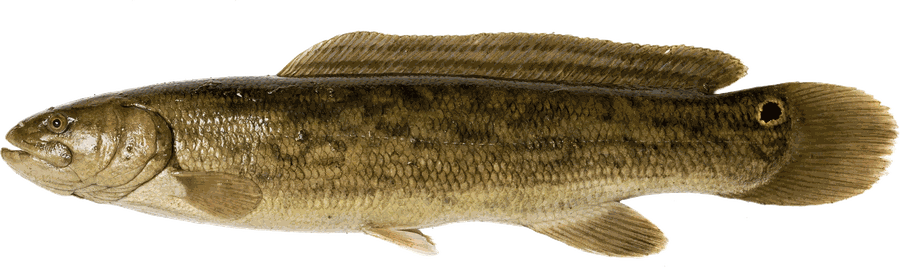
Bump Board's tactics library for Bowfin — where to fish, what to tie on and how to fish it, season by season. In the app, these tips adapt live to the weather, the front and the light.
Bowfin — Prespawn
Where to fish
- Prespawn bowfin wake on a hard, measured floor: below about 10 °C this fish is relatively inactive and barely breathes air at all, and activity rises progressively above that line. As the water crosses it, fish leave the deep wintering water and travel toward the shallow, vegetated spawning ground — the Green Bay record tied those spring spawning migrations to warming water temperature over six years.
- Slow backwater and floodplain fish move with rising water toward the vegetated shallows they will spawn in — the spillway movement record ran through the warming spring, tied to temperature, water depth and spawning. Fish the still, vegetated margins on the route, never the fast water this species avoids.
- The prespawn lake address is the edge of the vegetated shallows nearest the deep wintering water: spring depths in the Hamilton telemetry averaged about 1.9 m and shallowed as the season built, with fish sliding into vegetation as the spawn approached.
What to tie on
- Match the year's first menu: crayfish led the spring diet in the Great Lakes stomach record at about 75% prevalence in spring, against only about 10% by fall — a real seasonal switch, measured in stomachs. The one bait the bowfin canon names outright is cut bait, taken readily by a fish that hunts by scent as much as sight. No lure is named in the bowfin research, and none is invented here: crayfish-sized or scented, presented in the vegetation, is the supported shape.
How to fish it
- Fish the warming trend, not the calendar: a cold snap that drops the water back under about 10 °C puts this species back at its inactivity floor, and the honest response is to wait for the water rather than change baits. On warming afternoons, work the shallow vegetation the sun has heated first.
- Start the low-light habit that runs this species' whole year — telemetry detections ran higher at dawn, dusk and night than by day in every season measured. Prespawn sessions that end at dark are leaving as the fish start.
If it's still tough
- If the shallows are empty in spring, check the thermometer before the tackle box: under about 10 °C the measured answer is that the fish are still in their deep wintering water, inactive, and no presentation fixes a temperature floor. Drop to the wintering depth and wait for the crossing.
Bowfin — Spawn
Where to fish
- The spawn is a shallow, vegetated, night event: April through June range-wide, May into early June in the northern lakes, at about 16 to 19 °C, in water roughly 61 to 92 cm deep. The male clears a circular nest about 39 to 91 cm across in root mats and vegetation, takes on bright green breeding colour, and the Hamilton fish sat at their shallowest of the year — under a metre, in vegetation — through the May-to-June window.
- The fish travel to the event: Oneida fish made migration-like movements to a primary spawning area and dispersed only after spawning and care ended, and the Green Bay wetland spawning runs tracked warming water over six years of record. A vegetated bay that draws fish in May is a destination, not a coincidence — and the fish in it have come from elsewhere in the system.
What to tie on
- There is no spawn feeding pattern to tie to, and the entry says so in the rating's own terms: a guarding male that strikes is defending eggs and then a school of young — aggression, not feeding — and no study has ever measured how much a guarding bowfin's feeding is suppressed. The honest spawn offering is the general one, cut bait or a crayfish-sized presentation fished to the non-guarding fish on the vegetation edges, not a bait dragged across a nest to provoke a strike.
How to fish it
- Fish the spawn as a location season, not a feeding season: the guard window is long — eggs hatch in about 8 to 10 days, and the male then guards and leads the young until they reach roughly 10 cm, a care window of weeks, far longer than a sunfish bout. Through it, the catchable feeding fish are the females and the males between duties, on the edges of the nesting vegetation, in the low-light hours.
- Keep the night rule: spawning itself is nocturnal, the species' movement record ran 90% at night, and the shallow nesting flats are most active after dark. An evening session on the vegetation edge fishes the spawn at its own hour.
If it's still tough
- If every fish you find is on a nest and striking out of defence, the feeding fish are elsewhere that day — move off the colony flats to the nearest deeper vegetation edge and fish it at dusk. Provoking guards is a category error this entry will not teach as a technique.
Bowfin — Summer
Where to fish
- Summer is the bowfin's measured season: a wide thermal plateau from about 22 to 30 °C — the research carries two preferendum measurements in open conflict, 23.8 °C from a Lake Erie laboratory study and 30.3 °C from an Ontario compilation, and prints the conflict rather than averaging it — with air breathing at its maximum across roughly 18 to 30 °C. The fish hold in warm, shallow, vegetated water all summer, sliding deeper or into cover by day and moving shallow to feed at night.
- Backwater and floodplain fish hold the still, vegetated margins through summer — this is a lowland, slow-water species everywhere it lives, and the summer crayfish and fish diet in the southern river records came out of exactly that slack, vegetated water.
- Summer lake fish in the Hamilton record averaged about 1.8 m deep, in vegetation, with high site fidelity — a bowfin's summer is a home range, not a migration. Find the vegetated bay a fish lives in and you have its address for the season.
What to tie on
- Tie on the two foods that dominate every regional record — crayfish and small fish — while knowing the species' strangest measured trait: bowfin are a generalist population made of specialists, with 72 to 88% of the dietary niche varying between individuals. One Michigan record found crayfish in about 64% of stomachs with fish at about 60% by volume; one Great Lakes mixing model put a local diet at about 54% crayfish and 38% small fish; southern fish ran about 56% fish. The supported practice is to offer both forms in a home range and let the individual fish in front of you declare itself — and cut bait, the canon's named bait, fishes the scent channel this species hunts by.
How to fish it
- Fish the dark: the model's shape is dawn 0.85, day 0.45, dusk 1.0, night 1.0, triangulated from telemetry, a 16-month movement census that ran 90% at night, and air-breathing rates that rise in darkness. A summer bowfin session is an evening-into-night session on the vegetation edges; midday is for locating home ranges, not for expecting them to feed.
- Do not abandon the warm, still, low-oxygen backwater — for this species it is prime water, and the physiology is measured: during low-level exercise in clean, oxygen-rich water, about 66% of the oxygen a bowfin used came from the air it breathed, and field fish persisted at stations below 0.5 mg/L of dissolved oxygen where most species had dropped out. Low oxygen costs a bowfin a few extra breaths at the surface, not its feeding — the standard warmwater habit of writing off hypoxic shallows is exactly backwards here.
- Keep presentations slow and close in the vegetation: this is a stalking ambush predator that uses scent as much as sight, with tubular nostrils built for it. A bait that sits in a home range and advertises by scent fishes the measured senses; a fast bait flashing past fishes senses this species does not lead with.
If it's still tough
- If a summer bay produces nothing by day, the diel record says that is the expected result, not a mystery — return at dusk and fish the same vegetation into the night before changing anything. And if the water has pushed into the mid-30s, you are at the edge of the lethal family — sustained exposure at 35.2 °C killed nearly every test fish, against a ramping maximum of 37.0 °C — so find the deepest, most shaded water in the bay or leave the fish alone until it cools.
Bowfin — Fall
Where to fish
- Fall bowfin keep feeding as the water cools through the teens — the canon and the telemetry agree — while their geography turns: Hamilton fish deepened from about 1.8 m in summer to about 3.6 m in fall, shifting to sparser vegetation and deeper water, and Toronto fish showed rising residency as they settled toward wintering areas. Fish the deep edge of the summer vegetation, on the way to the wintering depth.
- The fall lake pattern is a deepening, not a departure: in four years of Hamilton telemetry no bowfin left its harbour, and the wintering fish are the summer fish, deeper. Work the deepest vegetated bays and their edges rather than searching new water.
What to tie on
- Shift the menu with the measured seasonal switch: crayfish prevalence in the Great Lakes stomachs fell from about 75% in spring to about 10% by fall, so fall weight shifts toward fish — small-fish presentations and cut bait over crayfish forms. Individual fish still specialise, so the summer rule holds in miniature: if one form is refused in a home range, offer the other before moving.
How to fish it
- The night-led clock runs until the floor arrives: keep fishing dusk and night on the deepening vegetation edges while the water holds above about 10 °C, and treat the first sustained drop below that line as the season's real end — below it, activity and air breathing fall away together on the physiology record, whatever the calendar says.
- Use the fall residency: site-faithful fish settling into known wintering bays can be located with summer knowledge. The bowfin you found in a vegetated bay in July is, on the telemetry, very likely still in that system in October — deeper, in sparser cover, and feeding on the night shift.
If it's still tough
- If fall fish have gone quiet in the shallows, follow the depth progression before blaming the bait: check the 3 to 4 m edge of the same bay at dusk. And once the water is under the 10 °C floor, quiet is the measured state — the fish have entered the winter pattern, and fall tactics are over.
Bowfin — Winter
Where to fish
- Winter bowfin at the northern edge are a residency story, not a feeding story: Toronto telemetry found residency highest for large fish in winter and fall, in warm, vegetated embayments, and Hamilton fish completed the deepening to about 6.3 m, in sparser vegetation, without leaving their harbour in four years. The fish are present under the cold all winter — below their 10 °C activity floor the whole time.
- The winter lake address is precise because it is measured: about 6.3 m deep, off the summer vegetation, in the same harbour or bay system the fish used all year. Winter bowfin do not migrate to a different water; they sink in the one they have.
What to tie on
- No winter feeding has ever been measured for this species, so there is no winter menu to tie on with a straight face: the honest line is that any winter attempt uses the summer foods — cut bait above all, for a scent feeder — presented to a located, sedentary fish, with expectations set by the section below. No ice or winter presentation is named in the bowfin research.
How to fish it
- Hold the two winter facts together, because the rating does: the fish are measurably present and resident, and their winter feeding has never been observed at all. Add the physiological frame — a fish far below its activity floor barely breathes air and barely needs to — and a winter bowfin is a dormant, site-holding fish, not a feeding pattern waiting for the right bait.
- Note the one winter mechanism that does bind: under complete cover this air-breathing fish cannot reach the surface at all, so its winter survival runs on gills alone in water whose oxygen sags through the season — which is why the deep harbour wintering sites, over the shallow vegetated backwaters, are where the telemetry finds them. The shallow summer bays are the winterkill-risk water for this species, not its refuge.
If it's still tough
- Winter silence is the baseline state of a fish spending the season below its measured activity floor — it is not a problem a presentation solves. The useful winter work is cartographic: mark the deep wintering bays the telemetry pattern points to, because those same systems hold the fish again at ice-out.
Bowfin on the ice — Through the ice season
Where to fish
- The ice set for bowfin is PROVISIONAL, and the entry carries that flag openly: winter presence, residency and deepening are measured by two Great Lakes telemetry programmes at the northern range edge, but bowfin feeding under ice has never been measured — and under complete ice this air-breathing fish cannot reach the surface, so the winter oxygen picture is deliberately harsher than the open-water one. Fish the deep wintering water the telemetry measured, about 6.3 m in the home bays, and expect a dormant fish, not a pattern.
- Winter fish held their home harbour in the telemetry — the deepest water in the same vegetated bay system, in sparser cover. The ice address is the summer bay, deepened; there is no separate winter water to search.
What to tie on
- Cut bait, the one bait the bowfin canon names, set down to the deep wintering water — a scent feeder below its activity floor is the one fish that might find a bait by smell alone. No ice presentation has ever been measured for bowfin, and the entry claims none beyond that reasoning, labelled as reasoning.
How to fish it
- Carry the inversion honestly, because it is this species' signature: in open water, low dissolved oxygen barely matters to an air-breather that takes most of its active oxygen from the air — but ice removes the surface, the fish runs on gills alone for months, and the ice oxygen curve is therefore built steeper than the open-water one from that measured mechanism. Late in the ice season, the deepest, best-oxygenated wintering water is the only water worth the attempt, and the shallow backwaters are winterkill water. The night-led timing is the open-water diel shape carried under ice as a labelled transfer; nothing under ice has been timed for this species.
- Sit on located water rather than searching: winter residency was the highest of the year for large fish in the Toronto record, so a bowfin in a deep wintering bay is a fish that stays — a quiet hour over the right depth is fishing the measured behaviour, while hole-hopping a bay treats a sedentary, dormant fish like a travelling one.
If it's still tough
- An unmarked winter of effort is the expected result here, not a failure: bowfin come through the ice only incidentally in angler reports, usually described as lethargic, and no ice catch record of any rigour exists. The provisional flag on this set means exactly that — the locations are telemetry, the feeding is an open question, and a silent day is the data behaving as documented.
Where Bowfin live
1,002 waters in the Bump Board dataset hold Bowfin. A selection:
Ontario
- Anson Lake
- Ben Lake
- Big Creek
- Big East Lake
- Black River
- Boat Lake
- Boyne River
- Bright Lake
- Canal Lake
- Caribou Lake
- Cataraqui River (Rideau Canal)
- Charleston Lake
- Consecon Lake
- Cranberry Lake
- Deer Bay
- Dinner Lake
- Dog Lake
- Duffins Creek
- East Lake
- East Two Creeks
- Echo Lake
- Fagan L.
- Fraser Creek
- Frenchman's Bay
Plus 77 more Ontario waters — browse Ontario lakes.
Alabama
Connecticut
Iowa
Louisiana
- Black Bayou Lake
- Black Lake
- Ivan Lake
- John K. Kelly Grand Bayou Reservoir
- Kepler Creek Lake
- Lake Maurepas
Massachusetts
Michigan
- Algonquin Lake
- Appleton Lake
- Archer Lake
- Austin Lake
- Barnes Lake
- Bass Lake
- Bass Lake
- Batteese Lake
- Baw Beese Lake
- Beadle Lake
- Bear Lake
- Bear Lake
- Bear Lake
- Big Crooked Lake
- Big Evans Lake
- Big Fish Lake
- Big Lake
- Big Long Lake
- Big Pine Island Lake
- Boom Lake
- Boot Lake
- Brooks Lake
- Brownwood Lake
- Burt Lake
Plus 142 more Michigan waters — browse Michigan lakes.
Minnesota
- Adney Lake
- Airport Lake
- Aitkin Lake
- Alice Lake
- Amelia Lake
- Andrew Lake
- Andrusia Lake
- Ann Lake
- Arrowhead Lake
- Baby Lake
- Bachelor Lake
- Bald Eagle Lake
- Ball Bluff Lake
- Ball Club Lake
- Ballantyne Lake
- Barrett Lake
- Bass Lake
- Bass Lake
- Bass Lake
- Bass Lake
- Batson Lake
- Baxter Lake
- Bay Lake
- Bde Maka Ska
Plus 676 more Minnesota waters — browse Minnesota lakes.