
Fishing tips & tactics
How to catch Black Bullhead
Ameiurus melas
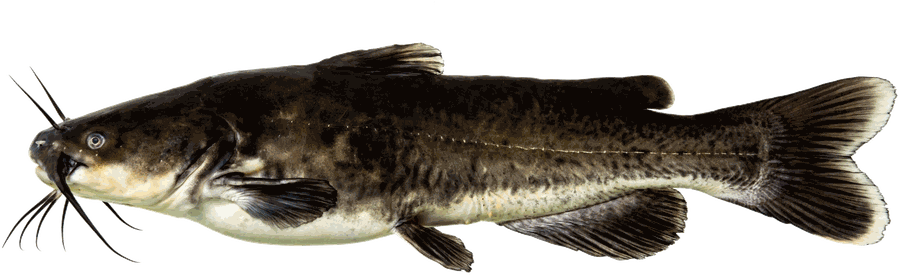
Bump Board's tactics library for Black Bullhead — where to fish, what to tie on and how to fish it, season by season. In the app, these tips adapt live to the weather, the front and the light.
Black Bullhead — Prespawn
Where to fish
- Fish the warming shallows this species is built for: warm, shallow, turbid water over soft bottoms with little vegetation is its documented niche — the turbid-water specialist of the genus, at the opposite end from yellow bullhead's clear gravel. In shallow turbid lakes its bottom-feeding actively sustains the turbidity it prefers (in the macrophyte-impact study its effect ran about half of common carp's at median catch rates), so the murkiest warm shallows in the system are not a compromise for this fish; they are its address.
What to tie on
- The benthic menu, broadly: this is a wide benthic omnivore — insects and larvae, crustaceans, molluscs, worms, detritus, plant material, fish. One measured prespawn-adjacent lesson from the diet work: when water rises and floods new ground, the diet swings hard to terrestrial prey (56% by volume in the rising-water period of the reservoir study) — after a spring rise, offerings that read as drowned terrestrial food are fishing a documented switch, not a hunch.
How to fish it
- Fish the whole day more honestly than the other bullheads allow (see the summer entry for the measured reason) while weighting dusk and dark. Prespawn black bullhead are a warming-shallows pattern with a real daytime component — a combination neither cousin offers you.
If it's still tough
- If the turbid shallows are quiet, check that the water has actually warmed — the spawn below is temperature-gated at about 20 °C, and a cold turbid flat is still a winter flat. Warmth first, then the shallows.
Black Bullhead — Spawn
Where to fish
- Spawning runs May through July (April–June in some accounts) once the water passes about 20 °C, with a core band of 20–24 °C on consistent secondary-grade evidence. Nests are small saucers, 15–35 cm across, at about 0.6–1.2 m deep, in the shallow soft-bottom water. Care is biparental with variable roles between the sexes in the syntheses. Fish the shallows around the nesting water.
What to tie on
- No spawn-specific presentation is measured for this species. The scent-led bottom offerings of the feeding seasons, worked around the nesting shallows, are the supported approach.
How to fish it
- One discipline this entry keeps on purpose: whether guarding suppresses feeding has never been observed in black bullhead at all, and no other species' spawn story is borrowed here as a black fact — expect the spawn window to fish on this species' normal clock (night-led, with its genuine daytime component) and let your own results, not a cousin's study, describe its spawn bite.
If it's still tough
- If the nesting shallows are dead, work the first deeper soft-bottom water off them before leaving — post-spawn and non-nesting fish in a sedentary genus are a short move away, and the turbid shallows' edges fish in daylight for this species in a way they don't for its cousins.
Black Bullhead — Summer
Where to fish
- Summer black bullhead are the warm, shallow, turbid, soft-bottom pattern at full strength — little vegetation, high turbidity tolerated and preferred beyond either cousin, and an agency ranking that has this species persisting and flourishing in warm, low-oxygen, silted water lethal to nearly everything else. The temperature frame is black's own: no preferendum exists for this species, but its growth was measured insensitive to temperature across 18–29 °C — that broad, cool plateau is what its rating carries — with feeding and growth commencing near 10 °C, best weight conversion at 23–24 °C, and black's own ceiling above it: an upper incipient lethal of 35.4 °C and a critical thermal maximum of 37.5 °C, with a 1953 measurement of 35.0 °C (24-hour, 50% mortality) independently agreeing with the lethal bound across 57 years. A fish-culture tradition running this species at 23–25 °C is a plausibility check that its productive band includes the mid-20s — a husbandry range, not an optimum, and the entry quotes it as nothing more.
What to tie on
- Fish the night menu and the day menu as the diet work separates them: offshore summer fish caught at night in the reservoir study were 98% Chaoborus (phantom midge larvae) — a tiny, mid-water night food — while the pond diet work has detritus at about half the diet with chironomids the dominant animal prey. Small, soft, scent-led bottom offerings cover the documented core; the Chaoborus result argues for keeping one small offering off the bottom at night over deeper soft flats. Taste does the finding (the genus mechanism, measured on bullheads themselves); no lure is named in this species' literature, and none is invented here.
How to fish it
- Here is this species' measured difference from its cousins, and the reason its entries read differently: black bullhead feeds by day in a way brown bullhead measurably does not. The field tradition says adults feed almost exclusively after dark — and then the controlled evidence qualifies it twice: video-recorded scavenging experiments found activity higher at night but substantial daytime activity also recorded (larger fish more active, especially at night), and a high-density pond population fed across the day with three peaks, at 08–11, 13–15 and 19–22 h. That pond was a stunted, high-competition population, which is not a lake — the entry carries the caveat — but two independent results break strict nocturnality for this species, so its rating's day value sits near double brown's. The practical shape: night and dusk are still the peak, and a black bullhead trip does not have to wait for dark — a summer midday on turbid shallows is a real shift for this fish, where for brown it is the documented off shift. (The juveniles' midday school-feeding in the secondary accounts is noted and not modelled; these entries describe adults.)
If it's still tough
- If the turbid shallows won't go at night, fish them again in daylight before you move lakes — with this species that is a measured pattern, not optimism. And in a hot, still, low-oxygen spell that empties a shallow lake of everything else, remember the ranking: this is the fish built to be the one still feeding there — slowly, and mostly after dark.
Black Bullhead — Fall
Where to fish
- Fall is thin water for this species: its cooling-season behaviour has never been measured, and no other fish's fall slide is substituted for it. What is black's own is the growth logic — growth across its populations correlated significantly and positively with temperature in the meta-analysis, so cooling water means slowing fish. Shorten the search toward shoreline shelter and debris as it cools; the winter-burial accounts wait at the bottom of this season.
What to tie on
- The summer bottom menu, slower. The fall diet breadth stays wide — a benthic omnivore in cooling water is still a taste-led fish, and scent remains the presentation the genus mechanism supports.
How to fish it
- Keep both halves of this species' day while the water holds warmth: dusk and night as the peak, daylight as a genuine second shift on the turbid shallows. As the water falls toward the low teens, weight the dark hours more and the day less — the daytime evidence comes from warm-season studies, and the entry doesn't extend it into the cold.
If it's still tough
- A fall flat emptying is more likely temperature than departure in a sedentary genus — follow the warmest shallow, sheltered, soft-bottom water before you follow the fish anywhere else. Below that, you are in the cold entry's honest territory: low cap, winter unmeasured.
Black Bullhead — Cold
Where to fish
- Start with what this entry is, because the cold season shows it plainest: black bullhead's rating is a derived set, its confidence capped at Low — the lowest cap in this genus package. Its temperature and oxygen curves are built from black's own measurements; its winter is not. Black's own winter material is secondary-only: accounts of decreased or ceased feeding and of fish buried in shoreline debris with their gills exposed, unreplicated and graded as claims, not findings — and if anything they describe a fish that stops. Fish the warm, shallow, soft-bottom water this species owns, near shoreline debris and shelter, and hold your confidence at the cap.
What to tie on
- Scent-led and still, on the genus mechanism — taste working as a distance sense, measured in the experiment where bullheads themselves were the subjects (no primary taste-bud count exists for black bullhead; the 'about 100,000 receptors' figure in secondary accounts has no primary source and is not used). Offerings sized to the measured diet — detritus and chironomids lead the pond diet work — are the supported shape. No lure is named in the black bullhead literature, and none is invented here.
How to fish it
- Slow and close to shelter, with one black-specific comfort in hard winters: this is the family's low-oxygen end-member — the historic resistance experiments used it as exactly that, showing a tolerance of combined low oxygen and high carbon dioxide the other test fish didn't match — so in a winterkill-prone shallow lake, this is the bullhead most likely to still be there. Survival, again, is not a feeding promise; it is a reason to keep the lake on your list.
If it's still tough
- If cold black bullhead won't go, you may simply be past this fish's studied year — its winter feeding has never been measured, and the secondary accounts lean toward stopped, not slow. The library's honest cold-season bullhead is brown bullhead; black in deep winter is a gap, and the entry leaves it one.
Black Bullhead on the ice — Through the ice season
Where to fish
- Not covered — and for this species the absence argues in one direction. No winter feeding or under-ice study of black bullhead exists, and the only winter material there is — secondary accounts of fish ceasing to feed, buried in shoreline debris — points away from borrowing any other species' ice shape. ICE mode for this species reports not-covered.
What to tie on
- No ice presentation exists for black bullhead, and the winter accounts give no feeding pattern to build one from.
How to fish it
- If you fish this species through the ice, know that its ice season is past its evidence entirely. Its open-water facts (warm turbid shallows, soft bottom, a night-led clock with a real day shift) are open-water findings if you use them, not ice findings.
If it's still tough
- Black bullhead under ice is unstudied water, and the library's answer is to say so rather than to borrow a cousin's winter.
Where Black Bullhead live
1,676 waters in the Bump Board dataset hold Black Bullhead. A selection:
Manitoba
Ontario
- Babcock Lake
- Baby Creek
- Barrett Pond
- Bear Creek
- Beaver River
- Black Donald Creek
- Black Lake
- Bonnie Doon Creek
- Brewer Lake
- Bridgewater Creek
- Bronte Creek
- Bulls Eye Lake
- Butterill Lake
- Canoe Lake
- Chemong Lake
- Clyde Lake
- Corine Lake
- Cranberry Lake
- Dalrymple Lake
- Darling Lake
- Decker Creek
- Deline Lake
- Diamond Lake
- Dodd Creek
Plus 99 more Ontario waters — browse Ontario lakes.
California
Colorado
- Banner Lakes
- Dawn Reservoir
- Prewitt Reservoir
- Quail Lake
- Seaman Reservoir
- Smith Lake
- Teller Lake
- Turks Pond
- Viele Lake
- Wonderland Lake
Connecticut
Iowa
- Alice Wyth Lake
- Black Hawk Lake
- Blue Lake
- Butler Lake
- Cedar Lake
- Center Lake
- Diamond Lake
- Diamond Lake
- East Lake
- East Okoboji Lake
- Elk Lake
- Five Island Lake
- Grade Lake
- Green Valley Lake
- Greenfield Lake
- High Lake
- Ingham Lake
- Iowa Lake
- Lake Binder
- Lake Hendricks
- Lake Icaria
- Lake Iowa
- Lake Keomah
- Lake MacBride
Plus 24 more Iowa waters — browse Iowa lakes.
Idaho
- Avondale Lake
- Ben Ross Reservoir
- C J Strike Reservoir
- Campbell Ponds
- Carey Lake
- Cocolalla Lake
- Coeur d'Alene Lake
- Dog Creek Reservoir
- Elk Creek Reservoir
- Fernan Lake
- Horsethief Reservoir
- Killarney Lake
- Lake Cascade
- Lake Hayden
- Lake Pend Oreille
- Lucky Peak Lake
- Mann Lake
- Moose Creek Reservoir
- Priest Lake
- Shepherd Lake
- Spirit Lake
- Spring Valley Reservoir
- Thompson Lake
- Twin Lakes
Plus 1 more Idaho waters — browse Idaho lakes.
Illinois
Indiana
Kansas
Louisiana
Michigan
- Andrus Lake
- Au Train Lake
- Backus Lake
- Bass Lake
- Batteese Lake
- Battjes Lake
- Bear Lake
- Ben-way Lake
- Bennan Lake
- Bertha Lake
- Big Crooked Lake
- Big Lake
- Big Lake
- Big Long Lake
- Big Mud Lake
- Big Pine Island Lake
- Big Trout Lake
- Birch Lake
- Black Lake
- Black Mallard Lake
- Blanchard Millpond
- Blue Lake
- Bluegill Lake
- Boardman Lake
Plus 173 more Michigan waters — browse Michigan lakes.
Minnesota
- Adams Lake
- Agnes Lake
- Albert Lake
- Albert Lea Lake
- Alice Lake
- Amber Lake
- Andrew Lake
- Andrusia Lake
- Ann Lake
- Arrowhead Lake
- Arrowhead Lake
- Artichoke Lake
- Bald Eagle Lake
- Bald Lake
- Ballantyne Lake
- Bang Lake
- Barrett Lake
- Barry Lake
- Bartlett Lake
- Bass Lake
- Bass Lake
- Bass Lake
- Bass Lake
- Bass Lake
Plus 1,051 more Minnesota waters — browse Minnesota lakes.
Mississippi
Montana
- Alvord Lake
- Anita Reservoir
- Arapooish Pond
- Big McNeil Slough
- Bighorn Lake
- Boxelder Lake
- Bucholtz Reservoir
- Church Slough
- Fennon Slough
- Flathead Lake
- Fort Peck Lake
- Frenchman Reservoir
- Hollecker Lake
- Kilbrennan Lake
- Lake Josephine
- Lindsay Reservoir
- Little Warm Reservoir
- Loon Lake
- McNeil Slough
- Morony Reservoir
- Phills Lake
- Savage Lake
- Schoolhouse Lake
- South Sandstone Reservoir
Plus 3 more Montana waters — browse Montana lakes.
North Dakota
- Arnegard Dam
- Beaver Lake
- Bowman-Haley Lake
- Cedar Lake
- Cottonwood Lake
- Dry Lake
- Dry Lake
- Elm Lake
- Fordville Dam
- Grass Lake
- Gullys Slough
- Harmon Lake
- Homme Lake
- Horseshoe Lake
- Juanita Lake
- Lake Ashtabula
- Lake Elsie
- Lake Hoskins
- Lake LaMoure
- Lake Tschida
- Lone Tree Lake
- Lynch Lake
- Metigoshe Lake
- Mirror Lake
Plus 8 more North Dakota waters — browse North Dakota lakes.
Nevada
New York
Oregon
South Dakota
- Amsden Lake
- Bear Butte Lake
- Beaver Lake
- Beaver Lake
- Bismark Lake
- Blue Dog Lake
- Brant Lake
- Brush Lake
- Bullhead Lake
- Bullhead Lake
- Byre Lake
- Chapelle Lake
- Clear Lake
- Clear Lake
- Clear Lake
- Clear Lake
- Clubhouse Slough
- Corsica Lake
- Cottonwood Lake
- Cottonwood Lake
- Cottonwood Lake
- Diamond Lake
- Dog Ear Lake
- Durkee Lake
Plus 77 more South Dakota waters — browse South Dakota lakes.