
Fishing tips & tactics
How to catch Arctic Char
Salvelinus alpinus
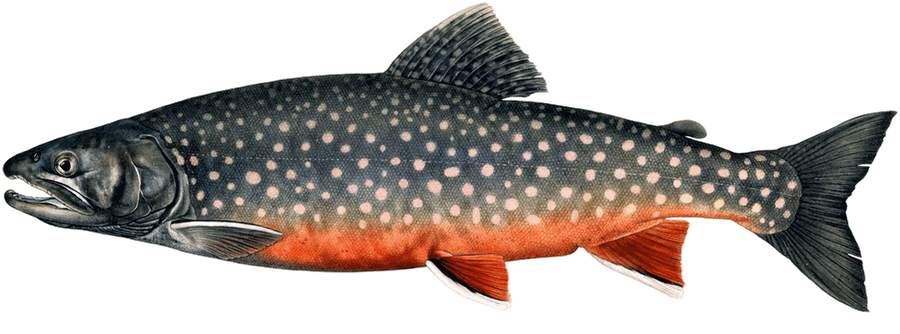
Bump Board's tactics library for Arctic Char — where to fish, what to tie on and how to fish it, season by season. In the app, these tips adapt live to the weather, the front and the light.
Arctic Char — Prespawn
Where to fish
- Prespawn char are staging for a cold-gated spawn: spawning itself runs at about 2–7 °C, ovulation slows at 8 °C and is inhibited at 11 °C, so while the fall water is still above that band the fish are feeding and gathering, not spawning. Work the gravel areas they will use and the feeding water beside them.
- The spawning ground, when it comes, is lake gravel: beds of roughly 3–10 cm gravel in about 0.2–11 m of water, most often around 2.3–5 m deep. Prespawn effort belongs over and around that shallow gravel and its first deep edge, where staging fish can be reached before they are on the beds.
- Not every adult is in this season: females commonly spawn only every 2–4 years, so a large share of the fall population is non-spawning feeders in any given year. The prespawn pattern is therefore a mixed one — staging spawners near the gravel, and feeding fish working the same cooling lake more widely.
What to tie on
- No lure or technique is named for char in the research behind this entry, and none is invented here: the supported menu is local — littoral benthos such as chironomid larvae and Gammarus, zooplankton where the fish are feeding pelagically, and small fish for the larger residents. Match the offering's size and depth to which of those menus the fish are on.
- Keep presentations in the cold band the fish have chosen: prespawn water above the spawn band is still inside the activity plateau that spans roughly 8–16 °C, so ordinary summer-sized offerings are still appropriate early in the fall — shrink and slow only as the water falls toward the spawn temperatures.
How to fish it
- Fish the light changes hardest: the full-year telemetry puts the greatest activity at dawn, dusk and in daylight, with dawn and dusk the peaks (both scored 1.0). Be set up on the staging water before the transition, not travelling through it.
- Use the long fall light, not the dark, as the main shift — while remembering this fish's unusual floor: char feed at light levels down to 0.001 lux and score 0.55 at night, the highest night floor of any trout or char in the model. A slow pass after dark is a real option here in a way it is not for other salmonids.
If it's still tough
- If the gravel is empty, read the thermometer: above about 8–11 °C the spawn itself is physiologically held up, and the fish are still in prespawn feeding water. Fish deeper and wider until the water falls into the 2–7 °C band.
- If staging fish will not take, change depth before pattern: prespawn char split between benthic feeding low in the water and pelagic feeding higher up, lake by lake and morph by morph. A refusal at one level is information about the other.
Arctic Char — Summer
Where to fish
- Summer is the growth and feeding peak — season values 0.90–1.0 from June through August — inside the coldest dome in the model: the activity plateau spans roughly 8–16 °C, built between a measured preference near 11 °C and a measured growth optimum around 14–17 °C. Fish the water inside that span first, wherever in the lake it sits.
- In a warm southern stocked lake — Manitoba's char water is largely stocked parkland lakes such as Snail Lake and Glad Lake — midsummer surface water can pass the fish entirely: feeding ceases at about 21.5 °C. The summer address there is the deep, cold refuge water, and reaching it is the whole pattern.
- Choose the refuge by both numbers, not one: the deep cold water must also carry oxygen, because char routinely avoid water below about 2.3–3.1 mg/L. A cold, depleted depth is a place char have left, not a place they are hiding.
What to tie on
- Feed the generalist: summer char take littoral benthos, zooplankton, molluscs and fish, lake by lake and morph by morph — and larger residents are commonly cannibals, with piscivory beginning around 200–350 mm in the review record. A fish-profile offering for large char is diet-supported; benthic and plankton-sized offerings are the everyday pattern. No specific lure is named in the research, and none is invented here.
- Match the level to the menu you are fishing: benthic offerings belong low, on the littoral food; plankton-sized offerings belong up in the column where pelagic fish work zooplankton. A summer char refusal is often a level refusal — the same lake holds both menus at once, at different depths.
How to fish it
- Work dawn and dusk as the main events (both scored 1.0, above the day's 0.85) and keep fishing into the night with real confidence: this fish feeds at 0.001 lux, stops only in complete darkness, and carries a night score of 0.55 — after dark, slow down and stay on known water, but do not write the night off.
- Respect the steepest warm limb in the programme: activity falls from the plateau through 18 °C (about 0.70) and 20.5 °C (about 0.30) to feeding cessation at 21.5–21.8 °C and a lethal family at 23–24 °C. On a hot day, every decision is a depth-and-cold decision first and a presentation decision second.
If it's still tough
- If summer fish will not take in warm surface water, they are not being difficult — they are at or past their measured feeding ceiling. Get below the warm layer into the 8–16 °C span, or fish the coldest inflows and spring-fed water, before changing a single offering.
- If one part of the lake produces and another never does, morphs may be why: char populations split into littoral and pelagic (and in some lakes profundal) forms with different menus and depths, and the model prices the shared skeleton, not each morph. Treat a blank area as a different menu at a different depth, and test it once that way before abandoning it.
Arctic Char — Winter
Where to fish
- Winter is a feeding season for the lake-resident fish this entry describes — measured, not assumed: stomachs held food in every month of a 9-month ice season at 78°N, and a subarctic lake programme found continuous under-ice feeding at or below maintenance rate. Fish hold where they can feed benthically at low rate, all winter.
- The caveat that travels with every winter word here: sea-run char fast all winter by an internal programme — they fast in tanks, at constant temperature, with food in front of them. This winter pattern is the lake-resident form's, and in waters holding native sea-run fish it will overstate feeding. Know which char your lake holds before you fish the winter pattern hard.
What to tie on
- The winter menu is narrow and benthic — chironomid larvae and Gammarus in the subarctic stomach work, prey diversity well down from summer — so small, low, slow offerings are the winter evidence applied to tackle. No winter lure is named in the research.
- Keep one fish-profile option in the winter plan even so: larger residents in the High Arctic record ate other char in every season sampled, winter included. Cannibalism does not take the winter off in this species.
How to fish it
- Pace the winter by light, not temperature: feeding persists near 0 °C all winter, but the proportion of feeding fish and stomach fullness bottom out in the darkest weeks. The pattern strengthens as light returns in late winter, before the water warms at all.
- Fish the light changes inside the short day first — the dawn and dusk peaks persist as the year's skeleton even at winter rates — and give each located pocket real time, because a maintenance-rate fish is not cruising to find your offering.
If it's still tough
- A dead mid-winter day in the darkest weeks is the annual minimum arriving on schedule, not a tactics failure: the stomach record's lowest feeding sits exactly there. Fish the returning-light end of winter hardest.
- If a winter lake is silent everywhere, suspect oxygen: the field avoidance band (below roughly 2.3–3.1 mg/L) does not stop applying under ice, and depleted deep water is water char have left. Move toward better-oxygenated water.
Arctic Char — Fallspawn
Where to fish
- The spawn runs September–October in northern populations, later — into November and December — farther south, on lake gravel at about 2–7 °C. Fish are concentrated, shallow and findable: beds in roughly 0.2–11 m, most often 2.3–5 m, over gravel of about 3–10 cm.
- Know what kind of season this is in the model: no study has ever measured how much spawning suppresses feeding in lake-resident char, so the spawn carries a modest annotation-grade dip in the season score, not a measured coefficient. Strikes in the spawn window are a mix of feeding fish — remember, many adults are not spawning this year — and fish on the beds, and the entry does not pretend to separate them by formula.
- Work the edges of the spawning gravel and the feeding water beside it first, and give the beds themselves room: eggs laid this fall are the next generation, and a concentrated, shallow, cold-gated spawn is the population at its most exposed.
What to tie on
- Offerings matched to the autumn benthic menu — chironomid larvae, Gammarus and other littoral invertebrates — fished low and slow in the cold water beside the beds. No spawn-specific lure is named in the char record, and none is invented here.
- Size down as the water falls into the spawn band: feeding continues at 2–7 °C — winter stomachs prove this fish feeds near 0 °C — but nothing at these temperatures is fast, and a smaller, slower offering matches a cold fish's rate better than a summer presentation dragged past it.
How to fish it
- The dawn and dusk peaks run the spawn day as they run the year: telemetry activity is greatest at the light changes and in daylight. Cold water and short days compress the useful window — be on the staging edges at first and last light.
- Fish slowly and give located fish time: at spawn temperatures the fish are in the lower half of their own dome, and repeated close presentations to a known lie outfish covering water that holds fish you have not found.
If it's still tough
- If the beds look busy but nothing feeds, you may be watching spawners, not feeders: with females spawning only every 2–4 years, the feeding share of the population is elsewhere in the same lake. Move off the gravel to the adjacent feeding water before changing baits.
- If the water is still above the band, the spawn has not started, whatever the calendar says — spawning is temperature-gated, slowed at 8 °C and inhibited at 11 °C. Fish it as prespawn until the thermometer, not the date, says otherwise.
Arctic Char — Spring
Where to fish
- Spring resumption is led by light, not heat: telemetry fish resumed activity as twilight returned while the water temperature was still stable and near winter values, and the ice-break period brought the sharpest activity surge of the year. Fish the newly open and newly lit water as soon as it exists — this fish does not wait for warmth.
- The spring water is still in the cold limb of the dome — activity rising from about 0.35 at 0 °C through roughly 0.50 at 2 °C and 0.70 at 4 °C in the model's anchors — so early fish are cold fish in cold water, feeding at maintenance-plus rates on the winter benthic menu, close to where they wintered.
What to tie on
- Start the year on the winter menu: under-ice diet work found the cold-season diet narrower and benthic — chironomids and Gammarus — and spring fish begin there before the summer's wider menu opens. Small, low, slow benthic-profile offerings are the supported start; no spring lure is named in the research.
- As the open-water season builds, add the pelagic option: pelagic-feeding char work zooplankton, and the spring telemetry's vertical movements track that prey's daily migration. An offering fished up in the column at the light changes becomes diet-supported as the season turns, not before.
How to fish it
- Let the returning light set the schedule: dawn and dusk are the measured peaks all year, and in spring they lengthen fast. The fish's own resumption is timed to twilight's return — fish the transitions as the season's main event.
- Expect a surge, not a ramp, at ice-break: the telemetry year's sharpest activity rise came at ice-break under near-continuous light. The first open days deserve your best water and your full attention; this is one of the year's genuine windows.
If it's still tough
- If spring fish are silent in the darkest early weeks, that too is in the record: the annual minimum sits in the darkest part of the season, and resumption waits on light. Later — more light, same cold water — is the fix the telemetry itself prescribes.
- Check oxygen in a late, depleted lake: char avoid water below roughly 2.3–3.1 mg/L in the field, so spring fish vacate the low-oxygen depths even while those depths are the coldest. Fish the cold water that still carries oxygen.
Arctic Char on the ice — Through the ice season
Where to fish
- The ice set for Arctic char is ISSUED at Moderate-capped confidence, and the entry carries that flag openly: lake-resident char are measured feeding continuously under ice — stomach programmes at 69–78°N across ice seasons of 6–9 months — and their under-ice activity and daily rhythms are telemetry-measured across a full polar year. No ice catch-rate dataset exists for the species, and the Moderate cap is the price of that gap.
- Winter depth is honestly lake-dependent: the subarctic stomach programme found winter fish feeding profundally, while the High Arctic record had fish at their shallowest densities in winter with deep-density peaks in spring and fall. The shared, priced facts are continuous benthic feeding and oxygen — set up where the bottom food and the oxygen are in your lake, and let sonar, not a borrowed depth, settle the rest.
- This ice pattern describes lake-resident fish. Sea-run char under the same ice are fasting, and this set will overrate them in winter — the coverage flag says so, and the ice entry repeats it because winter is exactly where the two forms part.
What to tie on
- Small, low, slow benthic offerings — the winter stomach record is chironomid larvae and Gammarus, with prey diversity well down from summer. No ice-specific lure is measured for char; the winter diet at its smallest is the supported presentation, fished close over the bottom food.
How to fish it
- Fish the under-ice light changes first: daily rhythms persist under ice in the lake-resident telemetry, with the day-led shape and dawn and dusk peaks carried into the ice shape (night 0.45 under ice against 0.55 in open water). Expect the exception the telemetry measured — for about two weeks around the winter solstice, activity went much reduced and arrhythmic even though the light stayed bright enough to feed by. That dip is an appetite rhythm, not a light limit, and no presentation fixes it.
- Build the late-ice days bigger than the early ones: spring resumption under ice is led by returning twilight at stable, near-zero temperatures — appetite returns on light before it returns on warmth — so the pattern strengthens through late ice for reasons that have nothing to do with the thermometer.
If it's still tough
- If the whole ice pattern is silent, check oxygen before presentation: char avoid water below roughly 2.3–3.1 mg/L in the field and their laboratory lethal band sits at 1.8–2.4 mg/L, so a depleting basin's deep water empties of feeding fish even though the species tolerates low oxygen better than most salmonids. Move toward better-oxygenated water.
- Ice catchability itself is not in doubt — a 24.5-inch char came through the ice of Manitoba's Snail Lake in January 2019 — so a blank day in the darkest weeks is the measured annual minimum, not evidence the ice pattern is wrong. Come back as the light returns.
Manitoba Master Angler
A Arctic Char of 51 cm (20 in) or better qualifies for Manitoba's Master Angler Program.
Where Arctic Char live
131 waters in the Bump Board dataset hold Arctic Char. A selection:
Manitoba
- Camp Lake
- Davidson Lake
- Glad Lake
- Hunt Lake
- Kormans Lake
- Lyons Lake
- McHugh Lake
- Nick Lake
- One Lake
- Snail Lake
- Tugby Lake
- Vini Lake
- West Hawk Lake
Ontario
Alaska
- Airstrip Pond
- Alexcy Lake
- Amanka Lake
- Arolik Lake
- Awayak Lake
- Backdown Lake
- Bathing Beauty Pond
- Battle Lake
- Benka Lake
- Birch Lake
- Buffalo Lake
- Campbell Lake
- Carpenter Lake
- Carter Lake
- Chekok Lake
- Chena Lake
- Cheney Lake
- Chenik Lake
- Chet Lake
- Coal Mine Number 5 Lake
- DeLong Lake
- Dick Lake
- Dicks Pond
- Donnelly Lake
Plus 91 more Alaska waters — browse Alaska lakes.